Skip to content

Photography Gear and Technique / Archived topic

Nikon 14-24 unsharpness?

Started by kaarlin ·

  • 130Posts
  • 130Replies

Read-only discussion

Nikon 14-24 unsharpness?

130 posts
  1. I think my point is that the 17-35 with a diopter is pretty sharp; very sharp in the center, and acceptably sharp in the corners.

    The 14-24 is acceptably sharp in the center, though nothing has impressed me so far that it is any sharper at the center than the 17-35, and is unacceptable to me at the corners at least at larger apertures.

    If one owned a 14-24 and not a 17-35, of course I could understand wanting to use it, but if you own both, I think the 17-35 with dioptre works better underwater at least from what I have seen.

    Edited by loftus
  2. No, I don't have this lens (yet). After this try-out I desided that I will buy one because, like I said, for my poolshots where the most "happens" away from the corners.

  3. No, I don't have this lens (yet). After this try-out I desided that I will buy one because, like I said, for my poolshots where the most "happens" away from the corners.

    I'm not sure I understand which lens you own, or do you not own either lens? Also are you shooting DX or FX?

    If corner sharpness is most important, then a fisheye is better. I have used the 16mm with my D200 (DX) for most of my poolshots and sharpness is excellent. As long as the model maintains arms and legs in the plane parallel to the image plane, distortion is not an issue with this setup. I have yet to do poolshots with my D700. I suspect the 17-35 with dioptre and the 16mm with 1.4TC will be the lenses I use.

    The 14-24 is a very expensive lens to buy for underwater and not achieve perfect results.

    Edited by loftus
  4. I don't have a Nikon camera or lenses yet. I was able to try the D700 in a aquatica housing. I want to buy it after I saw the difference between both lenses. And ofcourse I know that a fisheyelens is another option but not for where I want to use it for.


    Again like I said: for me (and for what I will be using this set-up) the 14-24 is the best option and Iam not saying that this lens performs perfect in all situations. I think that taking pictures on a reef will be hard because in that case there mostly will be a part of the reef in the corners very close to the dome. This part won't be sharp. I won't use this set for my trips. I'm satisfied with my Olympus and yes I mostly use fisheye on a reef. I found the D700 to big for travelling and I don't need/want the extra's of the D700. My Olympus brings me enough quality for where I use these shots for. For my modellingshots I want more quality and work in higher ISO.

    Edited by kaarlin
  5. I don't have a Nikon camera or lenses yet. I was able to try the D700 in a aquatica housing. I want to buy it after I saw the difference between both lenses. And ofcourse I know that a fisheyelens is another option but not for where I want to use it for.


    Again like I said: for me (and for what I will be using this set-up) the 14-24 is the best option and Iam not saying that this lens performs perfect in all situations. I think that taking pictures on a reef will be hard because in that case there mostly will be a part of the reef in the corners very close to the dome. This part won't be sharp. I won't use this set for my trips. I'm satisfied with my Olympus and yes I mostly use fisheye on a reef. I found the D700 to big for travelling and I don't need/want the extra's of the D700. My Olympus brings me enough quality for where I use these shots for. For my modellingshots I want more quality and work in higher ISO.

    Of course it's all your choice, and your cash :(. I simply disagree from everything I've seen , including your tests, that the 14-24 with present setups is sharper in any situation underwater than the 17-35 with a dioptre or 16mm with / without TC

  6. Of course it's all your choice, and your cash :D. I simply disagree from everything I've seen , including your tests, that the 14-24 with present setups is sharper in any situation underwater than the 17-35 with a dioptre or 16mm with / without TC


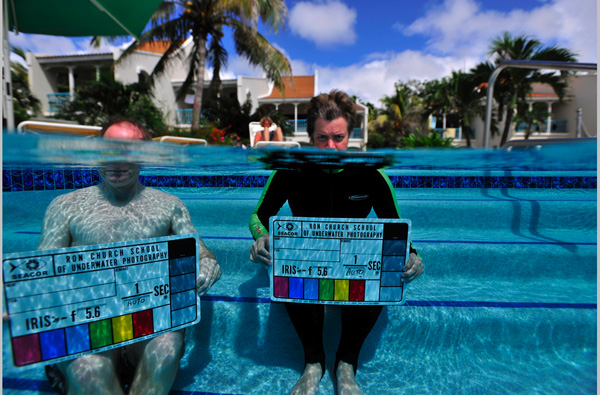
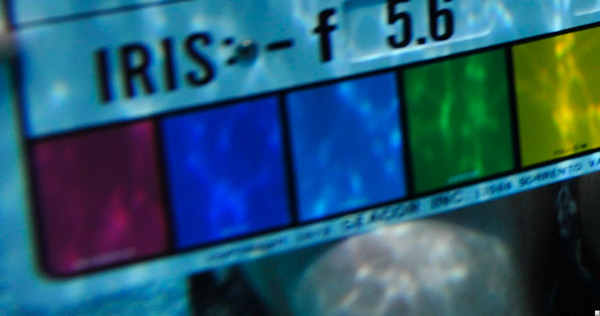
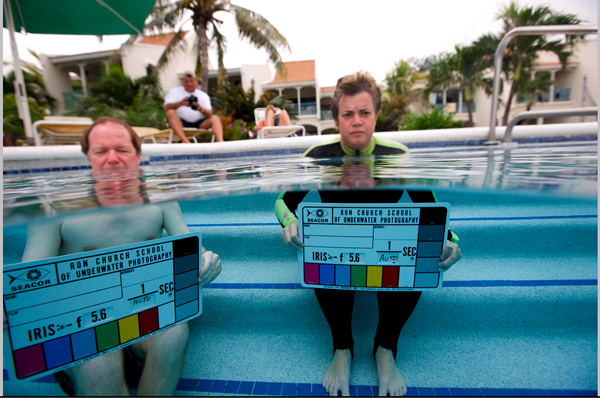
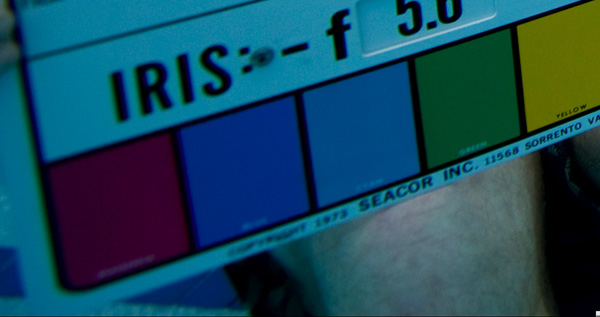
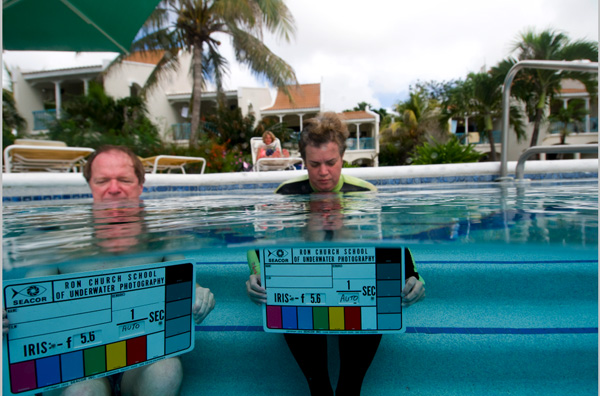
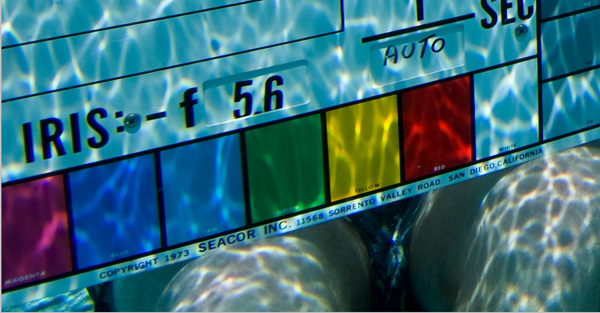
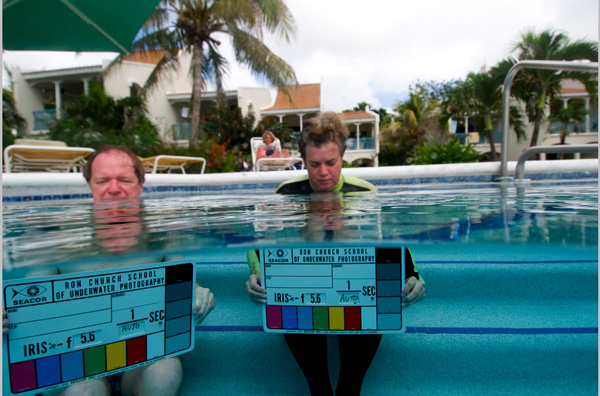
    Quick one as I am in Bonaire teaching a photo course at the moment, but thought these tests would be relevant to discussion. All shot with Seacam housings, with superdome and appropriate port extension. Focus on exposure slate in center, corner screengrab from 100% enlargement on second exposure slate in lower left corner, about 1 foot closer to camera than focus point, intentionally to replicate typical UW reef scene.


    Mixed sun and cloud, so please excuse lack of consistent light conditions, but aperture priority for F-5.6 on all following. 17-35 test to be done tomorrow under similar conditions.


    14-24 on Nikon D3X

    post-630-1233714917.jpg


    post-630-1233715023.jpg

  7. Canon EOS 1Ds MKIII with 16-35II


    post-630-1233715341.jpg


    post-630-1233715370.jpg

  8. D300, 12-24 with no diopter

    post-630-1233715486.jpg


    post-630-1233715512.jpg

  9. D300, 12-24, +2 diopter

    post-630-1233715697.jpg


    post-630-1233715729.jpg

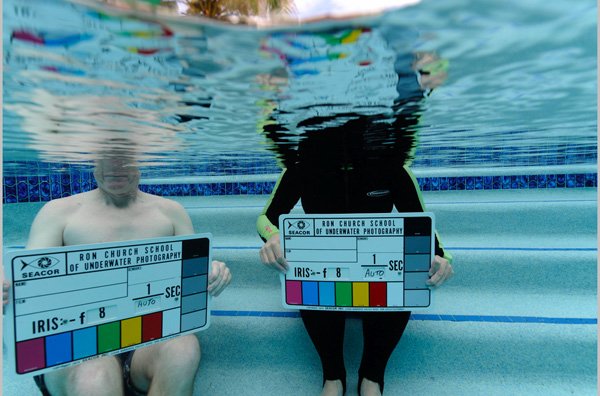
  10. This one is D3X with 17-35, no diopter. However, my F-5.6 test was flawed so this one is at F-8.


    Tomorrow I'll test 17-35 with and without diopter.


    post-630-1233716195.jpg


    post-630-1233716290.jpg

    Edited by StephenFrink
  11. Stephen, I assume these are all shot at the widest angle?

  12. Stephen, I assume these are all shot at the widest angle?


    Yes, but for some reason the EXIF on 14-24 did not say 14. However, it was as wide as it would go physically. I was doing all screengrabs quickly in Photo Mechanic and maybe it couldn't read the D3X EXIF data properly, or maybe the D3X didn't encode it right. But,whatever, all lenses were as wide as they would physically go. If we get a shot of consistent blue sky tomorrow I may replicate. It is a rare opportunity to have all these camera and lenses in one place so I should take advantage of it.


    As I was testing corner sharpness, diver on left scooted one way or another so slate was always in the corner.

    Edited by StephenFrink
  13. Steve,

    From these the 12-24 +2 clearly trumps everything else. My only concern is the fact that the corner is 1 foot closer which is kind of arbitrary, maybe if you had one more slate on the other side but at the same distance as the focal point for comparison that would help.

    Do you have a dioptre on the 16-35?

    Say Hi to Ana Maria your illustrious model.

    Edited by loftus
  14. Steve,

    From these the 12-24 +2 clearly trumps everything else. My only concern is the fact that the corner is 1 foot closer which is kind of arbitrary, maybe if you had one more slate on the other side but at the same distance as the focal point for comparison that would help.

    Do you have a dioptre on the 16-35?

    Say Hi to Ana Maria your illustrious model.


    Yeah, as if I'm ever going to go to the trouble to test this many corners again in life :D


    No 82mm diopter for 16-35II. Could never find a good one that did not vignette.

  15. Yeah, as if I'm ever going to go to the trouble to test this many corners again in life :D


    No 82mm diopter for 16-35II. Could never find a good one that did not vignette.

    I know, guys like me are never satisfied, and give you no respect! :)

    These tests do make you want to drop everything for the 12-24 on a DX though, don't they?

  16. The 12-24 does look the best of those shown so far. It is also has the narrowest angle of view and the smallest physical aperture.

  17. Thanks for posting these Stephen. However if your time is limited why not start at ~ f/11 with the 14mm FL based on you experience with the Canon 14mm http://www.seacamusa.com/canon-lens-14mm-ii.shtml

    Then increment + or – (with emphasis on smaller stops) from there for further exposures. For FL = 14mm, 5.6 is too large a stop for even the DX format, IMHO.


    Secondly, it is only fair compare lenses using the same angle of view (assuming lenses are all appropriately optimized behind the same port). Therefore one must set the 14-24 and the 17-35 at 18mm (assuming FF) to compare against the 12-24 at 12mm on DX.


    But back to post #46 in this thread. Does a 100% blow-up of the area above the right shoulder of the bare-chested fellow, i.e., the blue tile edges, look sharp?


    Tom

    Edited by Tom_Kline
  18. Thanks for taking the time to test and post these, Stephen.


    DX clearly performs the best (12-24mm), particularly with a dioptre, which is as expected. I have also seen it performing very well with a dioptre behind some of Seacam's smaller domes too.


    And the Canon 16-35 Mk2 is certainly much better than either Nikon lens (at least without dioptres). Did you test many port extension rings with the two lenses to determine which is best - as you said above - after testing the 16-35mm Mk2 you asked Seacam to make a new extension ring specifically for it?


    Certainly from my tests posted above, the addition of a dioptre made a massive difference for corner sharpness with the 17-35mm (I realise dioptres are not practical with the 16-35mm and 14-24mm). I look forward to seeing these results in comparison with the 16-35mm.


    I disagree with Tom and Craig about zooming the lenses to the same points. Of course that would be a fairer comparison - and stopping the full frame cameras down an extra stop would be fairer too! But the reality of a photographer using any of these lenses underwater is that they would not stop zooming out if they needed to. They would use the range of the lens that is fitted to their camera. The tests need to be relevant to actual shooting and it is important to know how the lens you attach will perform (I realise Tom, that you don't dive with your cameras - so can't zoom while shooting - the rest of us do).


    Although I do take Tom's point about F5.6 being very open. I used it above because I felt it was the widest I would typically go with the aperture - and obviously the most likely to show problems. I also tested a F14 - where differences are less clear.


    Anwyay, Stephen, thanks again for the tests. I'll post something on the front page.


    Alex


    p.s.. And for some reason I didn't note that Seacam made a D300 housing before, which is also good news.


    Edited by Alex_Mustard
  19. I take my virtual hat off to Stephen.


    It looks like the uncropped images with the D300 and the 12-24 are the same image? The models have their hands, bodies and head positioned exactly the same way, they have exacly the same expression on their faces... Maybe they were in the water for so long they got stiff :D I suspect it is the dioptre-shot in both examples? If possible, I would like to see the 'full' image of the 12-24 without dioptre.


    cheers

    Edited by Christian K
  20. supposedly, the big advantage of the 14-24 over the 12-24 is less distortion and larger aperture.

    I have used my 12-24 without a diopter in my Aquatica housing with good results, but did have distortion.

    I was considering the 14-24 to limit this.

    Not sure how important the corner sharpness is in the photos we do, I would suspect the distortion is more of an issue?

Turtle

Account

Navigation

Search

Search

Configure browser push notifications

Chrome (Android)
  1. Tap the lock icon next to the address bar.
  2. Tap Permissions → Notifications.
  3. Adjust your preference.
Chrome (Desktop)
  1. Click the padlock icon in the address bar.
  2. Select Site settings.
  3. Find Notifications and adjust your preference.