Skip to content

Photography Gear and Technique / Archived topic

Nikon 14-24 unsharpness?

Started by kaarlin ·

  • 130Posts
  • 130Replies

Read-only discussion

Nikon 14-24 unsharpness?

130 posts
  1. supposedly, the big advantage of the 14-24 over the 12-24 is less distortion and larger aperture.

    I have used my 12-24 without a diopter in my Aquatica housing with good results, but did have distortion.

    I was considering the 14-24 to limit this.

    Not sure how important the corner sharpness is in the photos we do, I would suspect the distortion is more of an issue?


    I wasn't aware of either having major distortion issues. Although when Nikon announced the D3 and 14-24mm I went to a Nikon test day and was shooting alongside an architecture photographer. He was testing the distortion on the 14-24mm and decided it had too much distortion for his work.


    Alex

  2. Karin. Thank you for your testing. It would seem that neither the camera nor test board were stationary (fixed) during testing, as evidenced by focus issues. I believe these issues render the tests rather inconclusive.

    May I recommend using a tripod for the camera and hard mounting a focus board 1 meter from the lens. Also, using Apertures between 5.6 - 16 (most used range) would be helpful.

    My early testing which I posted here last summer using a Nikon D3 comparing a 14mm and 17-35 was rudimentary at best, using pool lane tiles.

    The tests did show severe corner aberrations in the 14mm lens compared to the 17-35 @17mm, no diopter throughout the aperture range of the lenses.

    Thank you for the testing. What dome/spacer/housing were you using?

  3. It's not clear that the 14-24 is worse than the 17-35 at 17mm but it is clear that the 17-35 is worse than the 14-24 at 14mm. :D You have to decide how important the wider perspective is, but you can't say the 14-24 is softer on the edges when you aren't comparing the same edges. A 60mm behind a dome would look pretty good in this test (not criticizing the test) because it doesn't have any wide edges.


    This test is important, probably the most important; I'm simply pointing out that comparing like fields of view is critical to judging lenses against one another. Normalizing physical aperture is also important. Then you see that port optics are more important than sensor size.


    It's clear, though, that with the port tested here that the 14-24 is at a disadvantage not allowing a diopter.


    The 12-24 has significant distortion when used with diopters. How important is that underwater when you consider the popularity of fisheyes? It doesn't seem to be a disadvantage in this test. I'd like to see a Sigma 10-20, Tokina 11-16 and Canon 10-22 though I realize the circumstances.

  4. I had been using the 12-24 with a +2 diopter, but recently started using a +4 with better results. Still a bit of corner distortion, but less than with the +2. It's still my go-to lens for sharks and other big critters.

  5. I'm simply pointing out that comparing like fields of view is critical to judging lenses against one another.

    As Craig say comparing like fields of view is a critical requirement, as indeed are determining 'output requirements'. Simply looking at every lens at its widest setting, at various apertures and at a 100% crop will reveal flaws in most to some degree, so for a really meaningful test to be carried out, the parameters which are being compared have to be considered carefully to allow like to be compared with like. Stephen's comparisons show that the narrower field of view of the DX lens and format appears to produce better corners from how I read them. Which is to be expected.


    I've started putting a page together about Dome Port Theory. Its not complete and misses vast nuances which all play a role, but at least its a start. I'll try to add to it idc. If anyone wants to comment, pm me:


    http://www.marinewildlife.co.uk/wisscms-en-243.aspx

  6. I had been using the 12-24 with a +2 diopter, but recently started using a +4 with better results. Still a bit of corner distortion, but less than with the +2. It's still my go-to lens for sharks and other big critters.


    Some of the enhanced corner sharpness with a +4 could be a side-effect of the narrower angle of view, compared with the +2. I was using a +3 with the 12-24 (Seacam Superdome and 55mm extension) since the corners were better than the +2, but I discovered I could not focus on infinity with the +3, so now I have reverted to using the B&W +2. This makes theoretical sense. I don't know whether infinity would have been included in the depth of focus.

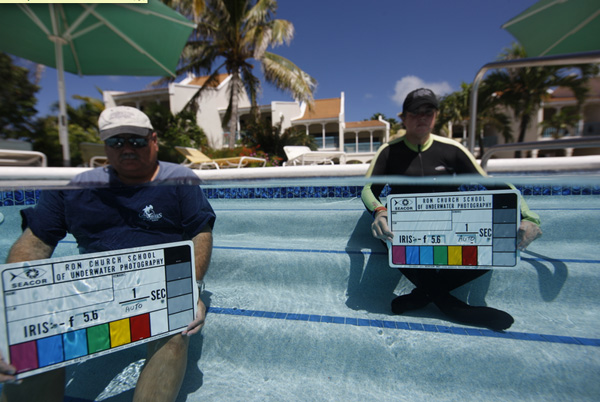
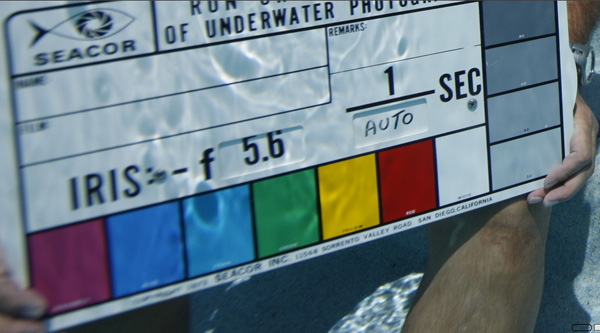
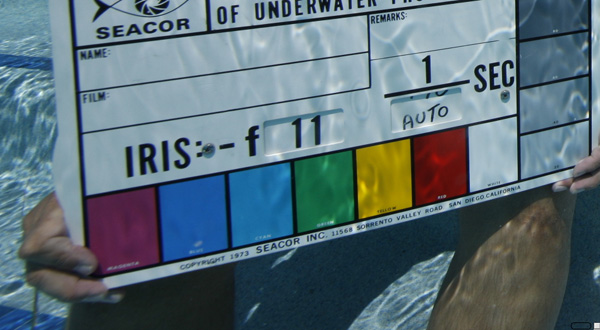
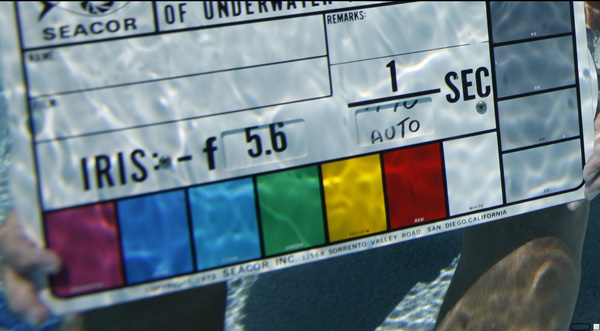
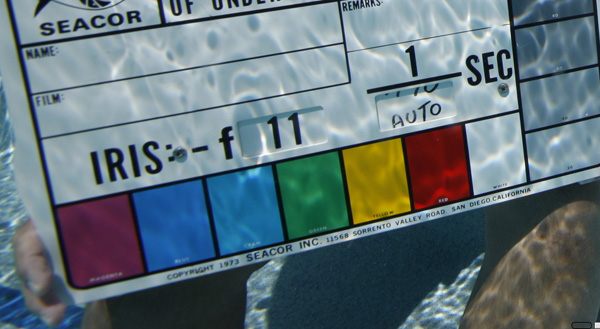
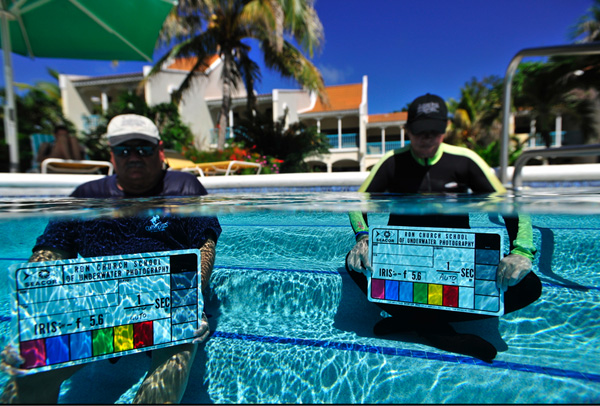
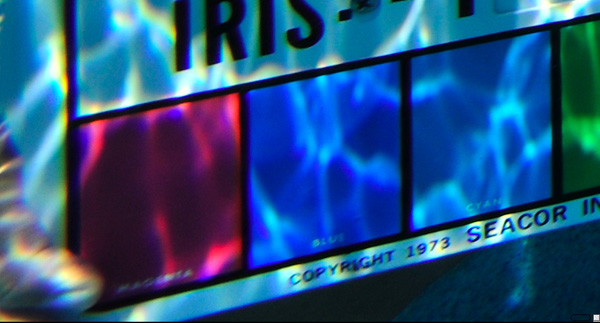
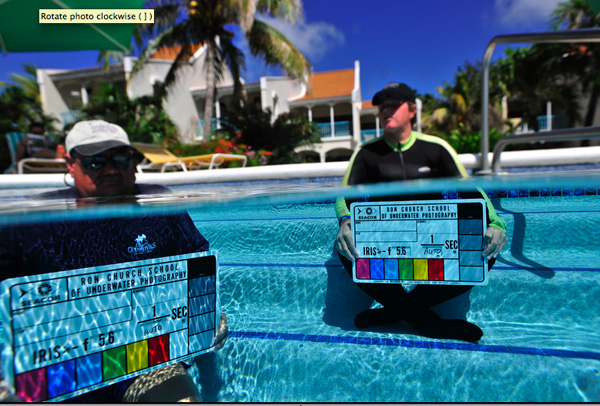
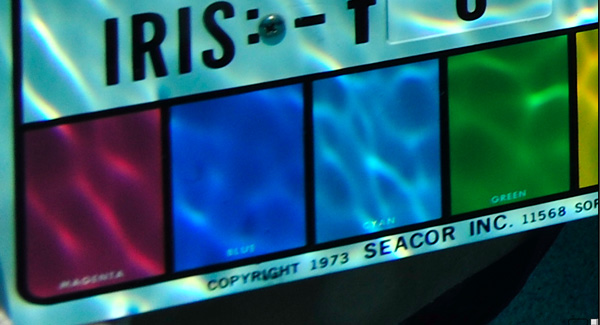
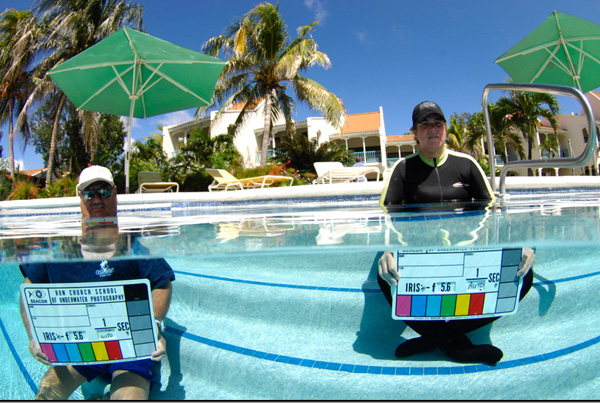
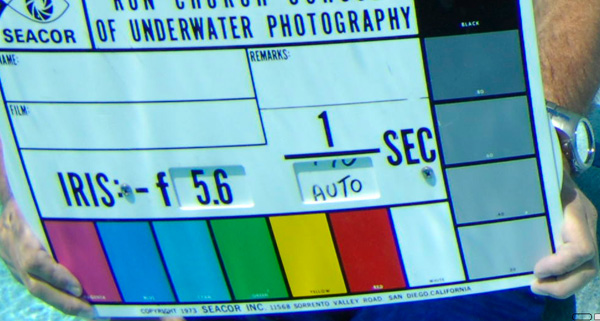
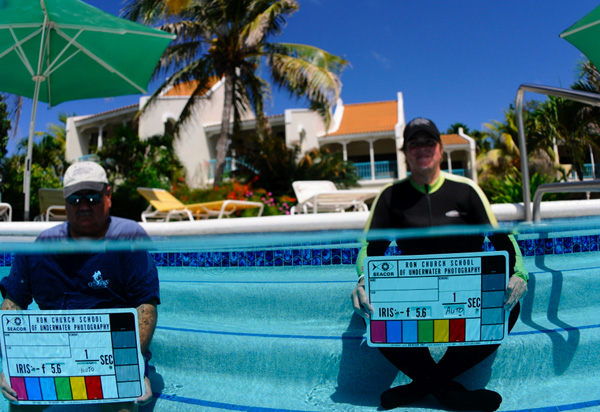
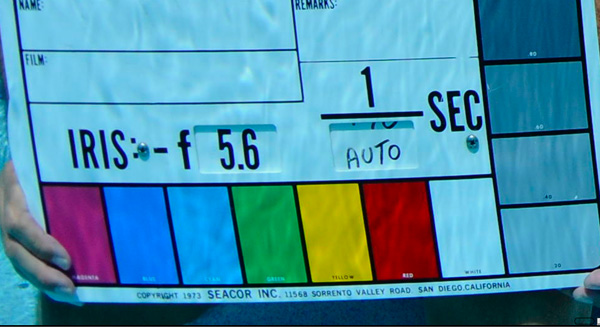
  7. Quick one as I am in Bonaire teaching a photo course at the moment, but thought these tests would be relevant to discussion. All shot with Seacam housings, with superdome and appropriate port extension. Focus on exposure slate in center, corner screengrab from 100% enlargement on second exposure slate in lower left corner, about 1 foot closer to camera than focus point, intentionally to replicate typical UW reef scene.


    More today:


    14mm on Canon EOS1DsMKIII ... needs to be at F-8 or F-11 for the right performance. PVL 20 + superdome.

    post-630-1233804766.jpg


    post-630-1233804803.jpg


    post-630-1233804861.jpg

  8. smaller apertures help. 16-35II on 1DsMKIII at 5.6


    post-630-1233805009.jpg


    at F-11


    post-630-1233805080.jpg

  9. 17-35 Nikkor on D3X, +2 diopter


    post-630-1233805203.jpg


    at F-5.6

    post-630-1233805270.jpg


    at F-16

    post-630-1233805327.jpg

  10. 14-24 on Nikon D3X with various port extensions


    full shot, superdome and PVL50

    post-630-1233805469.jpg


    PVL55

    post-630-1233805550.jpg


    PVL50

    post-630-1233805592.jpg


    PVL45

    post-630-1233805624.jpg


    PVL 50 is the winner.

    Edited by StephenFrink
  11. Tokina 10-17 on D2X, 10mm, superdome no port extension

    post-630-1233806399.jpg


    post-630-1233806423.jpg

    Edited by StephenFrink
  12. Nikkor 16mm fisheye on D300

    post-630-1233806560.jpg


    post-630-1233806590.jpg

    Edited by StephenFrink
  13. I disagree with Tom and Craig about zooming the lenses to the same points. Of course that would be a fairer comparison - and stopping the full frame cameras down an extra stop would be fairer too! But the reality of a photographer using any of these lenses underwater is that they would not stop zooming out if they needed to. They would use the range of the lens that is fitted to their camera. The tests need to be relevant to actual shooting and it is important to know how the lens you attach will perform (I realise Tom, that you don't dive with your cameras - so can't zoom while shooting - the rest of us do).


    Alex,

    I do dive my cameras, however, they can get a lot more 'bottom time' in a day of stream shooting compared to scuba diving. :) While not limited by air, there are other limitations such as day length, card size, and at some sites tide (one of my favorite streams has to be accessed at low tide from its seaward end).


    There is a need to choose FL regardless of mode used to deploy ones camera. I have used 14mm the most for stream shooting with the DX format, however there are times when wider or even longer would be better. Being able to zoom at the time of deployment or being able to adjust during a shoot would be beneficial. What may be the main advantage of the 14-24 over the 14 prime is its superior resistance to flare. 14 is quite wide, I think the 18- 20 mm FL range would be best for what I do based on recent experience. Thus the 17-35 would also do. I use the 10.5 when the fish are so dense they tend to run right up to and contact the port, it would be these situations where 14mm on FF would be good too.


    BTW, Happy Birthday Old Boy!! :D

    Tom

    Edited by Tom_Kline
  14. 14-24 on Nikon D3X with various port extensions


    PVL 50 is the winner.

    Hi Stephen,

    WOW!!

    Very impressive results suggesting this lens is far better than what others have reported. This was only f/8 too! Looks like 5mm of port extension can make a big difference!! I suspect this why others have not gotten such good results. :D

    Thank you!!

    Tom :)

  15. As Craig say comparing like fields of view is a critical requirement, as indeed are determining 'output requirements'. Simply looking at every lens at its widest setting, at various apertures and at a 100% crop will reveal flaws in most to some degree, so for a really meaningful test to be carried out, the parameters which are being compared have to be considered carefully to allow like to be compared with like. Stephen's comparisons show that the narrower field of view of the DX lens and format appears to produce better corners from how I read them. Which is to be expected.


    I've started putting a page together about Dome Port Theory. Its not complete and misses vast nuances which all play a role, but at least its a start. I'll try to add to it idc. If anyone wants to comment, pm me:


    http://www.marinewildlife.co.uk/wisscms-en-243.aspx

    Hi Paul,

    You have a good start. However, I would replace 'entrance node' with 'entrance pupil'. See page 48 of McNeil 1972, Optical Fundamentals of Underwater Photography, 2nd ed. I realize that Ray uses entrance node on p. 350 of Applied Photographic Optics, 2nd ed., but this is probably incorrect. Note that he cites McNeil. There is a discussion on this terminology here:

    http://en.wikipedia.org/wiki/Focal_plane#F...ints_and_planes

    and here:

    http://www.vrphotography.com/data/pages/te...ptalign-tn.html

    Tom :D


    ps. It would be good to have some drawings as well.


    Tom

    Edited by Tom_Kline
  16. Hi Paul,

    You have a good start. However, I would replace 'entrance node' with 'entrance pupil'. See page 48 of McNeil 1972, Optical Fundamentals of Underwater Photography, 2nd ed. I realize that Ray uses entrance node on p. 350 of Applied Photographic Optics, 2nd ed., but this is probably incorrect. Note that he cites McNeil. There is a discussion on this terminology here:

    http://en.wikipedia.org/wiki/Focal_plane#F...ints_and_planes

    and here:

    http://www.vrphotography.com/data/pages/te...ptalign-tn.html

    Tom :D


    ps. It would be good to have some drawings as well.


    Tom


    Hi Tom


    I'll check the links - Sid Ray was one of my lecturers so I usually accept his statements without question!!! However...


    What I haven't attempted to do is to try to explain what happens when things aren't set up correctly or where the theory breaks down - at closer distances for examples. Stephen's tests do show corner 'smear' (astigmatism???), chroma and general softness - I have a friend who is a lens designer so I'll see if I can pin him down to discuss these aberrations and their causes. All the corner degradations are probably to do with the use of the 'simple' lens (dome) and consequent uncorrected image aberrations but it would be interesting to identify them and see if there are any possible solutions to any of them.


    Drawings are not my forte but I do agree that they'd be useful. I'll see what I can do.

  17. Is there anyone who worked with the 14-24mm lens underwater. I would like to see some results and am curious about the unsharpness everybody is talking about.


    I doubt between the 14-24mm and the 17-35mm lens.


    Can I ask Stephen which +2 diopter he used in the 12-24mm test ? A Canon 500D ?

    Even though 2 element diopters are undoubtedly better on land, I read somewhere that cheaper single element diopter lenses can work well / better underwater - any opinions ?


    Thanks.

  18. Can I ask Stephen which +2 diopter he used in the 12-24mm test ? A Canon 500D ?

    Even though 2 element diopters are undoubtedly better on land, I read somewhere that cheaper single element diopter lenses can work well / better underwater - any opinions ?


    Thanks.


    B+W. Just used what I had left over from my 77mm days, although now I don't have anything but a 24-70 that can use them.

  19. 17-35 Nikkor on D3X, +2 diopter


    post-630-1233805203.jpg


    at F-5.6

    post-630-1233805270.jpg


    at F-16

    post-630-1233805327.jpg


    I'm sure we can make the 17-35 better than this. Today we will do dedicated testing of 17-35 with various ports extensions and diopters. Stand by to stand by.

  20. Stephen


    Can I suggest that you also take a similar topside view of the same subjects under similar lighting (I know, more work!) as this should give a baseline comparison of each lens's capabilities and will also show just how much corner degradation is due to the port (and diopter if used). I suggest this because not all lenses are equal on land let alone underwater so comparative data is useful. I've just been using my 24mm f/1.4 (MkI) on a Canon 5DMkII and have discovered why Canon are bringing out a new design!!! Too many MPixels are very demanding on lenses. (For interest, I also used a Leica Summilux 80mm f/1.4 R lens on the 5DII and this simply reveals stunning amounts of detail - although its focal length is apparently in a 'sweet spot' of lens design).

Keldan

Account

Navigation

Search

Search

Configure browser push notifications

Chrome (Android)
  1. Tap the lock icon next to the address bar.
  2. Tap Permissions → Notifications.
  3. Adjust your preference.
Chrome (Desktop)
  1. Click the padlock icon in the address bar.
  2. Select Site settings.
  3. Find Notifications and adjust your preference.