Skip to content

Lights, Strobes, and Lighting Technique / Archived topic

RETRA Strobe Thread

Started by guyharrisonphoto ·

  • 698Posts
  • 698Replies

Read-only discussion

RETRA Strobe Thread

698 posts
  1. Hi guys, what sort of routine do you apply for the retra o-rings:

    -Lubricating each time you open battery compartment?

    -taking out the orings to do so?

    -with which lube? I have hips of inon grease...


    Cheers

    Nicolas


    Envoyé de mon iPhone en utilisant Tapatalk

  2. Hi guys, what sort of routine do you apply for the retra o-rings:

    -Lubricating each time you open battery compartment?

    -taking out the orings to do so?

    -with which lube? I have hips of inon grease...


    Cheers

    Nicolas


    Envoyé de mon iPhone en utilisant Tapatalk

    Hi Nicolas


    We suggest lubricating every 10 times the battery compartment is opened/closed. The o-rings don't need to be taken out if they are clean and without dirt or debris. We supply a silicone grease with the Retra Flash although any silicone grease is useful for lubrication.

  3. Hi Nicolas


    We suggest lubricating every 10 times the battery compartment is opened/closed. The o-rings don't need to be taken out if they are clean and without dirt or debris. We supply a silicone grease with the Retra Flash although any silicone grease is useful for lubrication.

    Thanks for this Oskar!
  4. One more question to you Oskar if i may, but i guess i won't be the only one wondering: on the Retra flashes i've borrowed i see the following power levels: 100, 50, 25, 6, 1, and corresponding: +2, +1, 0, -1, -2, which i guess are in EV.

    For the 1st scale i am confused: from 100 to 50 and 50 to 25 that's -1 EV (division by 2 if i am not wrong), but i don't understand the jump from 25 to 6 and then 6 to 1, which are also spaced by 1 EV if i am reading well.


    cheers

    Nicolas

  5. One more question to you Oskar if i may, but i guess i won't be the only one wondering: on the Retra flashes i've borrowed i see the following power levels: 100, 50, 25, 6, 1, and corresponding: +2, +1, 0, -1, -2, which i guess are in EV.

    For the 1st scale i am confused: from 100 to 50 and 50 to 25 that's -1 EV (division by 2 if i am not wrong), but i don't understand the jump from 25 to 6 and then 6 to 1, which are also spaced by 1 EV if i am reading well.


    cheers

    Nicolas

    The EV stops are in brackets as is the STTL mode indicating that these two are linked. EV stops are +/- 2 stops and correspond to compensation in STTL mode.


    Power from 1-100 is in percentage and is used for manual modes (ON and SL). Big dots indicate a 1 F-stop increment whilst small dots indicate a 0.5 F-stop increment. Only between 25-100% do we have half stop increments.


    Did you get the practical instructions sheet with the borrowed strobes? It's one A5 piece of waterproof paper which you can take in your dive box and explains these basic features as well as different modes and maintenance.

  6. The EV stops are in brackets as is the STTL mode indicating that these two are linked. EV stops are +/- 2 stops and correspond to compensation in STTL mode.


    Power from 1-100 is in percentage and is used for manual modes (ON and SL). Big dots indicate a 1 F-stop increment whilst small dots indicate a 0.5 F-stop increment. Only between 25-100% do we have half stop increments.


    Did you get the practical instructions sheet with the borrowed strobes? It's one A5 piece of waterproof paper which you can take in your dive box and explains these basic features as well as different modes and maintenance.

    Thanks for these explanations Oskar, i didn’t get the instructions but it’s all clear now.


    On my current Inon z240 i have always 0.5 stops increments, so i know by how much i’ll add/decrease the strobe output when manipulating the knob, even without looking.


    Out of curiosity, what’s the reason for not offering 0.5 stops increments below 25%?

    Is it because you’re assuming most people would use these low powers only when getting very close to subject, and at these distances strobe power needs to be decreased quicker?


    Regards

    Nicolas

  7. Thanks for these explanations Oskar, i didn’t get the instructions but it’s all clear now.


    On my current Inon z240 i have always 0.5 stops increments, so i know by how much i’ll add/decrease the strobe output when manipulating the knob, even without looking.


    Out of curiosity, what’s the reason for not offering 0.5 stops increments below 25%?

    Is it because you’re assuming most people would use these low powers only when getting very close to subject, and at these distances strobe power needs to be decreased quicker?


    Regards

    Nicolas

    Yes, with lower power the shooting distance is usually shorter and a half stop difference would amount to a relatively small change in distance. In those situations it's also usually more effective to slightly change your setting on the camera rather than reaching out to the strobe and possibly mucking up the scene.


    This begs a question for the community: Have you found the lowest power setting (1%) on the Retra Flash to be too powerful and if yes in which situation?

  8. I'm very glad to hear this. So it means minimum power is actually -6 stops correct?? I had assumed it was -4. Even though I've already decided to go with the Retra, this was an important element vs z330.


    Personally I've had situations shooting in low light where I wanted less than minimum power on my z240's to balance with ambient. But I'm making some ND gels to accomplish this.

  9. I'm very glad to hear this. So it means minimum power is actually -6 stops correct?? I had assumed it was -4. Even though I've already decided to go with the Retra, this was an important element vs z330.


    Personally I've had situations shooting in low light where I wanted less than minimum power on my z240's to balance with ambient. But I'm making some ND gels to accomplish this.

    Yes, the complete range is 7 F-stops.

  10. I know, that the flash sounds simple....but is there a manual out there?

  11. Just bought 2x this week- as soon as the housing arrives I will be playing with these in Anilao and then Tubbataha... will report back, they sound great in the write ups..

  12. I was quite shocked by the test results showing that the Inon Z-330s were brighter and wider beams than the Retras. I thought for sure the Retras would produce more/wider light but the tradeoff beign that Inon is a more established company with likely better customer service etc. Now that the test results came out I have to say I'm leaning toward Z-330 entirely now, as it apparently wins on price, performance and likely service.

  13. I normally avoid discussions about specific strobes, because I think light is the most crucial thing in photography (I know how valuable having exactly the light I want has been to my career). And the right quality of light is far more valuable than the quantity. However there are no measurable specs for quality - so photographers argue about the measurable specs. However, I know what light I want and need and that informs my strobe choices.


    ------------


    I shot a pair of Inon Z330 strobes on a trip to Cayman in January. That trip persuaded me to get the Retras (although I haven't got them yet). But I would add that both strobes are a significant step on from the previous generation strobes like the Z240 and D2.


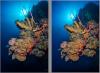
    On that trip I used the Z330s most of the time (as I had used the Retras before and had a good knowledge of their performance) - which is how I assessed them, but did one dive with one of each strobe to compare them in a single shot to share. This shot is not what I based my own conclusions on - but it is consistent with them. This is the comparison shot of the two strobes (that I posted on Facebook at the time) - screen grab from Lightroom:
     

    post-713-0-76197200-1521259278_thumb.jpg


    Quotes from that post"Comparison of coverage and quality of light between single Inon Z330 strobe (left) and single Retra flash (right). This is not a comparison of strobe power - I did other tests for that. The Inon was slightly ahead on strobe power, but that may be because the diffuser is does not spread that light as wide. Both strobes are considerably stronger and have more coverage than an old Z240. Do consider that both strobes have done very well in lighting a large wide angle scene, shot into the sun, with just one strobe, which is very impressive. These were both shot on about 50% power. Taken with Nikon D5 and 8-15mm fisheye @ 15mm, f/11 @ 1/320th, ISO 400."


    "The difference between the strobes was immediately obvious testing them together. With diffusers attached, the Inon is about 1/3 stop more powerful than the Retra. I did the tests with diffusers on because you'd always use them that way for wide angle. This difference is almost entirely down to the difference in the diffusers. The Z330 currently feels a bit unfinished and rushed to market. It needs a better diffuser - one that spreads the beam a little better and warms the light (it is currently way too cool - and you can't add gels because of the domed front)."


    and


    "Strobe manufacturers like to quote Guide Numbers - which is the most useless information there is. This is because the guide number is inversely proportional to how wide the strobe beam is set to be. If you want a high guide number, simply make a narrower beam. Easy.


    Unfortunatlely the best light for lighting wide angle scenes in clear water is wide and soft - so that it illuminates the subject naturalistically, without eyecatching burned-out hotspots and harsh shadows.

    Some manufacturers do quote angle of coverage - which is good. But again it is not the best statistic. What is more important than how wide the beam is - is how much of a fall off of light is there from the centre to the edge. Two strobes might both have a quoted 120˚ coverage, but in one, after 90˚ there is only 20% of the light remaining. In the other there is 70% remaining. The second example will be easier and more flattering to use."

    Quotes from that post"Comparison of coverage and quality of light between single Inon Z330 strobe (left) and single Retra flash (right). This is not a comparison of strobe power - I did other tests for that. The Inon was slightly ahead on strobe power, but that may be because the diffuser is does not spread that light as wide. Both strobes are considerably stronger and have more coverage than an old Z240. Do consider that both strobes have done very well in lighting a large wide angle scene, shot into the sun, with just one strobe, which is very impressive. These were both shot on about 50% power. Taken with Nikon D5 and 8-15mm fisheye @ 15mm, f/11 @ 1/320th, ISO 400."


    "The difference between the strobes was immediately obvious testing them together. With diffusers attached, the Inon is about 1/3 stop more powerful than the Retra. I did the tests with diffusers on because you'd always use them that way for wide angle. This difference is almost entirely down to the difference in the diffusers. The Z330 currently feels a bit unfinished and rushed to market. It needs a better diffuser - one that spreads the beam a little better and warms the light (it is currently way too cool - and you can't add gels because of the domed front)."


    and


    "Strobe manufacturers like to quote Guide Numbers - which is the most useless information there is. This is because the guide number is inversely proportional to how wide the strobe beam is set to be. If you want a high guide number, simply make a narrower beam. Easy.


    Unfortunatlely the best light for lighting wide angle scenes in clear water is wide and soft - so that it illuminates the subject naturalistically, without eyecatching burned-out hotspots and harsh shadows.

    Some manufacturers do quote angle of coverage - which is good. But again it is not the best statistic. What is more important than how wide the beam is - is how much of a fall off of light is there from the centre to the edge. Two strobes might both have a quoted 120˚ coverage, but in one, after 90˚ there is only 20% of the light remaining. In the other there is 70% remaining. The second example will be easier and more flattering to use."


    ​That said, the deal breaker for me with the Z330 is that I could not use it for inward lighting (p122-123 and p152-153 of my book) - because it does not have a sharp edge to the beam to exploit. So the decision was actually reasonably easy.


    Alex

    Edited by Alex_Mustard
  14. I agree with Alex (because who wouldn't!) and while I struggled to pick it in side by side shots from different dives at the same site, I know my local dive sites and I prefer the photos with the retras. The retras gave me completely different (better) light quality from the first dive there, even with strobe positioning all wrong and backscatter through the shots. The colours are better and the hotspots/throw/eveness was nicer.


    Some of my negatives are teething issues that I will get used to. I just hope the reliability is there, because I've had a lot of problems with overheating Z240s and I'm hoping to move on from that.

  15. Just posted 10 shots done with Retras on my recent trip to Hawaii on my website here:

    http://www.salmonography.com/Aloha/Hawaiian-Invertebrates/

    The first 3 are from Maui and were shot with the RS20-35 lens modded by Seacam. I used the shorter protection ring for these. The next 7 are from the Big Island and were shot with the 60mm AFS Micro Nikkor. I used the longer macro protection ring for these.

    I used the battery extension for all pix. I found the extension provided a convenient way to grasp the strobes to aim them by feel (i.e., ascertain optical axis).

  16. Are there any Retra distributors in Asia yet? I'm currently in Thailand and worried about the import tax. DHL are usually always the first to get hit with tax.

  17. Hi Oskar

    Where can I get an e-copy of this sheet - I didn't get one....


    2x Retra strobes.

    The EV stops are in brackets as is the STTL mode indicating that these two are linked. EV stops are +/- 2 stops and correspond to compensation in STTL mode.


    Power from 1-100 is in percentage and is used for manual modes (ON and SL). Big dots indicate a 1 F-stop increment whilst small dots indicate a 0.5 F-stop increment. Only between 25-100% do we have half stop increments.


    Did you get the practical instructions sheet with the borrowed strobes? It's one A5 piece of waterproof paper which you can take in your dive box and explains these basic features as well as different modes and maintenance.

  18. Hi newboy


    Please send us an email to info(at)retra-uwt.com and we will send you a .pdf file.


    Every strobe is included with this sheet so we are happy to send you new ones. They are waterproof so you can take them with you into the dive box.


    A few posts ago we were talking about TTL compatibility and I want to add that we are still working on a new firmware. We decided to make some changes which could help us be compatible with existing converters. The results are yet to be confirmed but once we have an update available we will notify everyone about the possibility of upgrading the firmware.


    Thank you very much!

  19. Hi newboy


    Please send us an email to info(at)retra-uwt.com and we will send you a .pdf file.


    Every strobe is included with this sheet so we are happy to send you new ones. They are waterproof so you can take them with you into the dive box.


    A few posts ago we were talking about TTL compatibility and I want to add that we are still working on a new firmware. We decided to make some changes which could help us be compatible with existing converters. The results are yet to be confirmed but once we have an update available we will notify everyone about the possibility of upgrading the firmware.


    Thank you very much!

    Received. Thank you. Great strobes.


    Sent from my iPhone using Tapatalk

  20. Received. Thank you. Great strobes.


    Sent from my iPhone using Tapatalk

    Any news on firmware?


    Sent from my iPhone using Tapatalk

Account

Navigation

Search

Search

Configure browser push notifications

Chrome (Android)
  1. Tap the lock icon next to the address bar.
  2. Tap Permissions → Notifications.
  3. Adjust your preference.
Chrome (Desktop)
  1. Click the padlock icon in the address bar.
  2. Select Site settings.
  3. Find Notifications and adjust your preference.