Everything posted by bghazzal
-
As I mentioned here I got largely over 2 hours of continuous runtime with the Weefine WED-5 Pro HD with the monitor at 30% display brightness. This is in 26° water with a new 21700 battery, at 1080p HDMI output. Official specs give 90 minutes, but I suspect this is at a higher brightness. At 3200 nits, it's very bright and 30% was fine for Okinawan sunshine in the shallows. cheers
-
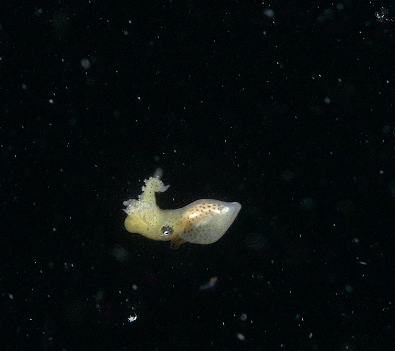
Thanks! we do get a lot of pigmy squid here, but there's also a strong possibility that this is a blue-ring octopus paralarva. It's a very tricky subject as most cephalopod paralavae haven't been ID'ed properly yet
-
In Japan, for a Mexico visit an individual would need to make a refundable cash deposit of roughly 50% of the value of the equipment for an ATA Carnet if they do not qualify for JCAA's guarantee scheme criteria 😅 The carnet itself isn't that bad - around €200 for €20,000 worth of equipment - but that would mean a €10,000 refundable deposit! I think Mexico must be one of the only countries in the world to tax personal diving and imaging equipment brought in by recreational diving tourists in this way. ¡Chingón!
-
Have you checked out this thread? https://waterpixels.net/forums/topic/2417-list-of-underwater-monitors/ I currently use the Weefine WED-5 Pro on an A7SIII - i don't dive on a reb but regularly do two hour+ shallow dives for macro videography. Depending on the brightness settings and how you use it (on all the time or not), I can confirm the WED-5 Pro lasts more than two hours. It's very bright and I usually have it on 30% to 50% display max here in sunny Okinawa. The first day testing it with the camera I did 2x two hour dives, leaving the monitor on, display at 30%. Monitor battery ran out 40 minutes into the second dive, so a runtime of 160 minutes at 30% . Monitor output was 1080p, on almost all the time, in 26°C water. This is pretty good for a single 21700 battery. Turning it off, when travelling for instance, would extend battery life further. hope this helps! cheers
-
ah I see thanks - Yes, cinetone is nice, I also like cine2. At the moment I've returned to HLG-3 as I've realized I could set the colour gamut to Rec.709 directly in camera, so no conversion needed, and it's nice. Otherwise I've narrowed it down to cine2, cinetone and HLG-3 or PP off for workeable non-log profiles. I also just got and NLE upgrade yesterday so can edit on FCPX12 or Resolve Studio, which broadens possibilites!
-
Thanks for the the update. Would you have a link to the post? Unfortunately Robert isn't on here (big Bobetc fan here), but feel free to link this thread on the BW group as well - the more talk there is the better! cheers
-
Thanks, I think I'll stay away. He's asking for roughly $150 USD, which is a bit much given the issue....
-
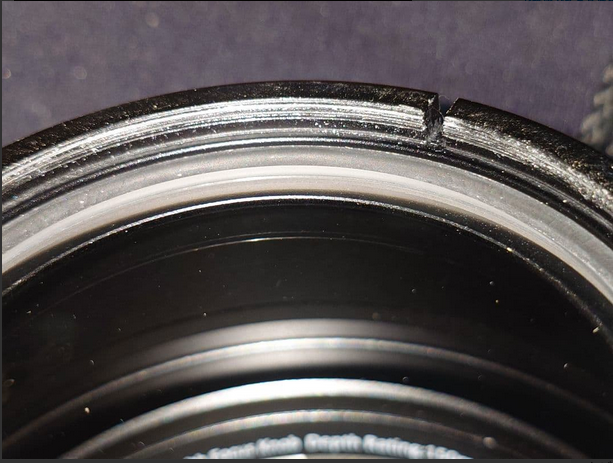
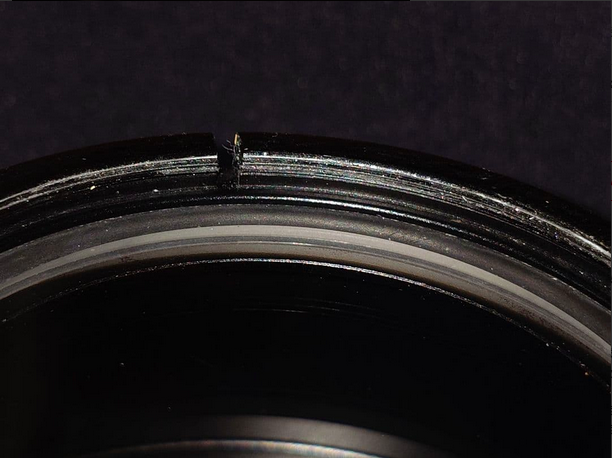
Yes - I was actually wondering if it might not be possible to rethread it with a spacer ring or filter mount. The issue is the vendor says nothing can be screwed on, and I'm not sure how much force he used when trying.
-
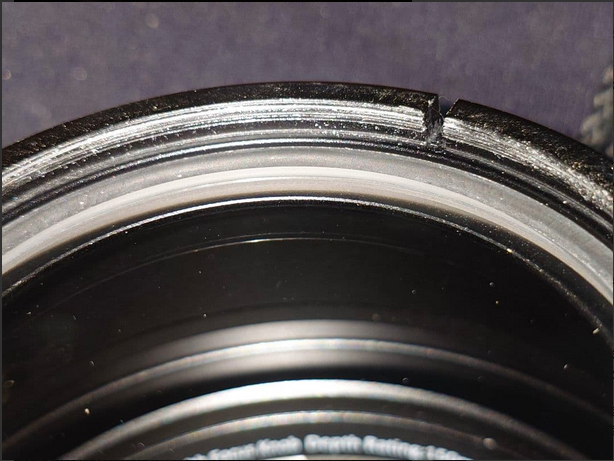
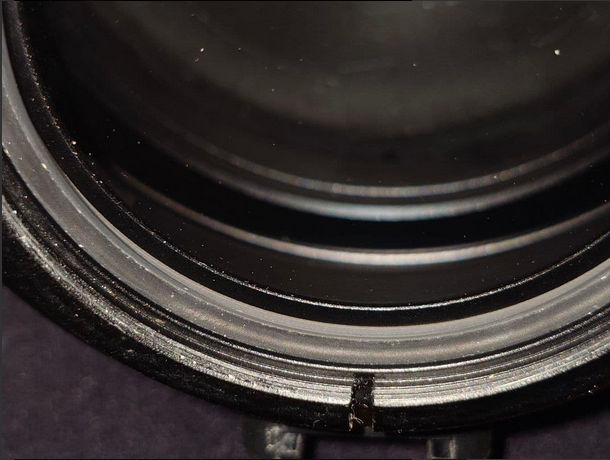
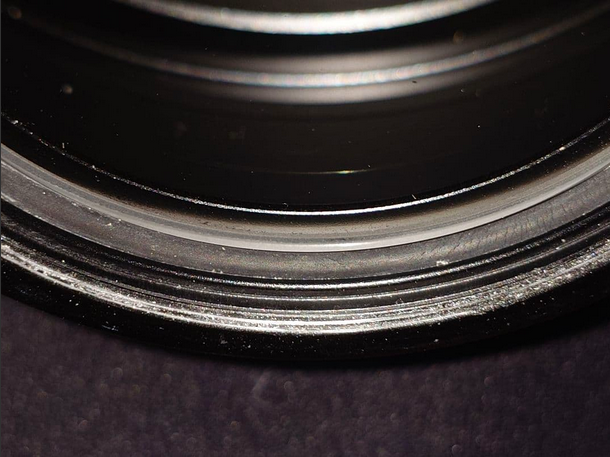
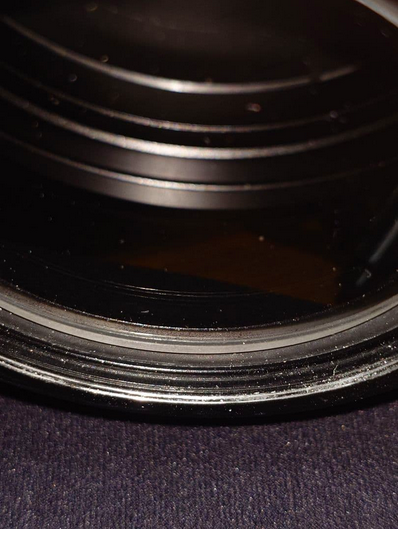
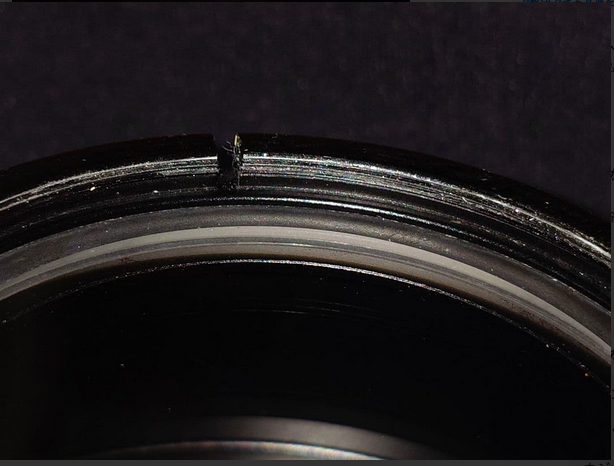
Hello all, I've come across a Nauticam flat port 45 with a damaged M67 thread - it doesn't look great, the thread seems quite crushed and mounting anything is not an option, which is a deal breaker. However I thought I'd ask for your opinion - since this is aluminium and quite soft, does it look like there might be an option to rethread it? The pictures are not the clearest, but all I have for now. thanks!
-
Unfortunately my recommendations are not up to date, but do look into the operators mentioned above Junk and Phinisi were 18 guests max for instance: https://thejunk.com/liveaboards/the-phinisi/ not sure how many guests on Big Blue's new Blue Dolphin, but they downsided IIRC https://www.bigbluedivingkhaolak.com/similan-liveaboard/ also check the Deep Andaman Queen https://www.deepandamanqueen.com/ and Smiling Seahorse https://www.thesmilingseahorse.com/
-
Really beautiful documentary, and a fascinating environment that I’d only ever heard about before. There are even some CFWA shots, like the gastropod at 12:40. Thanks for sharing!
-
I'm wondering if anyone has any updates on the info in this thread. I'm interested in cheap lights for a downline (bonfire / blackwater diving), but I keep stumbling on battery life and longevity, which are major weak points of these cheap lights. If you factor in buying good 3×21700 cells for each light, it does add up. The other issue is that they don't have constant output, so hanging them on a line would mean a constant drop in illumination over the 2 hours or so they're on. Realistically, for a pair of lights, I need 4,000 to 6,000 lumens per light, offering a decent illumination for 2 hours. I've looked into Leton Power lights (the "12,000-lumen" and "8,000-lumen" models), but they're still expensive for what they are. Rechargeable LED fishing lights are better value (but have no beam), although the ergonomics aren't great (no underwater switch, just a remote that has to be left on the surface).
-
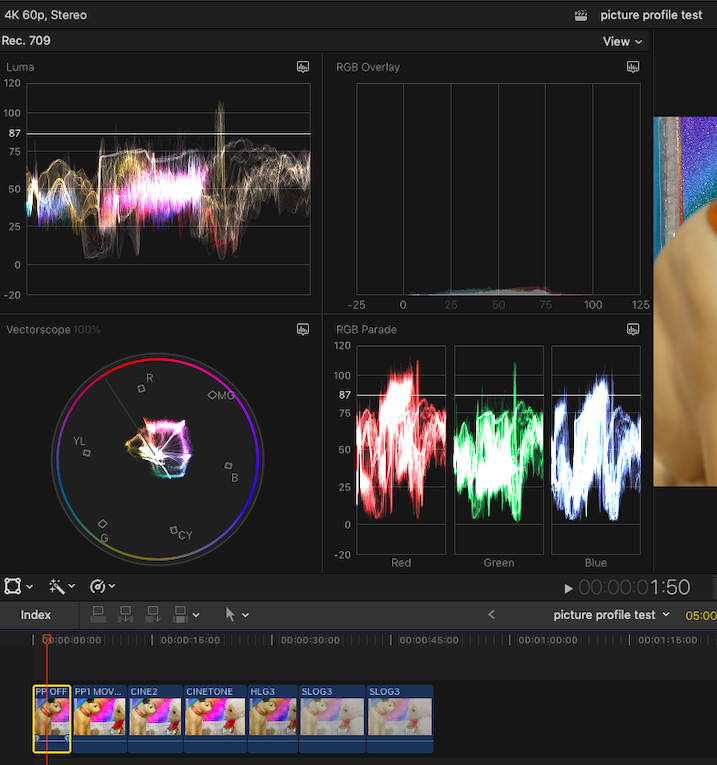
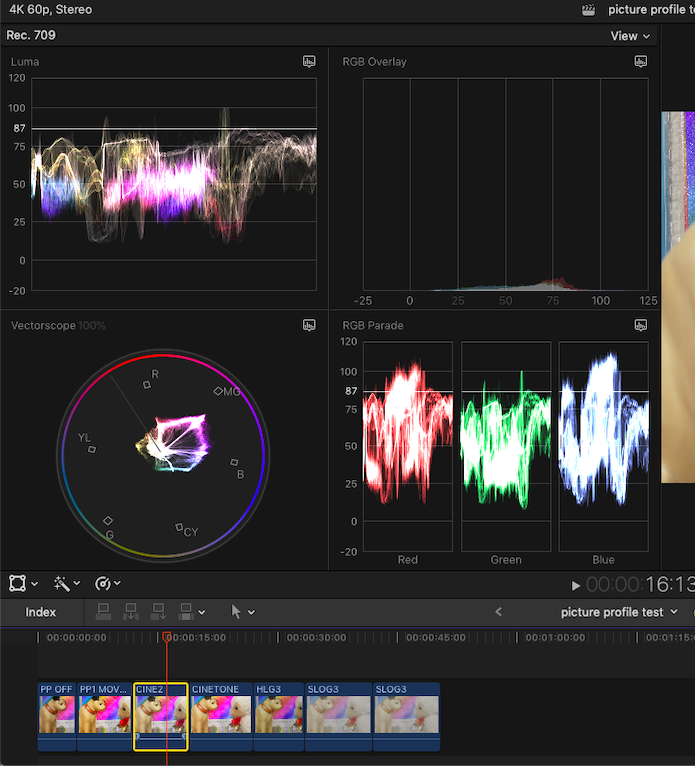
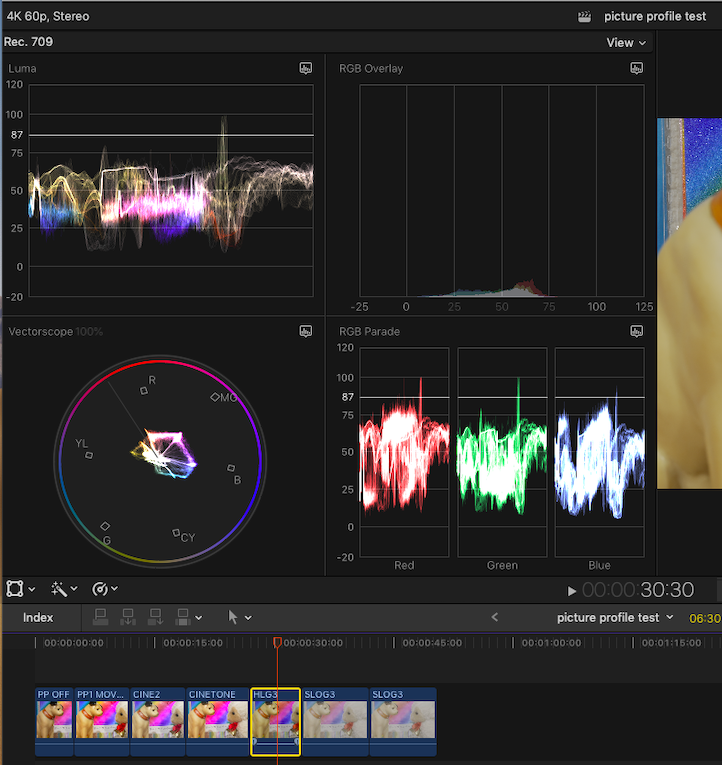
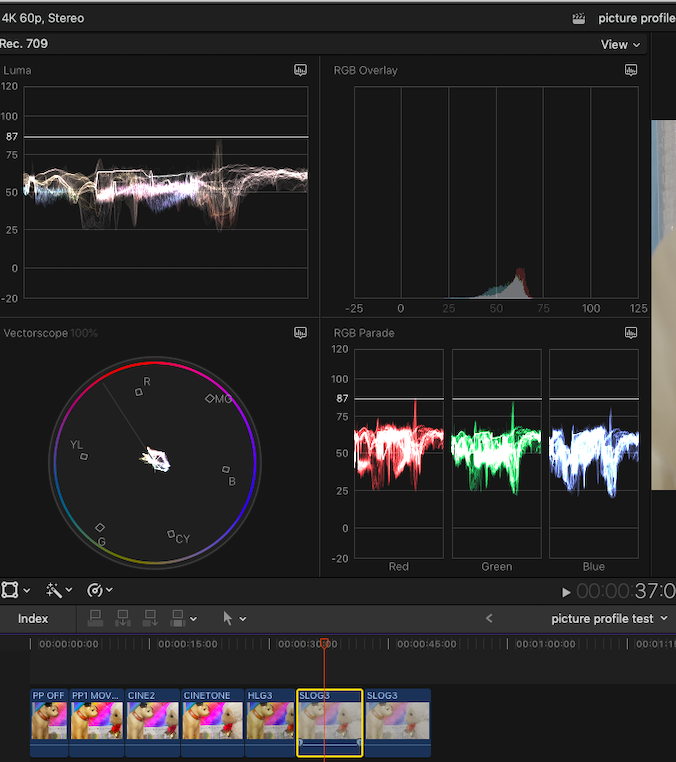
Thanks - not on the A7SIII as far as I can see. I ran some tests yesterday, taking a static clip of colourful sujects, same lighting, exposure. Graded results are very similar for non log profiles, but I would say most promising were either no picture profile (darker image to begin with, which might be linked to how ISO are handled?), and Cine2. All and all, I could get very similar results in all profiles, but HLG / SLOG3 required the most extreme exposure and saturation corrections, and the conversion to 709 is problematic on my software. Hard to tell Look at the scopes narrows it down to: - PP off (great) - Cine 2 (flatter, more latitude for grading) HLG3 is also very promising, being a hybrid log without the ISO or ETTR exposure constraints of S-LOG3, but not compatible with my current NLE. The conversion to an 709 colorspace just doesn't work on my version of FCPX Worth coming back to when I get a new computer and can run more recent, up to date software. Ungraded picture profile off: Ungraded Cine 2: Ungraded, uncoverted HLG3: Ungraded, unconverted SLOG-3
-
Thanks a lot James. I’m familiar with your work on the A7S III (the Lembeh WB-at-depth test is gorgeous and really impressive!) and I’m happy to hear you’re still using this camera after all these years. I understand what you mean about the higher base ISO, and I really don’t think shooting Log is worth it for what I do (which doesn’t involve sending footage to a third party for grading or matching multiple cameras), so I’ll follow your advice. In my experience, artificial-light-dominant footage just doesn’t require as much adjustment, so getting it right in camera does seem like the best approach in this case. Just to be clear, when you say "standard picture profile" do you mean turning Picture Profiles Off (rather than using PP1 / Movie), or are you referring to PP1 (movie standard)? It's interesting that you mention doing a custom white balance to the lights, as that was exactly what I was planning to try today. I use three main lights (Kraken Hydras and an MW4300), and on my previous camera I settled on a fixed 4700 K white balance to better integrate the warmer MW4300. I was thinking of setting up a custom white balance on the Sony instead for better accuracy. Edit- I just did the custom balance test, and result is surpringly close to what I had: with the Hydras + MW4300 in spot mode, 4900K and M2, and with the Hydras + MW4300 in wide mode, 4700K and M2.
-
Hello all I've begun my transition to Sony with the A7SIII, and I'm curious as to what people using this camera or other Sony cameras ended up using when it comes to video shooting profiles. I've been digging into the archives, and there was a lot of excitement back in the day about S-Log3, but I shoot mostly macro and blackwater-type video, so it's either artificial-light dominant or fully artificial light (BW). I'm not convinced shooting in log will add much other than the hassle of handling ETTR exposure. I plan on keeping S-Log for ambient light or mixed lighting (ie wider shots), which will come one day when I'll have a wide lens, a boat trip planned etc. Not for now anyway. I finally got the A7SIII in the water yesterday for two test dives and shot in HLG3. Hybrid log seemed like a good compromise for grading: excllent dynamic range, but without LOG's exposure/ ISO issues. However, I'm not impressed by how it behaves in post. I'm on FCPX (no, I can't run DaVinci due to a big fat hardware issue - I need a computer update and don't have the cash for one at the moment), and the HDR-to-SDR 709 conversion is underwhelming. Dynamic range is certainly there (wow), but other than that, there is still quite a lot of work needed after the conversion. The image is still pretty much flat (not much changes), which could be due to Final Cut, but who knows. Other than trying to recover clipped highlights, I might not need as much DR. I don't really lift blacks and it's heresy for BW. Colours need a lot of saturation lifting, which is great for precision, but then again I could start with something of a less flat-base to grade with. Long story short, I can make HLG3 work, sure, but the question is: should I? This first test has made me wonder if I should shoot in standard picture profiles instead. I've read recommendations for Cine2 and Cine4, asked AI to search for published material, but it ended up hallucinating verbose pseudo-technical garbage that went nowhere, as usual with LLMs... I'm really curious as to what actual humans out there are actually using in this situation. Actual hands-on experience. I understand artificial light / macro / BW video is not the most common shooting scenario, but I'm really happy to hear what people have used, are using, or would use in such a situation. On my previous camera, the Lumix LX10, I was shooting in Cine-D with flatter settings, which worked fine (of course there were no log options, which narrowed it down quite a bit ˆˆ) Thanks!
-
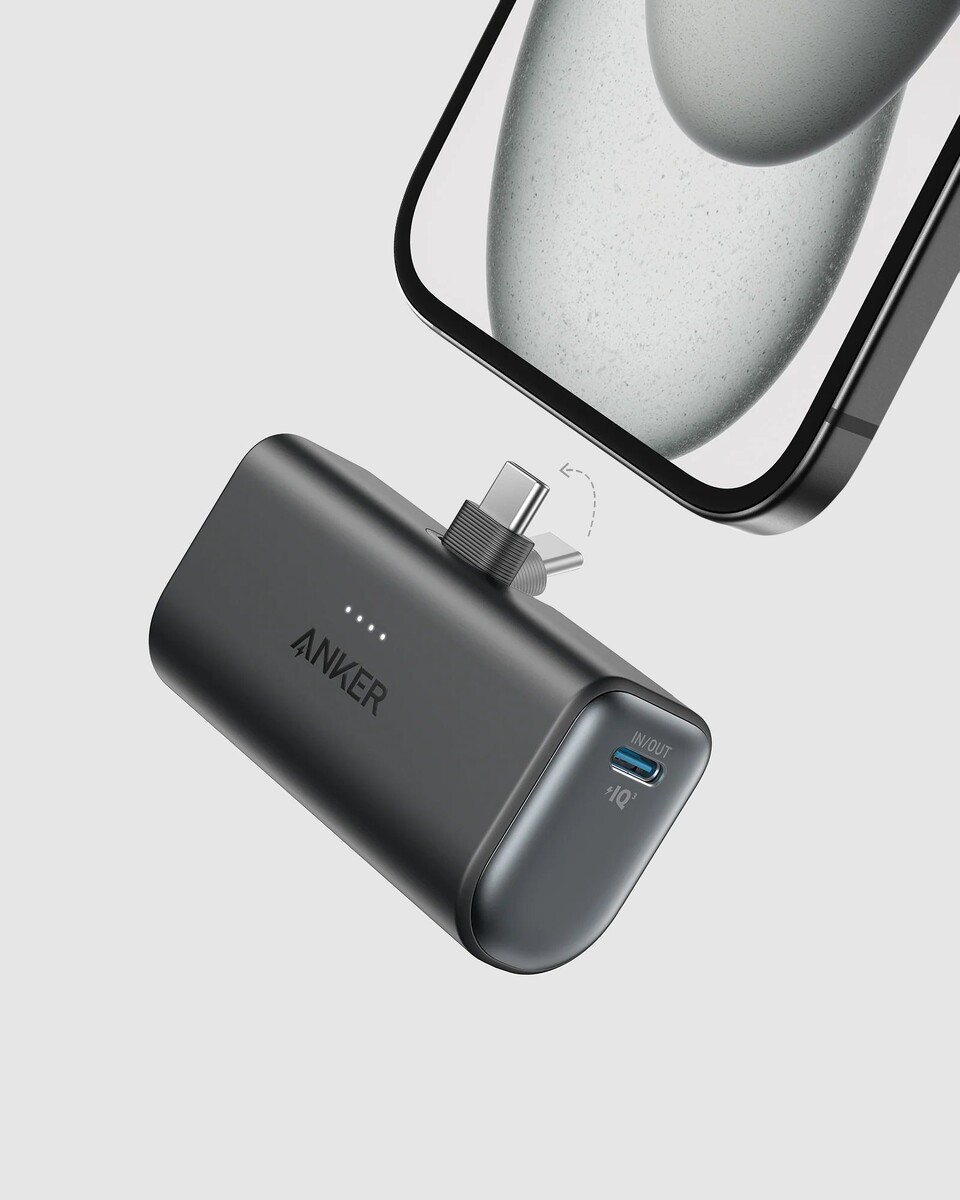
Yes - not sure how feasible it would be given space limitations. The power bank battery has a round, body-integrated push button on the opposite side: I'm also very interested in this here: https://thepihut.com/products/power-bank-keepalive-usb-c Instructions do say that it shouldn't be used with PD powerbanks, but not sure what the risks are with the Anker Nano's power delivery. This is beyond my limited understanding of electronics unfortunately. On of the other advantages of the systems is that I can just switch powerbanks - it's much easier to remove the powerbank than to remove the camera to access batteries, especially with a 100mm lens with focus gear.
-
First test in water today on the A7SIII with the Anker Nano powerbank - I opened the housing and turned on the powerbank 20 minutes before the dive. The first dive was 120 minutes, and the powerbank powered the camera for 90 minutes, after which it turned off (empty?) and the battery went to camera battery mode. I had 80% camera battery power left at the end of the dive. Now turning off the camera when not in use, I went for a second dive, 110 minutes, and camera battery was at 38% at the end of the second dive. This gives me an estimated runtime of 225 minutes for a new Sony NP-FZ100 battery, to which the Anker powerbank adds roughly 90 minutes, so a total of roughly 315 minutes (5 hours 15 minutes), being conservative (turning off the camera) when on the camera battery. I was shooting 4K video, 60fps to 120fps
-
Bienvenue à bord Hugo ! Si ton application fonctionne un peu mieux que google images, que j'essaye d'utiliser régulièrement pour des espèce au stade larvaire ou juvénile, ça sera très utile 😁
-
Thanks - an external battery is not an option unfortunately. On a positive note, I think the problem is partially solved. Looking into my camera settings, I had Auto Power Off set to 5 minutes (which could explain the Anker power bank's 5-minute cut-off time). I set it to 30 minutes and tested it. The camera battery was at 75%, but the power bank has now been active for over 90 minutes and shows no sign of turning off. The screen is off, so I don't know if the battery has charged to 100%, but I see the power bank's LED indicators draining, so I imagine the camera is being powered by the power bank. Exciting, as 1.5 hours is perfectly fine, even though it does mean leaving the camera on in the housing. The ideal situation would be for the power bank to turn on when the camera is turned on, but I don't think that's possible.
-
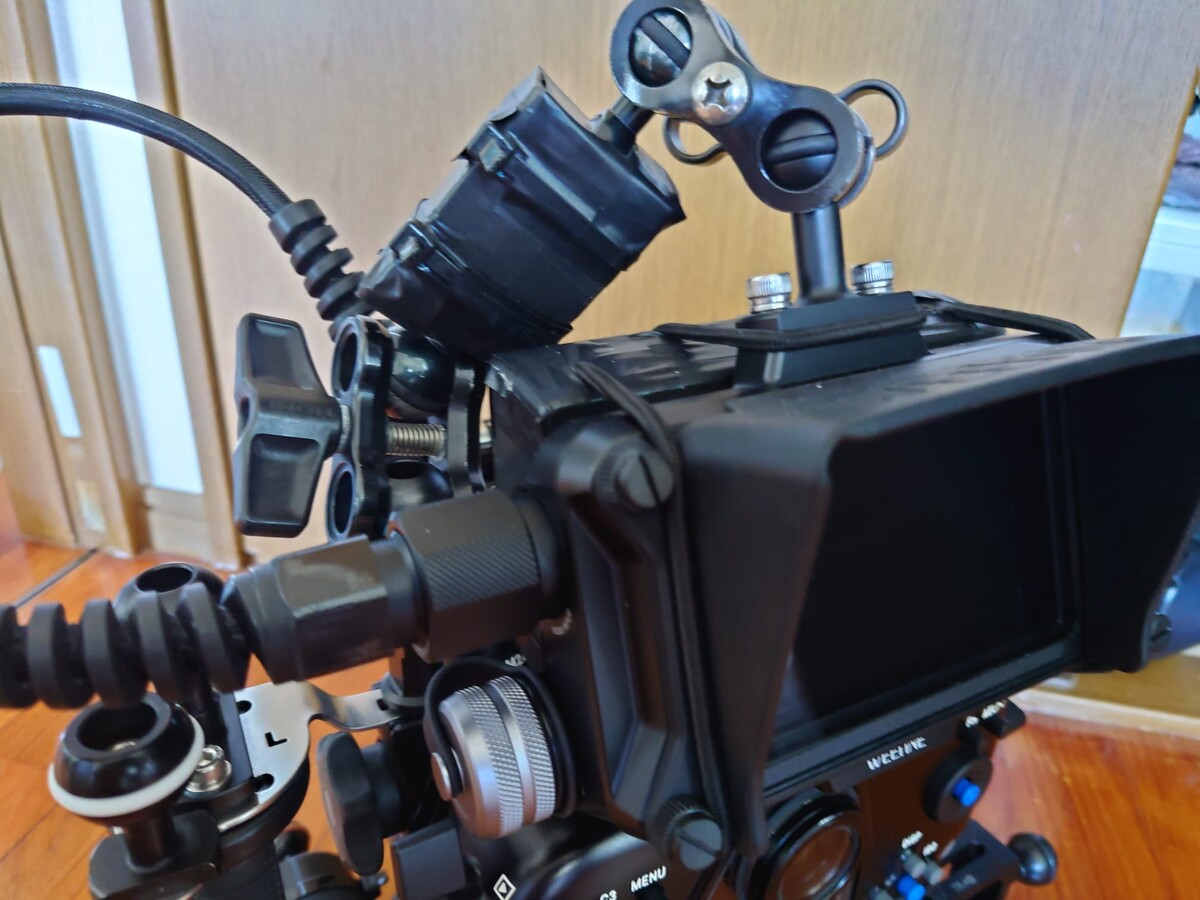
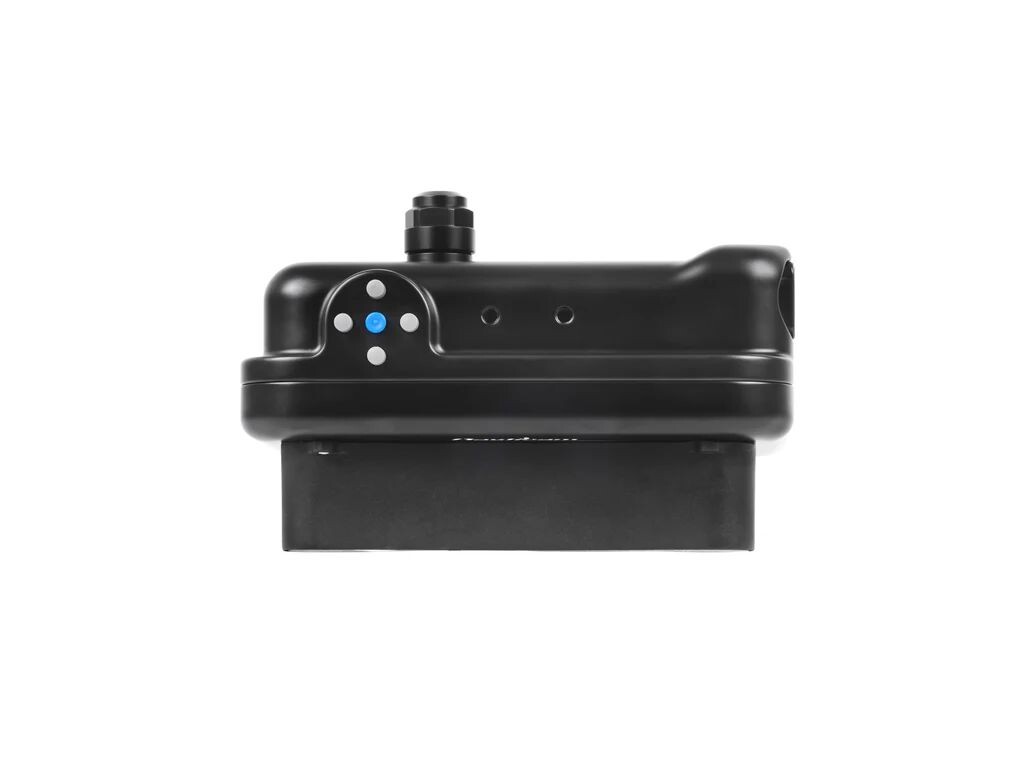
Hi Your monitor has twin mounting options on both the top and bottom of the monitor, meaning you can just mount a standard ball mount (with dual screws) top or bottom, and then just use a long clamp or a small arm (5") to position it wherever you want. I have a Weefine 5-HD pro with a dual mount point that I use with an NA-A1 housing (standard camera shape). I mounted the ball mount on top, and use a 5" arm, it's very flexible.
-
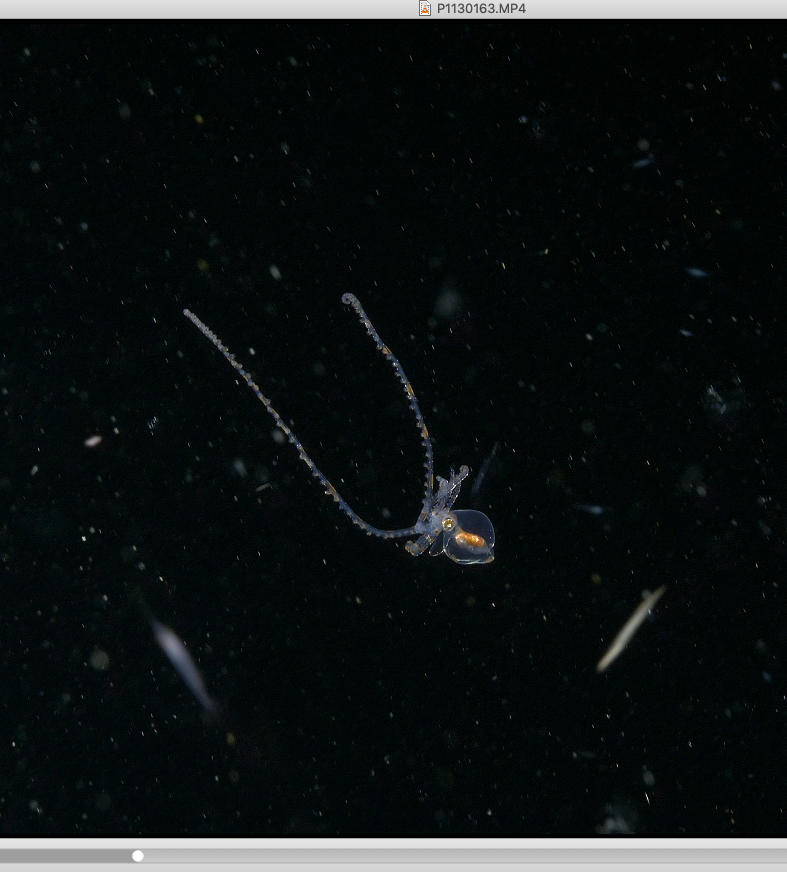
On a related note, I've tried the MFO1 on my Lumix LX10 compact. I bought the lens for use the A7SIII / 100mm macro, but since I haven't hopped onto the new rig yet, I thought I'd give it a spin on the LX10. The test was on a bonfire dive here in Okinawa last night. My first in-water impressions were that it really helped with focusing. I shoot video in MF with focus peaking, acquiring focus with back-button focus. The number of peaking points was often almost double what I usually have (which I imagine is linked to an increase in contrast), and focus acquisition felt snappier and easier. I shot the whole 95-minute dive with it, shooting 4K video from a 36 mm equivalent to 72 mm, usually in the 50 to 60 mm range. I just checked the footage, and those impressions are confirmed. Image quality (contrast, sharpness, colours) is improved a lot compared to the naked flat port, much more than I had expected. Focusing is indeed faster too. I have some sequences of fast-moving larval fish where manual autofocus acquisition/reacquisition just snaps like it never has on the LX10. It feels like an autofocus upgrade on a camera where AF performance is dismal. Really impressed, and kind of regretting that I didn't get this months ago instead of in the last week of using the LX10 rig! It wasn't designed for this, but yes, the MFO1 does work very well on a 1-inch sensor compact! screen capture of a raw clip from last night, larval long-arm octopus (Lumix LX10 + MFO1, 4K 30fps)
-
For what it’s worth, I just did some quick and dirty land tests with the Sony 100mm macro and the MFO1 (Sony A7SIII, uncropped 4K video mode, not stills). These are rough measurements taken from the front element of the glass to the subject. 100mm minimum focus distance without MFO1: 80 mm 100mm minimum focus distance with MFO1: 40 mm 100mm maximum focus distance without MFO1: infinity 100mm maximum focus distance with MFO1: 230 mm (quite restrictive) AF acquisition does seem slightly snappier within the MFO1's 40–230 mm focus range. I need to use it properly to confirm, but I'd just note that in my tracking video AF tests on the A7SIII with the 100mm, the lens performs better without the focus limiter (snappier) - but this carries the risk of having a much longer range to hunt on. By restricting the range, the MFO1 seems to act like an optical limiter, restricting the AF's hunting range, which on first impressions means it makes it more practical to use the 100mm without lens limiter on (and you can always flip it off for longer shots beyond the MFO1 range).
-
Really not sure how it is now, with the current political situation and conflict. In the past you you to either sail or drive up to Ranong (easy drive up the highway from Khao Lak, past Takua Pa) hand in your passport for immigration processing, hop on the boat and off you go. Ranong was famous for local joints with super cheap beer, which helped kill time while waiting for the immigration process to be over. Diving-wise it can be great, but you can also get very low viz over at Black Rock, Burma Banks etc Some trips combine the Surin islands (Richelieu) with Myanmar. The maritime border is nearby, when you're at Richelieu Rock you actually see islands that belong to Myanmar just a little up north.
-
The one I use doesn't have a trickle down mode unfortunately, and it's the only one which fits in the housing. I ran a test this morning, plugging in the powerbank and turning on the camera but not using it. Powerbank stayed on for about 20 minutes charging the camera (which went into sleep mode) before shutting down. I first saw the battery LEDs were off but the camera charging LED was still on - and when I activated the camera it was still charging. However I came back 15 minutes later and the this time the camera charging LED was off, and the camera was running on normal camera battery, powerbank completely off. I didn't check levels but I'm guessing battery level had reached 100%, so nothing was happening and the powerbank shut off completely. I ran other tests, basically camera on or off it's impossible to get past the 15 minute mark. It will work fine while diving, it's just that I like to pull the vaccum early before diving, so this limits the application quite a bit. I'm really curious about the keep alive devices and might try one. Ideally I would need a battery pack which only turns on as the camera is turned on and pulling energy, just not sure how practical this is.
-
No worries, glad it helps. And yes, it slipped my mind, but Smiling Seahorse is definitely photo-centric! They're also spearheading blackwater diving in the area and do trips up to Myanmar. The Deep Andaman Queen is also a great operator. Steve has been doing this for a long time in the area and is really good (and they also go all the way to Myanmar on some longer trips) These are both great recommendations. I'm not familiar with Vela, however.