Everything posted by Klaus
-
One thing that fits in the context of not being able to get the shot you wanted - simulate a "snoot" that you didn't have when taking the shot. I've tried that manually a bit but the results were dismal. It looked extremely artificial and didn't come remotely close to the amazing pics we can find on waterpixels. Maybe your tool could be a step towards that goal? Basically taking your example of dramatic look to the extreme. The shadows cast by a single snooted strobe might be difficult to emulate, though.
-
The example pictures are nice, but something similiar could be done manually with fuzzed-out oval mask(s) & brightening, I think. The (AI?-) calculated depth mask may have advantages in more heterogeneous situations ("jagged" background etc.). I think it is more intuitive to apply and probably easier to use on a smartphone, so why not. Revolutionary? Doesn't look like that to me - but more intuitive is a good argument for it. It cannot replace a strobe at depth, though - when the red is gone from the raw file, only genAI could bring it back (and that may go too far for many).
-
Espresso, anyone? That's a clear case for caffè corretto. Lake Garda or wherever.
-
Even my E-PL5 uses some (simple) AI for face recognition. Subject tracking is for sure AI-supported in almost all cameras. But I don't think the intention was to exclude all AF-C images.
-
These rules seem practical and well balanced. You emphasize the intention (... substanitally altered ...) as the editing limit, rather than any specific tool or slider. 👍
-
Why not include a really tough category: No removal of ANY backscatter? Let's see who can place the strobes just right... This could be fun and perfectly honest. But at some point we have to acknowledge that we're no longer pulling the prints wet out of the developer. So as a general rule, I think it's too extreme.
-
The contest can (and should, probably) of course be starting next year or even later, no need to rush this. As for the rules - let's make that a community thing as well. "Excessive editing" is a purely subjective conclusion. This needs to be defined much more precisely to be a rule (which I find difficult). And "no AI" would downright exclude a categroy for smartphones / actioncams. Not sure we should go that way - but if that's what the community wants, these steps are easily removed from a standard workflow with a not too recent camera model. To me, this is not about perhaps winning a competitive event (there are enough contests out there for that) but to participate in a kind of fund-raiser within our small community. On this forum, we're discussing at length about equipment that costs thousands - so we should be able to cough up a few bucks from time to time to keep the site alive. "Featuring" someone's image(s) on the banner for money was not my intention, rather the notion that if we want to benefit from the site, we need to contribute as well. Just include an invitation that one should consider chipping in a small donation once in a while when uploading images for display. It seems that we're not paying with our privacy here and that's a fantastic thing!
-
I think that a member contest is a nice idea and paying a little bit per image also limits the work of the judges. I assume they will donate their time for this, so one shouldn't burden them with the entire content of the hard-drive anyways. Suggestion for a category: Freshwater - streams, lakes, quarries - anything close to home for the land-locked waterpixelers. I just discovered the "donation" item in the store. Why don't we say that whenever we upload an image for the member showcase banner (the one running on the main page) it's an honor to donate a little bit to the site for the display?
-
Since this is deviating even more from the sensor format - here's today's counters from the Forums page on Waterpixels: Photography Gear and Technique has 8.7 k posts. Video Gear and Technique has 1.1 k posts. Lights, Strobe, and Lightning Technique has 3.3 k posts. I consider these categories as gear-related. Together slightly more than 13 k posts. Photo/Video Showcase and Critique has 1.5 k posts. Shooting Technique, Workflow and Editing has 607 posts. One may consider these as a bit more "artsy". Together about 2.1 k posts. So, it's a clear yes, we are gear-heads. Yes, this is what you can do when you're dry: Shopping - or at least think about it, until you face your bank account. But >2k posts on more artistic topics is not too bad either. Plus there's the really nice running banner of pics on the homepage, not included in the count-up. We do have composition, appreciation and even discussions about conservation going on on the site as well.
-
🧐... we also need to provide a reason for the companies to sponsor our site! Such a discussion is, (un)fortunatly, only a couple of clicks away from the shopping basket. (and that is part of the fun)
-
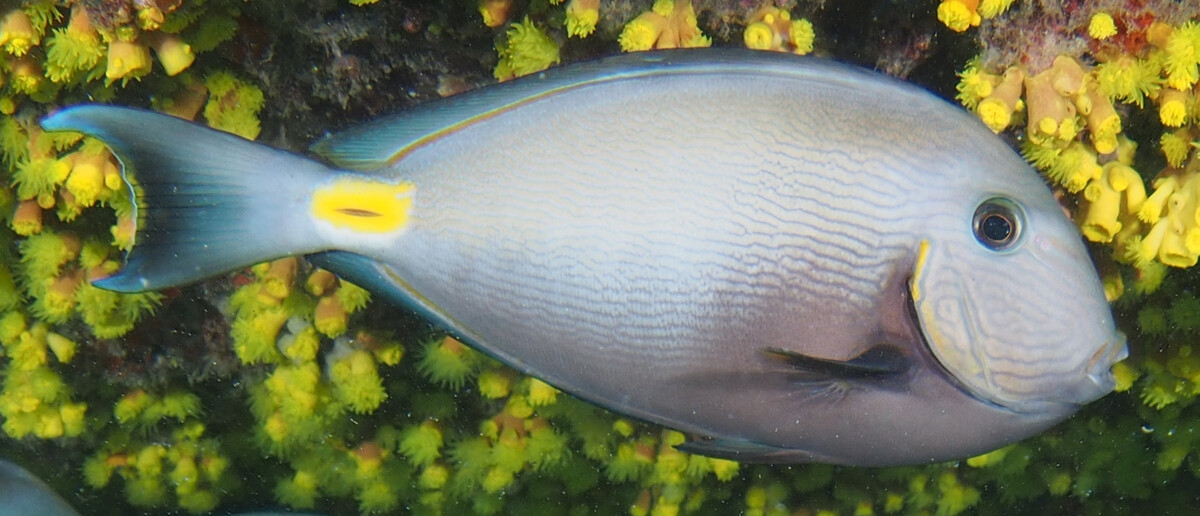
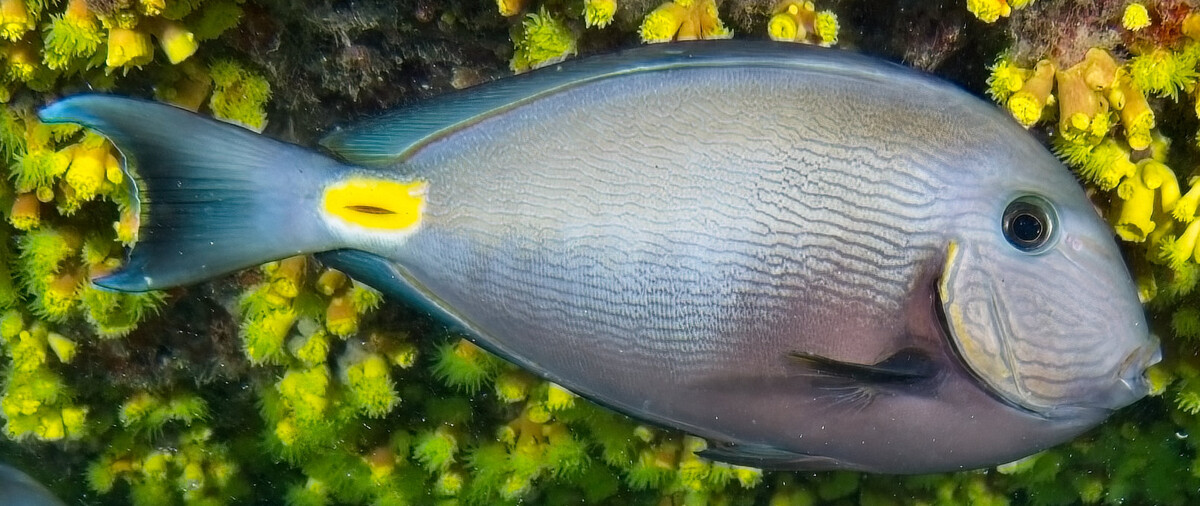
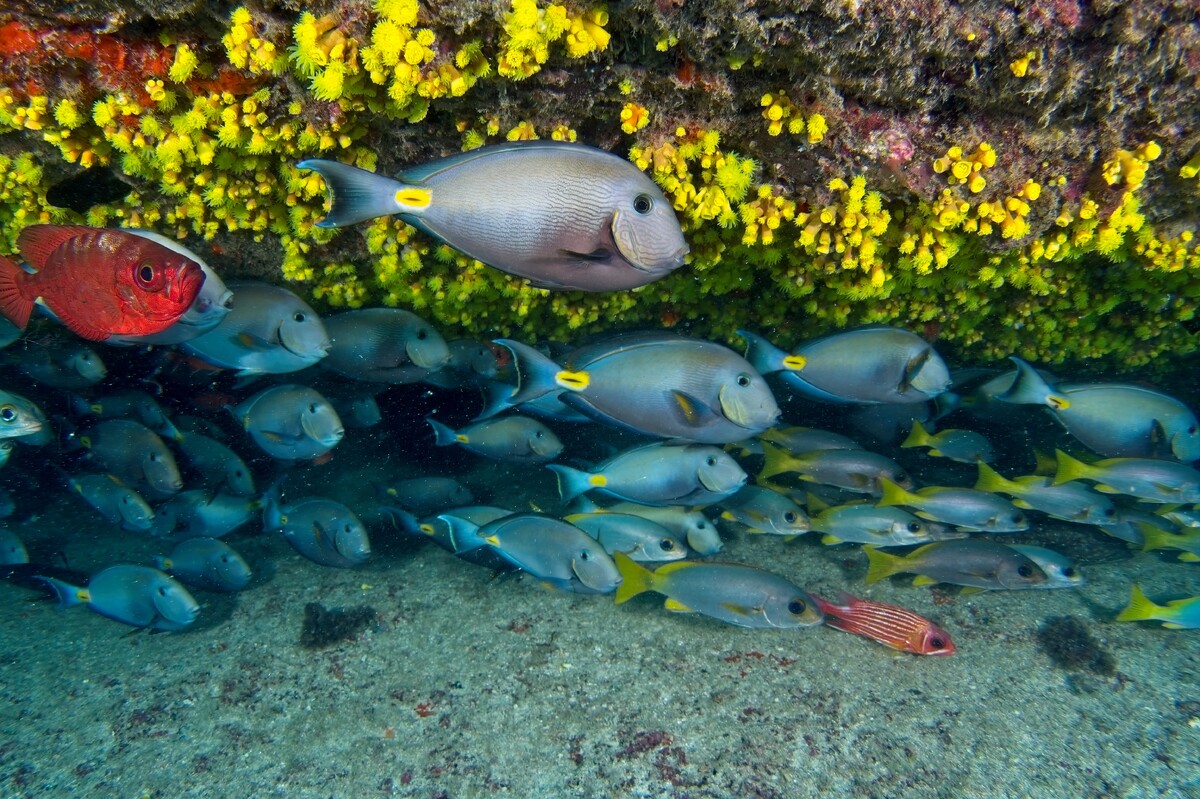
Dear Fred, another thing you may want to consider for your grant money is a computer / workstation for image processing. I don't know if you are already well served for that at your institute, but image processing can become part of your routine - if you decide that it's appropriate. Using AI to improve image quality is certainly a difficult thing for scientific purposes. The borders of what's acceptable and not are blurry and also depend on the field of research (i.e. whether and how the community accepts these technologies). For cell biology, this is starting to become applied to improve signal/noise of e.g. fluorescence images, in particular before automated image analysis in "-omics" projects. But one has to be very vigilant that the "improvement" does not "iron out" true information or, in your case, introduce artifacts that you may count wrongly as a fish scale. Let your own judgment and gut feeling guide you as to how far YOU find this acceptable. Now, that said, AI processing can make counting scales a lot easier for you. I process my images with a program called ON1 photo raw, the also offer a Photoshop / Lightroom plugin for just the de-noising and sharpening. I wrote a tutorial about it on this site some time ago, certainly the tools from other software companies will be comparable. What can this do for you? Here's an out-of-camera jpg from last summer (Olympus E-PL5, 14-42 RII kit Zoom and Inon UWL-100 wide-lens without the dome): And here is the same image after processing: There's a bit more going on than just the sharpening / de-noising, but I hope the difference is visible even after the website has down-sampled this a bit more. The second picture will make it much easier to count the scales, but if you squint you can see them all in the camera-jpg as well. ON1 offer a free 30-day trial with full functionality (google on1 photo raw). You can try it out on photos from your current setup, see what this can do for you. It will work on both jpg and raw but obviously raw gives better results. If you try this out, you will see that you need a reasonable graphics card for your professional needs - otherwise it is way too slow. The GPU's are viciously expensive these days, so count ~3000 € or above for that workstation. This is a crop from the 16 Mpx M43rd sensor, the E-PL5 has the same sensor as the original Olympus E-M5 from 2012. Here's the full image (processed), limited artistic value but this is a technical discussion.
-
Sounds like you found your partner! The best results will come from equipment that you are familiar with - whether it’s is new or top-of-the-line does not matter if you can’t find the button for making a particular adjustment. I shoot a 12 year old m43 and it’s not the camera that limits my shots… As I mentioned, your « partner ». 😉 we keep those around for a while…
-
@Klaus For the strobe : my INON D200 (I also have 2 S2000) have a descent recycling time (1,5 sec). 20 GN is not a lot but it is usually enough for me. I read that popular strobes like Retra Pro Max II does not recycle faster. But I should investigate other brands. It is true that recycling time is limiting for me. This is why I have considered buying a powerful video light (like weefine solar pro) and test using burst mode photography, but fish seem to be very sensitive to such lights, so no sure this is a good option. Prehaps investigating a Backscatter Hybrid Flash HF-1 ? Sorry, my wording was imprecise. If you had a more powerful strobe, then it will not use all the capacity for the flash and you can get another shot very soon after that. The recycling could happen in the background, so to speak. I should thus have written … a stronger strobe with fast recycling … or so. And, as said before, in your situation you certainly want to rely on automatic TTL strobe exposure. The HF1 could be a good choice but I don’t own this strobe.
-
It's just a bit difficult to change a tele-converter during the dive when the 80 cm fish shows up... Scientific work should not be limited by equipment, I agree, but coming from a G5 with CMC2 the larger kits may be challenging to handle at first. I suppose that for macro / flat port setups all of the sensor options (MFT to FF) will end up not all that different in size. Probably it's when you use a dome port that the bulk for a FF system increases significantly? Let's not forget that the D200 strobe might be begging for an upgrade, too. Something that recycles really fast.
-
Whether the cropping is a benefit depends on how shy the fish are. You can count the scales the better the closer you are when the photo is taken. Fish from 1 cm to 80 cm seems to be a classic dilemma (and I have nothing to add to the suggestions). But it will always be better if you don't need to crop because you were close enough to fill the frame.
-
Noise & dynamic range: Maybe one should stop discussing sensor sizes and instead refer to pixel sizes? After all, you can buy full-frame cameras from 24 Mpx all the way up to 61 Mpx. The larger a pixel is, the more light it can collect and as far as I understand this translates to higher dynamic range and better signal/noise ratios. Considering that the full-frame sensor has a 3.8-fold larger surface than a M43 sensor, the pixel size of a 20 Mpx M43 sensor should correspond to a hypothetical 77 Mpx full-frame sensor. If those two sensors were built exactly alike, then their signal/noise and dynamic range should be the same (per pixel). I know there are other things to consider, but let's keep it simple. In that comparison, the 61 Mpx FF camera is thus not soooo different from a 20 Mpx MFT. Sure, you can add up neighboring pixels from the 61 Mpx shot and thereby down-sample to 20 Mpx. This will improve singal/noise, but then you lose the argument that the 61 Mpx allows for much more cropping. (Interesting to follow where this thread has gone from the original post. Special thanks for the history and archeology info, VERY much looking forward to more posts on this and especially to the eventual opening of the museum! Also the practical info is wise - you can pay a lot of extra luggage for the price of a new kit, I agree.)
-
There clearly are ways to reduce noise and INCREASE sharpness at the same time during post-processing. Yes, this is AI - at its best. And these algorithms are likely driving much of the improved signal/noise ratio in the new camera bodies' jpg engines (no matter which sensor format).
-
Scientific work and museum exhibits are great projects, but not many of us have the luck to participate in that kind of event. Great stuff! As for the original question - may I ask what limits your photo archive most, image quality or diving opportunity? An honest answer may tell you where the money should go. And, since we shouldn’t bite the hands of the equipment dealers that feed this site: May I throw in that perhaps a better strobe or snoot might benefit your pictures more than a bigger sensor? I confess to GAS: I also feel better when traveling with something new to something blue …
-
I’m not sure if Nauticam still makes the special port that allowed to flip the macro mode of the lens on and off again. It was the only one offering that functionality. Without that particular port, you have to decide whether to dive general-purpose (12 and 50 mm electronic zoom positions) or whether to switch it into macro before closing the housing and use it as a dedicated 43 mm macro lens that will do up to 1:3 . A close-up lens can be added in both scenarios, but it will result in higher overall magnification when combined with the macro mode. Or, in other terms, you need a stronger diopter if you use it in the normal mode. I cannot currently test which option gives better image quality under water, but the macro mode of this lens has a somewhat better reputation than the 50 mm zoom position. And the 12 mm position may result in vignetting depending on how narrow the port glass is - the Olympus ports from that time were really wide. There are dome ports for this lens, but then you can’t add a diopter. So, unless you can dive with the vintage Nauticam port, there probably are better all-rounder options than this lens today. I think the 12-50 can be used with any setup designed for the 60 mm when it is switched to macro mode. Essentially, an affordable and perhaps faster focusing alternative to the Lumix 45 mm (but consider the diopter as well). It will not focus to infinity, just like when you mount the MFO3.
-
This is a perfectly valid point of view (= no AI whatsoever) and I certainly understand anyone who chooses this approach. I have always used technology to alter my pictures according to what I want to achieve. Red filters for dramatic skies on b/w film, polarizing filter for crystal-clear water on my Ektachrome slides, shading and burning when making prints in the darkroom … and the non-AI part of our image processing programs have a slew of sliders that can do all this and more. I see no harm in using an AI-tool to remove noise and improve sharpness/contrast. This does not alter the composition, it “only” makes the image look like I had a better camera and lens when I released the shutter. I think this is a much less invasive step than e.g. manually “stamping” away unsightly backscatter. I also have no problems declaring that I used the tool should that be asked for: I simply spent money on a software tool, rather than excellent & heavy glass. The results are very similar. Using AI to alter the composition, like removing objects or inserting a beautiful sky, is a very different thing. I am not ready for that kind of manipulation, even though I used the red filter back in the aRgentic days and of course I remove backscatter. I am also a big supporter of the EU rule that fully AI generated images now need to be marked. I have not bothered to find out whether a sky-swap falls into that category as well, but the touch-up I am doing certainly doesn’t (but no problem if it did). Most of the latest-generation camera bodies will have some sprinkle of AI in their jpg engines and our smartphones a lot more. It may become difficult to fully escape from AI at some point, but that remains nonetheless a valid goal. There is no good or bad in all of this, just personal preference.
-
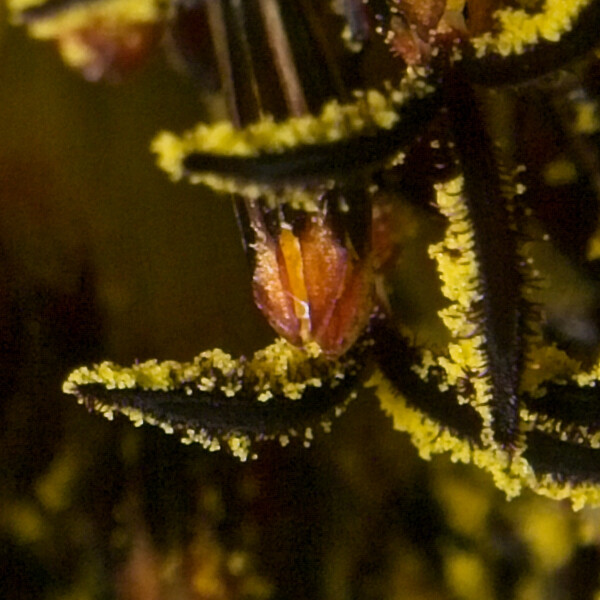
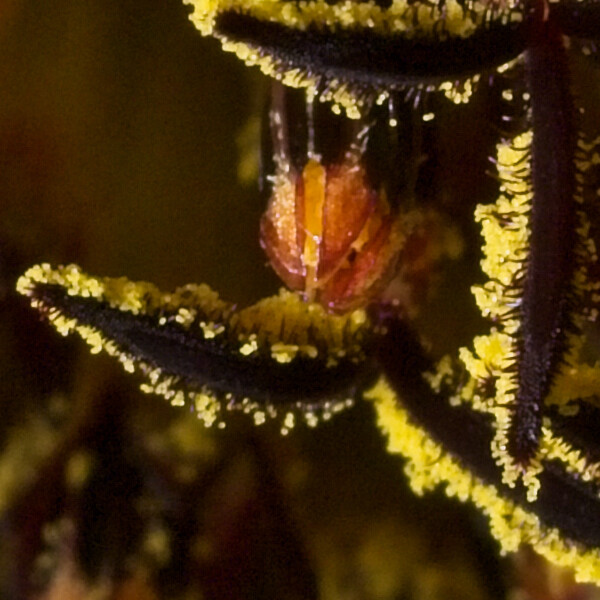
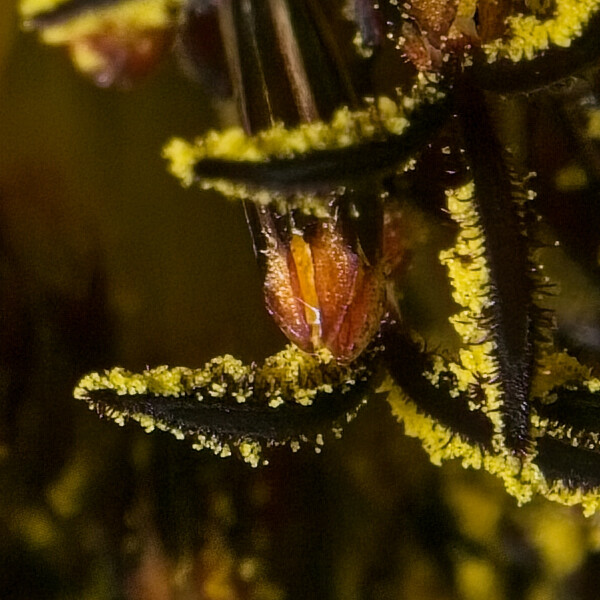
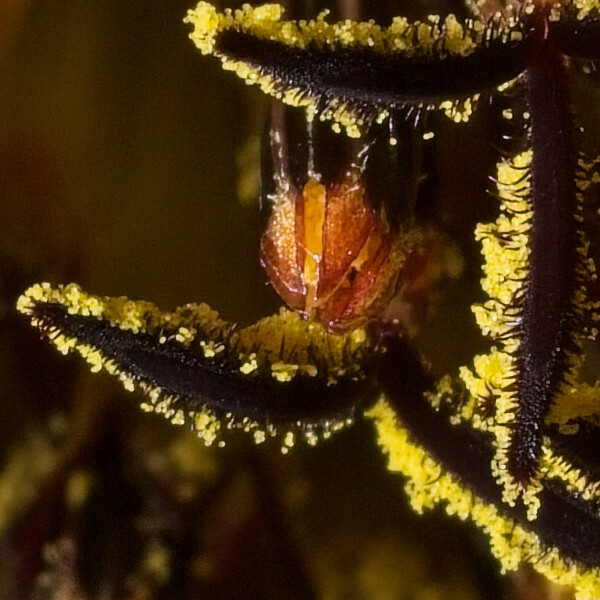
I’ve toyed around with an Olympus 12-50 mm EZ lens today. I got this together with an OMD-EM5 (the original one) for a really good price. I love the EM5 but had not given the 12-50 much attention. The lens has been discussed a lot when it came out in 2012, also for UW use, and I suppose pretty much everything has been said and posted about it. It’s a slow, decent but not brilliant lens with a moderate macro mode at 43 mm focal length. Some of the users here might have it lying in a drawer, collecting dust. So why do it over? Something has changed since 2012, and that is we now have AI-powered image touch-up possibilities. My approach is to use an algorithm that promise to recover unsharp shots (a myth) at a low intensity setting to improve the IQ of modest kit lenses. I explained this before in more detail on this site, many companies offer tools like that. Let’s see what this can do for the macro-mode. The 43 mm focal length is interesting as it is not too far away from the 60mm + MFO3 combination that many here like for the flexibility and outstanding image quality. The M43 30 mm macro lenses are great for the somewhat larger things but a bit limited for high-magnification by short working distances. The 45 mm Panasonic (Goldilock's compromise?) was sometimes described as a bit slower focusing. I only have the Panasonic 30 mm for a direct comparison and it’s all in air (can’t dive this year). I took the shots (sunflower) at a kind of UW-reasonable setting – hand-held, ISO 200, f 10, 1/200 sec and light coming from a flashgun. I tried to do this at the minimal focusing distance of the 12-50 EZ macro, so should be 1:3’ish. These are 100% crops from close to the center, a bit of "classic" noise-reducion & sharpening applied. 12-50 EZ in macro mode: Pana 30mm with a roughly similar field of view: The Panasonic 30 mm has better IQ, I think, though the focus may be ever so slightly different (try to look at the stigma to the left). But the difference is not all that big in this center part. The f 10 probably limited the Panasonic 30 mm somewhat, but realistically that's what many of us will use for sufficient depth. Now how does this look after my ON1 touch-up? (same raw-files, 65% AI noise reduction, 23% detail, 15% AI sharpening) 12-50 EZ macro: Panasonic 30 mm: Conclusions: 1) BOTH lenses benefit from this treatment. The 12-50 gets better than the “native” Pana 30 mm but after touch-up the Pana still wins clearly. 2) While I insist that recovering blurry images with this tool doesn’t work, it looks like the procedure CAN extend the focal depth a bit. Won’t save a truly ruined shot, but can be pleasing – or not, if shallow depth of view is what one wants. The Bokeh definitely gets busier for things that are just out-of-focus. AF performance: In air, I found the Olympus 12-50 EZ (macro mode) to be slightly faster than the Panasonic 30 mm. Both lenses will hunt occasionally, but the 12-50 will only focus out to ~1.2 m in the macro mode. Maybe that makes a difference? I only have bodies with contrast-detection AF, the newer phase-decetion systems may give different results. But the two lenses are not far apart. If you think that this might be an interesting 43 mm macro option for you, look around in the local classifieds as this lens has been discontinued. Reasonable prices will be 100-120 € if you buy from a private seller or less if you're lucky. I would not spend more than that. The lens should fit in any port designed for the 60 mm macro (12-50 EZ is just 1 mm longer). Add a +5 diopter if you need higher magnification. I certainly don't expect this to reach the IQ of the 60mm + MFO3 combination (those two lenses bought new are about 10x the cost of a pre-owned 12-50). I can't compare but that would be against all common sense. Nontheless, I think the image quality is good enough out-of-camera for sharing on social media and it can be improved post-processing for larger prints.
-
You are right and that is what I could find on other posts about it here as well, sorry for doubling this. So « two lens options » are 60 mm +/- MFO3 but also 45 mm +/- diopter. The difference is that the 60 mm without wetlens gives a longer working distance than the 45 mm with a +5 diopter, right? Edit: With the pana 45 or 30 one actually doesn't need the diopter up to 1:1, it's only if I use the 12-50 in macro mode that I would need it for something approaching 1:1. It's all about the working distance one has for the high-mag shots. Think I finally got it.
-
I suppose that was Olympus’ intention and it follows the theme of kit-lens + wet diopter for general purpose dives. The question has been raised before on this thread more or less - why should an MFT shooter buy the MFO3 rather than one of the 45 or 30 mm macro lenses? Any of those are cheaper than the MFO3, so there must be another reason than simple mathematics of focal length. Is it AF speed? Correction of flat port optical issues? [edit: the 45 mm is about the same price as the MFO3 when bought new, sorry.] The 12-50 in its macro setting is perhaps another option, with its own set of compromises (which we should not discuss in this post, I think). For the record and based on a quick test in air: @50 mm with a +5 diopter is about the same field of view as the macro mode, add the same diopter to that and it gives about twice the magnification. So it does make a difference whether you switch it to macro before the dive.
-
I was toying around today (dry) with the Oly 12-50 EZ lens. Disappointed to find out that I can trigger the extreme zoom positions from a camera button but NOT the macro mode. Nauticam has a port for that, but none for the plastic housing I have. Why, Olympus…. ? But then… I wonder: If I manually push it into Macro mode and then place it in the housing, would it not be similar to the 60 mm + MFO3 combo discussed here? I know the image quality will not be the same, but in practical terms. On land the lens can focus out to something like 1.2 m in macro mode. And of course, the MFO 3 can be taken off for stronger macro, which would require a diopter with the 12-50. But considering the price… any opinions?
-
Interesting experience, thanks for sharing (and not re-iterating the curses). It would be nice to be able to program two focus positions into the camera, say on an Fn button or so, for a given lens. Then we could have it all- fix-focus for reef and CFWA plus AF if we want to. And the ability to switch rapidly and reliably between all this. Does that exist?