-
-
-
-
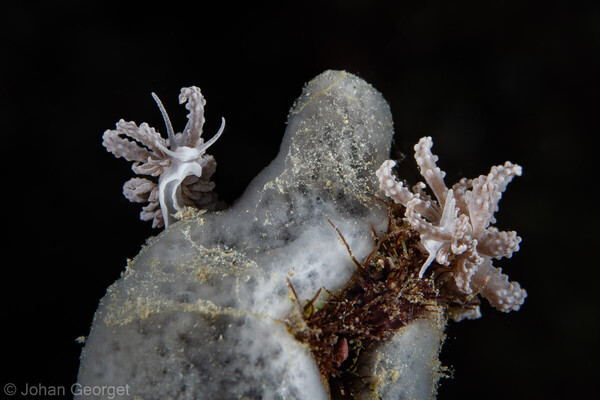
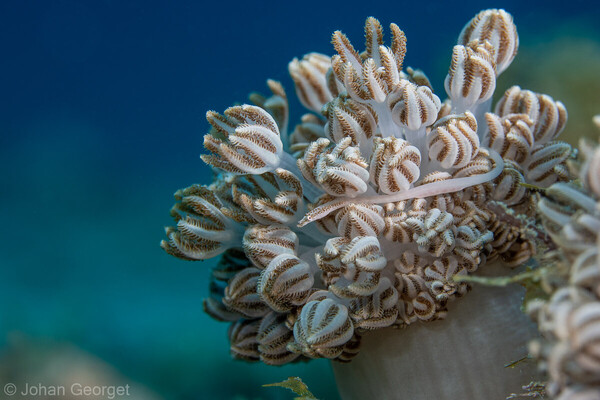
I use the FE PZ 16-35 (in a Seacam housing with the compact dome which is 170mm) and I'm satisfied with it. I bought it over the other 16-35s because it's light and compact, and doesn't need a zoom ring - I just control the zoom in/out with the left and down arrow buttons. This might be slower to operate than a zoom ring though. Image quality is good. I occasionally wish it had a longer reach, that it had an even lower min focus distance, and I don't use it much topside because it is slow, but we can't have it all! I'd buy it again. 1/125 f/8 iso 1000 16mm 1/125 f/10 iso 500 16mm close focus 1/125 f/8 iso 320 19mm close(ish) focus 1/100 f/13 iso 500 26.5mm closest focus I could get to on this yellow-tipped phyllodesmium. All uncropped


-
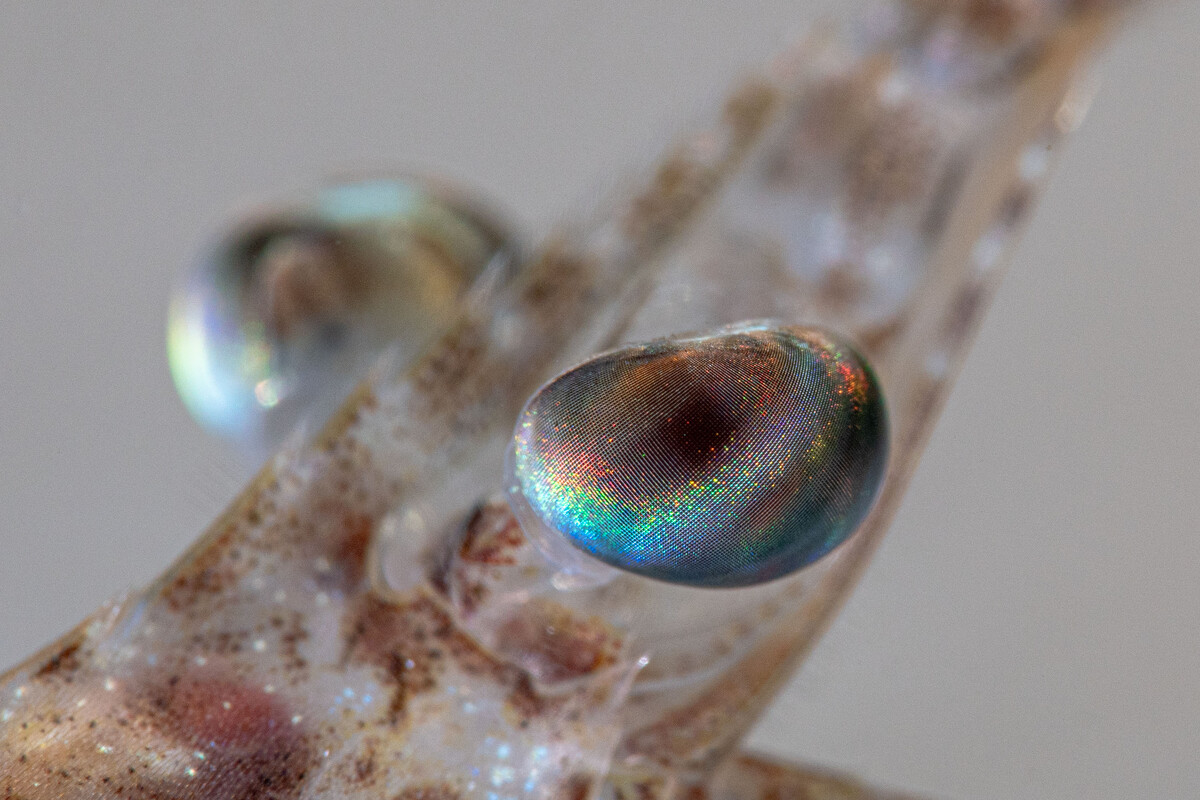
This photo was taken with the A6300 + 90mm macro + SMC-1. Some cropping, but so sharp! Maybe try without the flip adapter, just screwing the smc-1 on the flat port, and see what you can get. Easier than creating a new custom extension.
-
That's not quite the combination you are after, but I used to shoot the Sony 6000/6300 with the 90mm macro in an Ikelite housing, with the flat ports 5516.50 and extension 5516.70, and the SMC-1 with a 67 adapter. Not with a flip adapter, I was screwing/unscrewing it as needed, which was a hassle, but then the SMC-1 was closer to the port. The combination worked flawlessy, and I got super sharp images out of it. I don't have the gear anymore, but I remember that the front element of the lens was very close to the glass element of the flat port... maybe about 2-3mm? And the distance from the lens to the SMC-1 was then maybe 1 cm? I changed after that to a Seacam housing, but found the SMC-1 more frustrating to use because the 90mm lens was farther back from the flat port and gave a much narrower focusing range. And it became less frustrating after switching to the 100mm macro, which is comparatively closer to the flat port.
-
You may be interested in this pool test, if you haven't seen it already: https://waterpixels.net/forums/topic/2612-sony-100-mm-macro/page/6/#comment-21021 After 9 months of use - the 100mm is a fantastic lens. But I seldom add the 1.4xTC and never the 2.0xTC, the focal length and reach is too long for regular macro subjects. I would recommend getting the double adapter and the SMC-3.
-
As others have said, I have set a button to toggle between the EVF and LCD, and you need to disable the autoswitch which is normally useful on land. In addition I have also set a button to disable the display at all, in an attempt to conserve some battery - this was a fairly useful trick on the A6xxxx, and is faster and less error-prone than the global power switch. But to be honest, on the A! I haven't seen that much battery savings with that trick and can comfortably keep the camera running for 3 dives with the EVF set to 30 fps. Higher fps = higher battery usage. Update to the latest firmware as well, the most recent versions seem to have improved overheating and battery consumption compared to the first versions.
-
They already have a 10mm full-frame MF fisheye - https://7artisans.store/products/10mm-f-2-8-ii-ultra-wide-angle-full-frame-fisheye-lens-for-e-l-r-z-1 The projection is stereographic, 185 diagonal, 15cm, f2.8-16, 602g. This new lens is 15cm f2.5-16 so the design seems to have been slightly updated, but I expect it to be a full-frame lens.
-
I tend to stick to the viewfinder, even when shooting wide-angle (I'm not using an external monitor), and when reviewing pictures. But I do need to switch back to the main screen to change some settings, as it shows more information. One key setting - on the A1, I can select the EVF fps. I don't recall the exact fps on top of my head but it could be 60 / 120 / 240fps. While the highest setting is the nicest and smoothest... it also uses a LOT more battery. I'm typically reverting down to the lowest setting when diving, and can get 2 to 3 dives depending on bottom time and how many shots I took.
-
That's a great project and I would love to beta-test it. Tagging species is very tedious - I do have a few folders where I did that to the best of my abilities (and that best is not going to be anywhere near as thorough as Tom!).
-
I shoot with the A1 and upgraded from the 90mm to 100mm macro (shiny new gadget, woooh). I'll be one to say that the 90mm is fine, generally, yes it focus hunts occasionally but not that much on the A1. I used to shoot the 90mm on an A6000 (which didn't even have phase focusing) and the A1 is just night and day. The 100mm is better but it's not like it instantly focuses either. I also probably prefer the 90mm focal length. Definitely upgrade to the latest firmware of the A1, version 4+. They have added new focusing range areas, and the XS is very useful. I've been happy shooting in AF-C, XS tracking, center focus point, and using focusing+recomposing. A wider focusing area makes it harder to focus on a specific feature. A focus light is useful. There's definitely more hunting without it.
-
I've been using the AO cooler 36 for 10 years now. I love having it on day trips - the camera goes in there, as well as the spare tupperware box, mask, computer, towel, wet clothes, etc. It's very convenient. It's much easier to carry everything to a boat. It helps dampen vibrations as well on long boat rides. The zippers have been salted out for a while and don't close anymore. It folds but is quite thick so it takes a fair bit of luggage space. I have used it as a rinse tank in some hotels/resorts that weren't setup for it, or on 3-dives trip with a longer lunch break. But I find it rather unnecessary on a liveaboard, usually I don't even bring it. Just use the communal rinse camera tanks, cameras don't need to stay in the water much. It's hard to keep a soft-shell bag as your own rinse tank on the dive deck, it takes space in a usually crammed area, and freshwater is usually limited. And it's not very convenient or respectful to keep it in the bathroom, moving a wet camera back-and-forth across the dry area of the boat.
-
Sorry that you're facing this on location. Having suffered from 5 failed Sea&Sea YS-D2/D3 strobes at various times, my best advice is to get another brand when you're back home... Not very helpful for the problem at hand, I know, for which Chris gave great advice. In my case I suspect that Eneloop Pros were also too powerful for these strobes, and regular white Eneloop were preferable, with at one point a deficient set of batteries that also damaged a strobe. So if you have access to white Eneloops, use that for your remaining strobe. And in my case, when the strobes were fried, I could either manually trigger them but only at full power, or could only see a weak preflash but not the actual flash. So, when you use the optical cable between your working strobe and the dodgy strobe, are you able to adjust the flash power on the dodgy strobe? If so, that should be good news.
-
Hey Gary! Looks like there's a chance we could bump into each other at Blue Ribbon. I haven't been back this year, but stay there occasionally - will give a shout next time I do.