Phil Rudin
Industry
-
Joined
-
Last visited
-
Currently
Viewing Forum: Photography Gear and Technique -
Country
United States
-
The diving in Bali is great this time of year, perhaps you should pickup the equipment there😃😃😃
-
Want to Buy Newark, DE USA
I have SMC-1 in excellent condition and Marelux 67mm flip adapter PM if interested.
-
Some improvements will be better quality flash tubes tested to 1 million flashes at five second intervals at full power. These tubes also make the manual power settings more uniform across the range. Perhaps a small power increase, to increase power you decrease recycle times so max power is not the goal but rather a balance of both. Our strobe already has a 120 degree beam angle with a beaded dome which softens light across the frame. Many competing strobes have a flat front with a narrower beam angle which may look brighter in the center but don't extend to 120 degrees and with a diffuser added to reach 120 degrees power is reduced often by a stop or more. The modeling/video light is new and is 3000 lumens at 5500K and with a CRI of 95. Some other strobes have higher lumen target lights but with low CRI values. We have universal compatibility offering Manual, TTL, RC (including RC-Manual, RC-TTL, and RC-FP), Pre-M, and HSS. It also introduces Marelux’s proprietary MTL mode not offered on other strobes. The Apollo III 3.0 continues to lead with its advanced wireless optical triggering technology. Working with the LumiFlux and Artemis 4500RMT 2.0-S or the earlier Lumilink, it delivers a reliable remote triggering range of up to 15 meters, even at depths of 10–20 meters underwater. Without the restriction of fiber-optic cables, you can position your Apollo strobes anywhere within range, unlocking ultimate freedom and creative potential for your shoots. You can find all of this information and more at the link. https://www.marelux.co/products/apollo-iii-30
-
Not at all like MWL-1, not upside down and backwards and not nearly as long. More like the MV60 that takes 90 to 105 in the 50/60mm angle of view, MV24 will take the 90 to 105 range to 22/24 AOV range on a flip adapter along with the Mv60 or by direct mount. Minimum focus to infinity to be determined.
-
Regarding the Sony FE 16-25mm F/2.8 G I want to be clear that I said I tested it in the 180mm dome port I did not do a test in the 140mm port. Second I don't think the 16-25mm appears on the Nauticam charts with any port. The Nauticam charts do show the 16-35mm F/4 and they say that lens works best with the 250mm port and 70.5mm of extension. It also works with an N100 180mm port and 50mm II extension but in the N120 180mm port it takes the N100 to N120 35.5mm II extension and the N120 20mm I/II extension or 55.5mm of extension. So thats's the 250mm port that does not appear to exist in N120 anymore. N120 180mm port $1700.00+N100 to N120 $680.00+N120 20II extension $660.00 or N120 20 extension $390.00 total $3040.0 or $2770 depending on extension. Advantage will be the N100 to N120 can be used with other ports and lenses. The N100 180 port $1600+N100 30II $550 and N100 50II 610 total $2760. The upside all N100 and the down side may not be as usable with larger lenses and ports. With Marelux it would be the Marelux five inch 180mm dome port and five inch 40mm extension. That's $1380 port and $286 extension with lock. Total $1666.00, works with any lens on the lens chart and interchangeable between all full frame camera brand housings, so Canon, Nikon, Panasonic or Sony. Nauticam housing for Sony A7R VI $4800.00, Marelux housing for A7R VI $3398.00 a difference of $1411.00 so $7560.00 NA housing and port system (cheapest option) V MX $5064.00 all in with no accessories like vacuum, flash trigger. I have owned more than ten Nauticam housings over at least nine years or more, they make excellent equipment but so does Marelux, Aquatica, Isotta, Seacam and several more in the aluminum housing market. For those entering and buying an entire new system or looking to upgrade they should really look at all that is being offered currently. One manufacture is not the Holy Grail for housings, wet lenses, strobes or other related items. I reviewed the Tamron 17-28mm in uwpmag.com, back issue #119, you may also want to checkout Sigma 17mm F/4 (outstanding lens) issue #133, Sony FE 20-70mm issue #132 and many other related items. Back issues, Phil Rudin in the search engine for about 120 more articles. So far - - Sony 16-25mm F2.8 G - Sony 20-70mm (F4 G model?) - Tamron 17-28mm You may also want to add, Sony FE 16mm F/1.8 Sigma 17mm F/4 Sigma 20-200mm F/3.5-5.6 DG, this lens is supported by Marelux with a zoom gear. It focuses to 1:2 from around 28 to 85mm (better than the Sony 20-70mm) and in the Marelux 180mm port it will focus from 20mm to around 140mm. It is also a better choice than the Sony 70 to 200mm F/4 macro which is also supported by Marelux. Images with Sigma 20-200mm at 20mm and 81.1mm behind a180mm dome, impressive coverage to me.
-
My views have of course changed over the years as lenses have become more refined but in general the zoom lenses with the shortest minimum focus distance tend to work best in all size ports and especially 180mm and smaller. These days the first thing I look at when a new zoom or fixed lens is announced is minimum focus distance. I have not tested or purchased a lens with MFD over 20cm for some time. While I have owned the 16-35mm PZ and like the idea of not having to buy a zoom gear the newer Sony FE 16-25mm F/2.8 G simply has better sharpness towards the edges at 16mm in the 180mm dome. I credit this to the MFD of 18cm over the 24cm for the 16-35 PZ. If you shoot the lens mostly at the 16mm end you may also want to consider my favorite 16mm the Sony FE 16mm F/1.8 which has a MFD of 15cm. This is an excellent lens for the 180mm or even in a pinch the 140mm dome port. This site and others frequently talk about how much sharper fisheye lenses are in the corners compared to rectilinear lenses, this is urban legend related to older zooms with MDF values of 25cm or more. I have attached a photo taken with the 16mm F/1.8 in the Marelux 180mm port with 30mm extension at F/8 and ISO-1250. It has corners far sharper than any fisheye lenses I have tried at F/8 and the same distance to the subject. By comparison the second photo is the WACP-C, with 28 to 60mm at 28mm, F/11 and ISO-400. The 16mm clearly has corners sharper than the WACP-C even one stop higher. For those who want to argue that the WACP-C has a much wider 130 degree AOV, V. the 107 degrees for the 16mm I offer a third photo using the Laowa 12mm which has an AOV of 122 degrees. The Laowa 12mm photo was taken at F/8 and ISO 400 in the Marelux 140mm dome port with a 30mm extension and in a smaller port a stop wider it also looks better towards the corners than the WACP-C. I suspect you will find this to be true for any of the wet wide lenses. What should be considered first is how much are you really going to notice the corners in real world use and does it make a difference to the 99% of use who are not major pixel peepers.


-
These are the specs for the new Sony FE 8-14mm F/3.5 fisheye. Retail in the US $1599.00. It has an AF lock and a zoom lock for locking the lens at 10mm for full frame on APS-C. Size & WeightWeight 314 g (11.1 oz.) Dimensions (D x L) 63.1-82.8 mm (2-1/2 x 3-3/8 in.) Lens SpecificationsAngle of View (APS-C) 180°-116° Format 35mm full frame Lens Groups / Elements 13-16 Maximum Magnification ratio (x) 0.22 Maximum aperture (F) 3.5 Minimum Aperture (F) 22 Mount Sony E-mount Aperture Blades 7 Circular Aperture Yes Filter Diameter (mm) - Image stabilization (SteadyShot) - (body-integrated) Minimum Focus Distance 0.15 m (0.5 ft) Zoom system Manual Teleconverter compatibility (x1.4) Incompatible Teleconverter compatibility (x2.0) Incompatible Hood Type Petal shape, bayonet type Angle of view (35mm) 180°-180° 35mm equivalent focal-length (APS-C) 12-21 Focal-Length (mm) 8-14
-
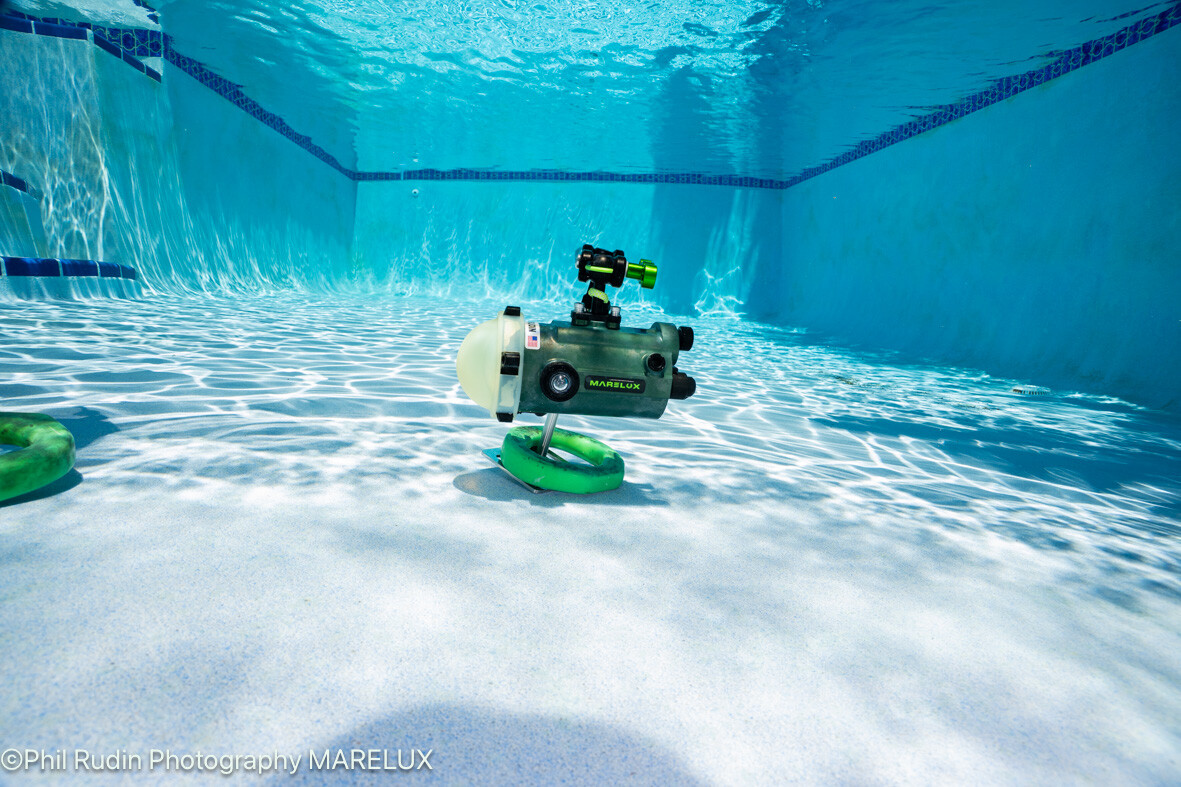
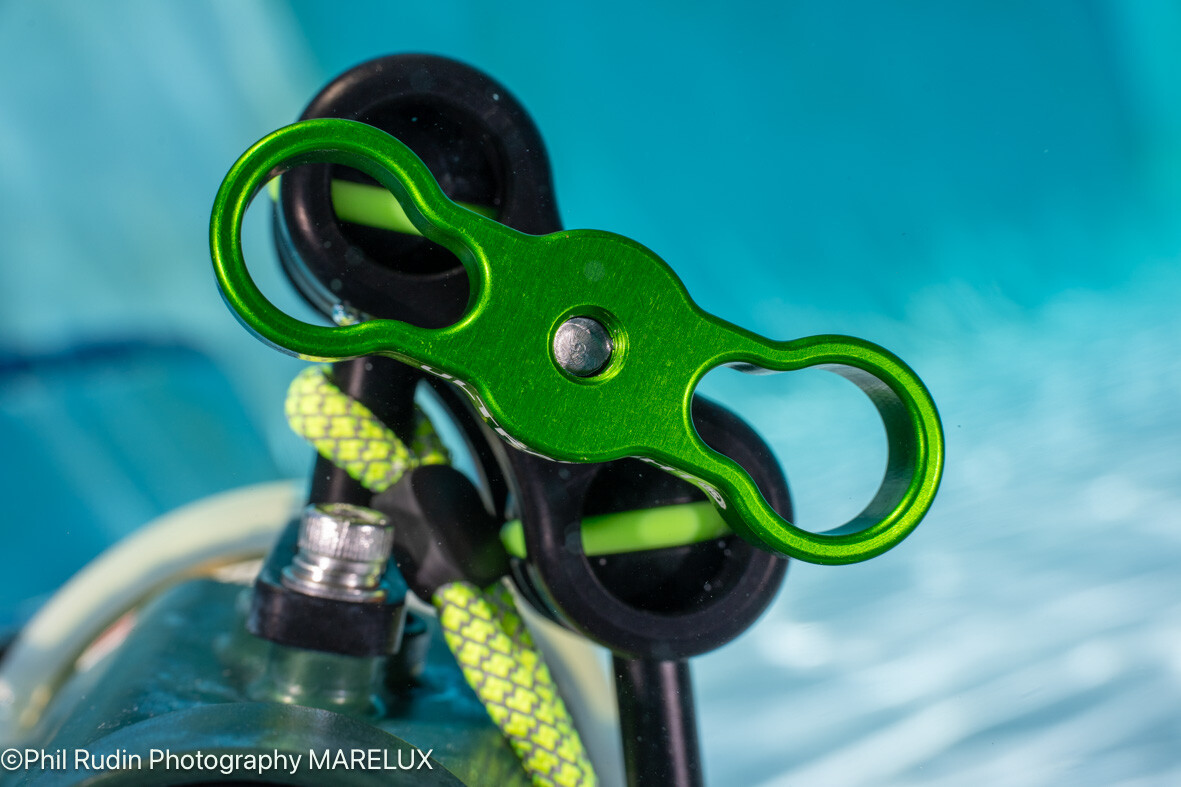
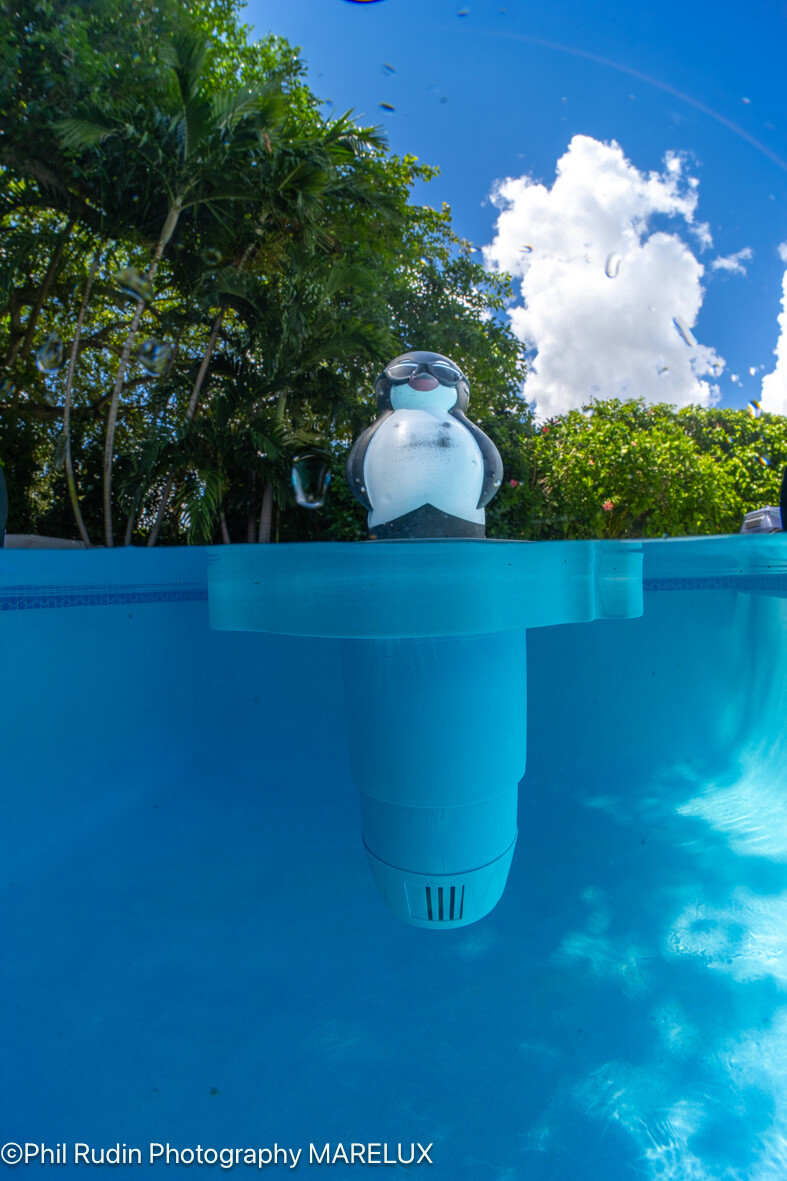
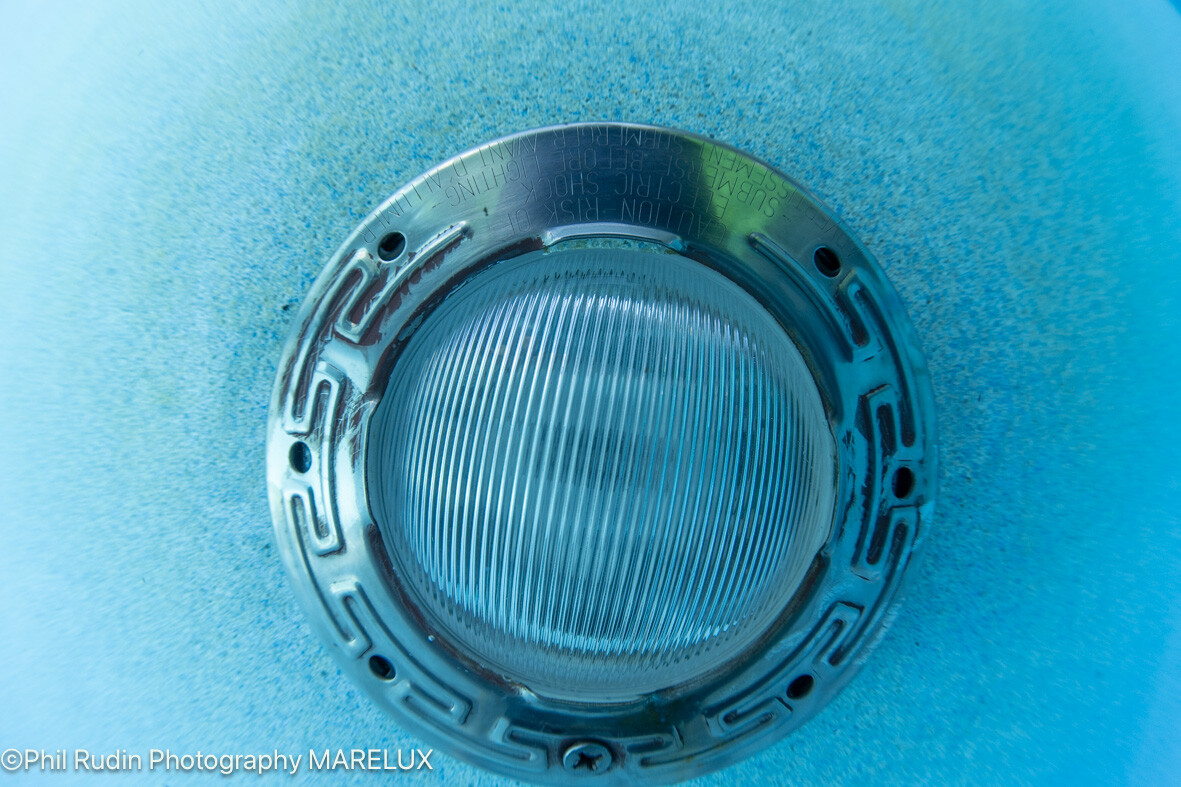
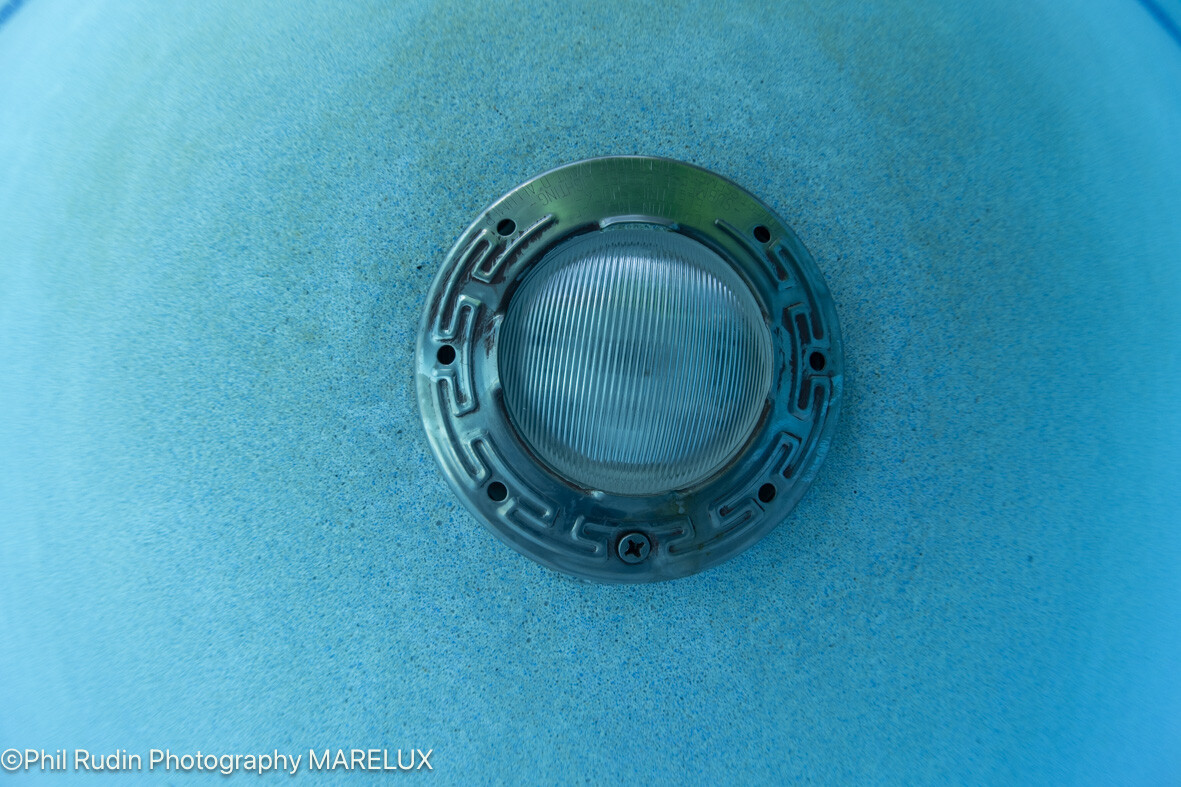
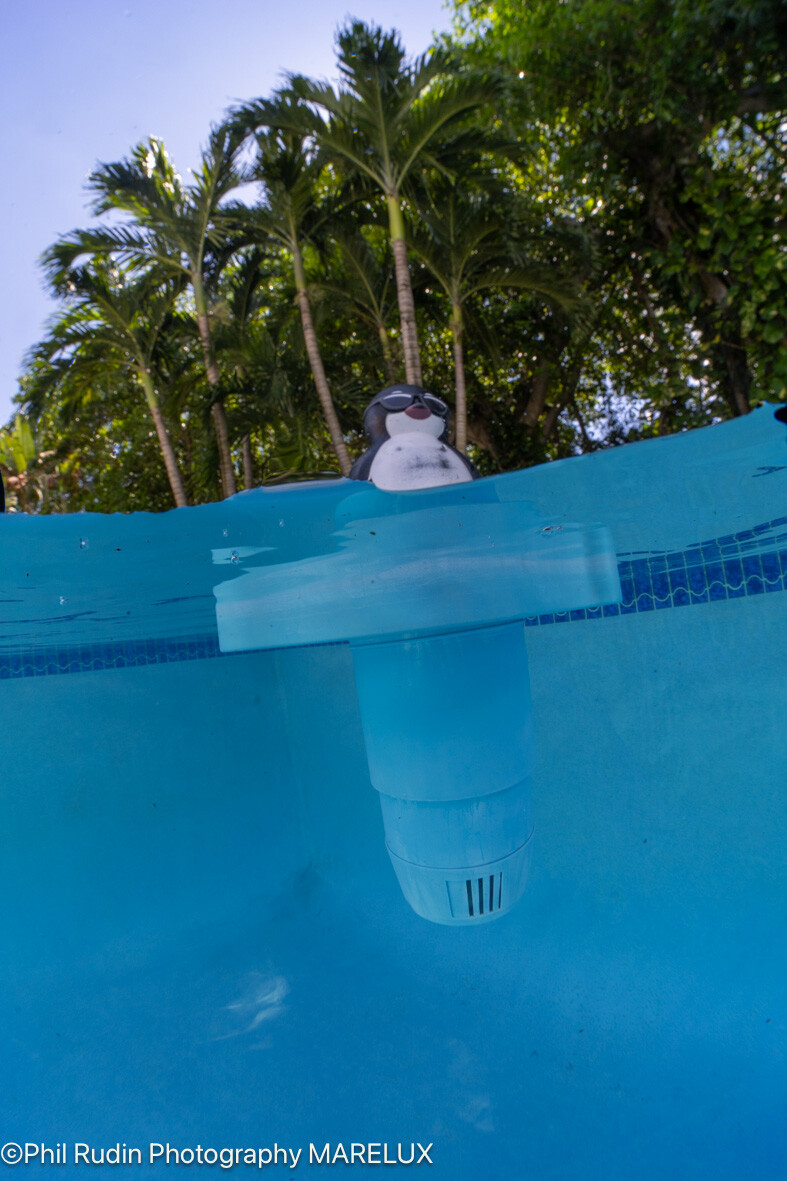
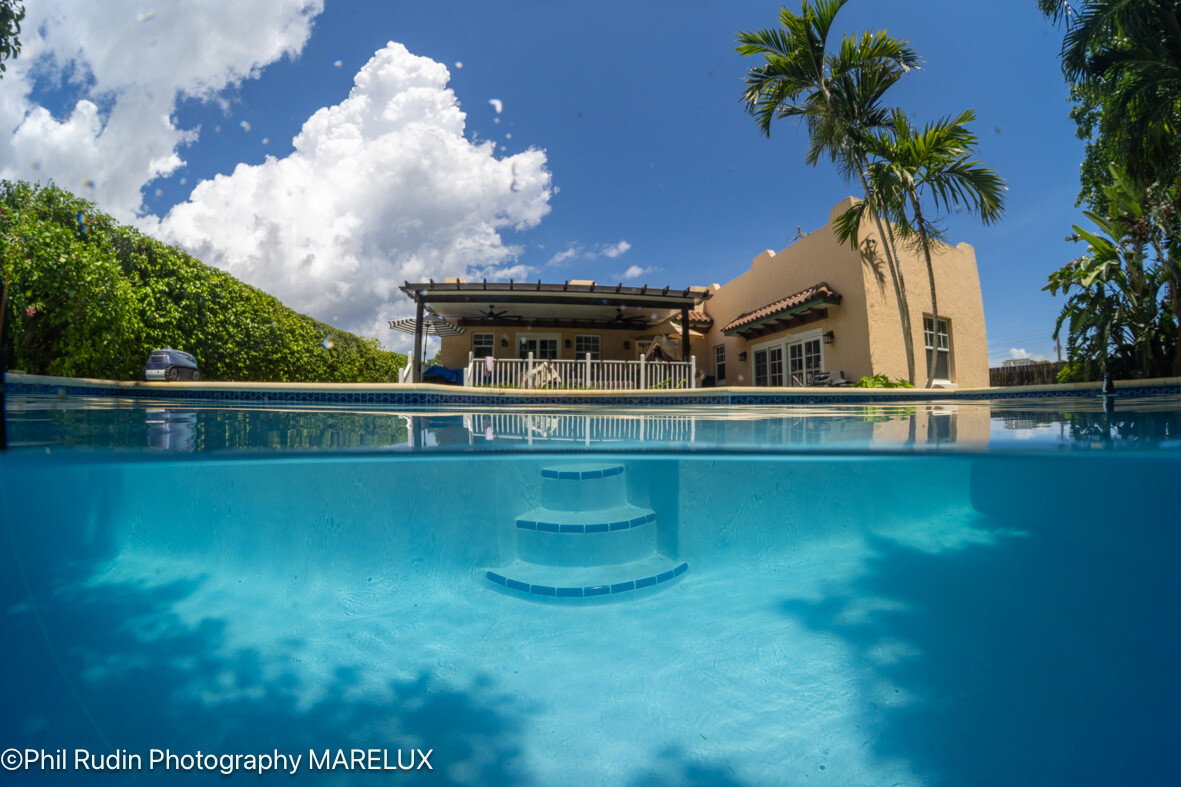
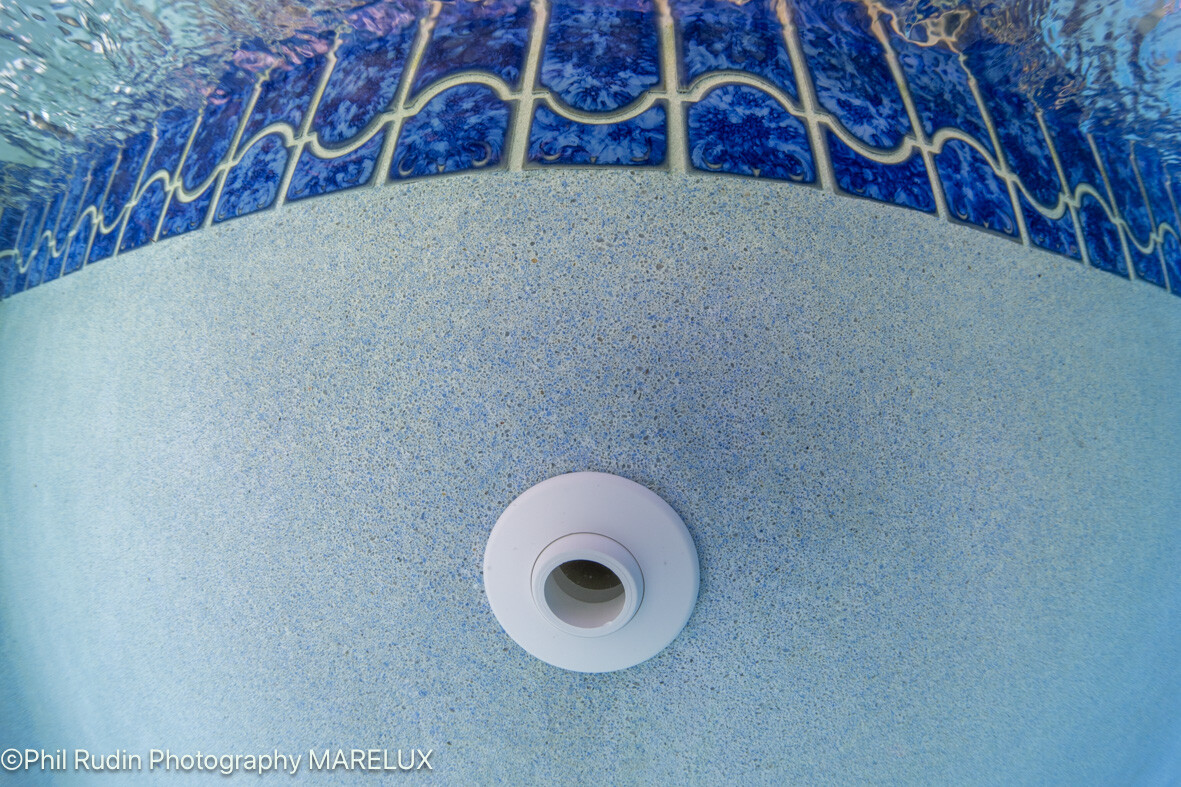
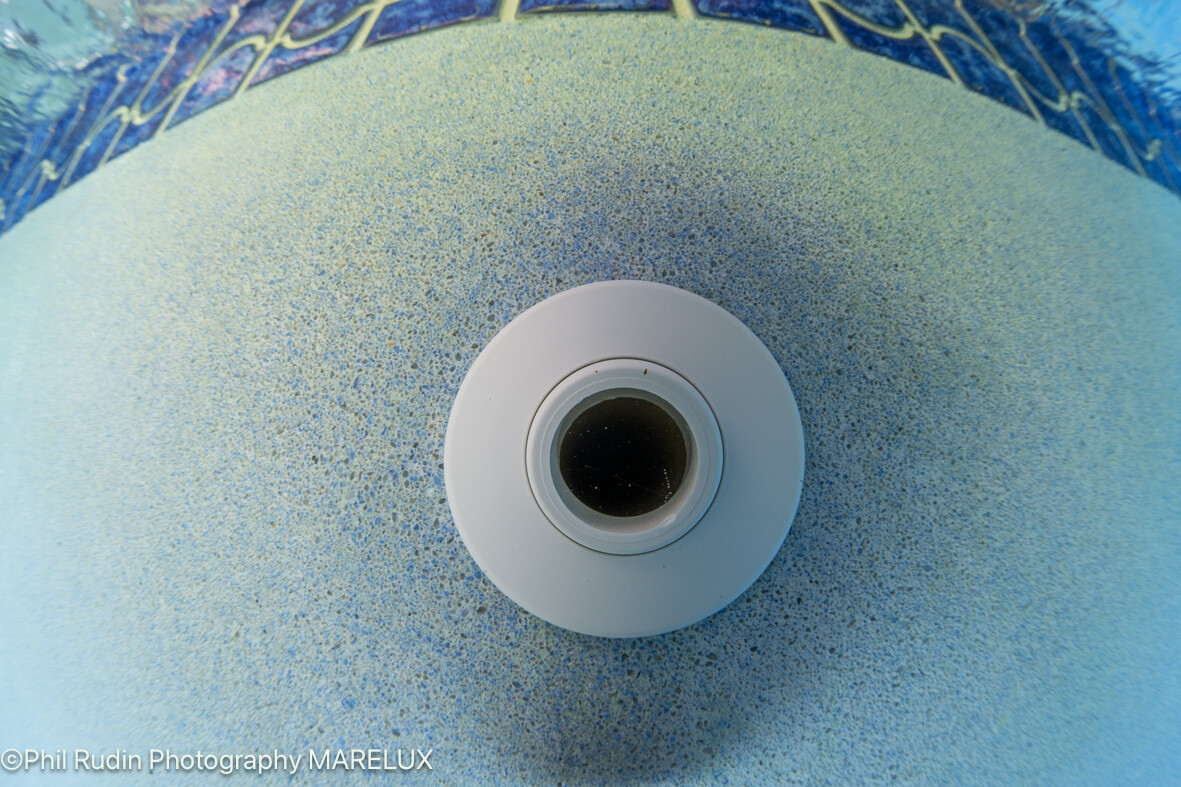
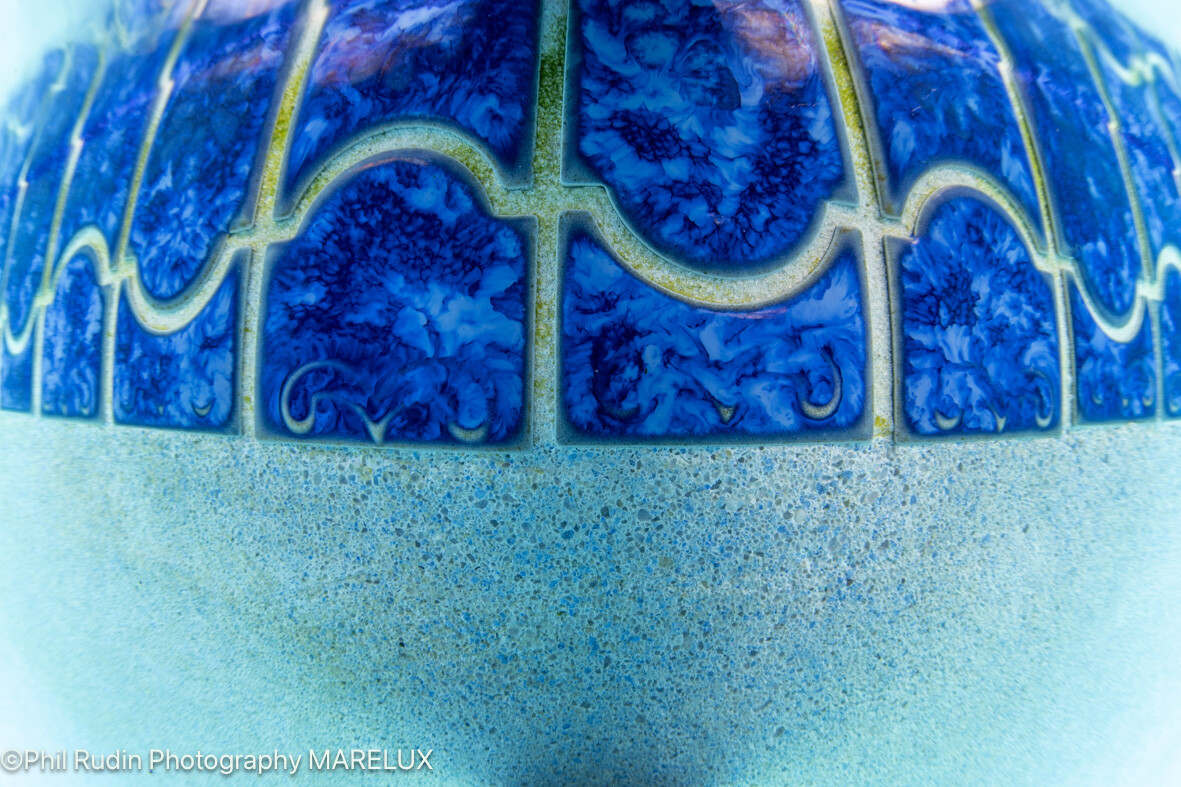
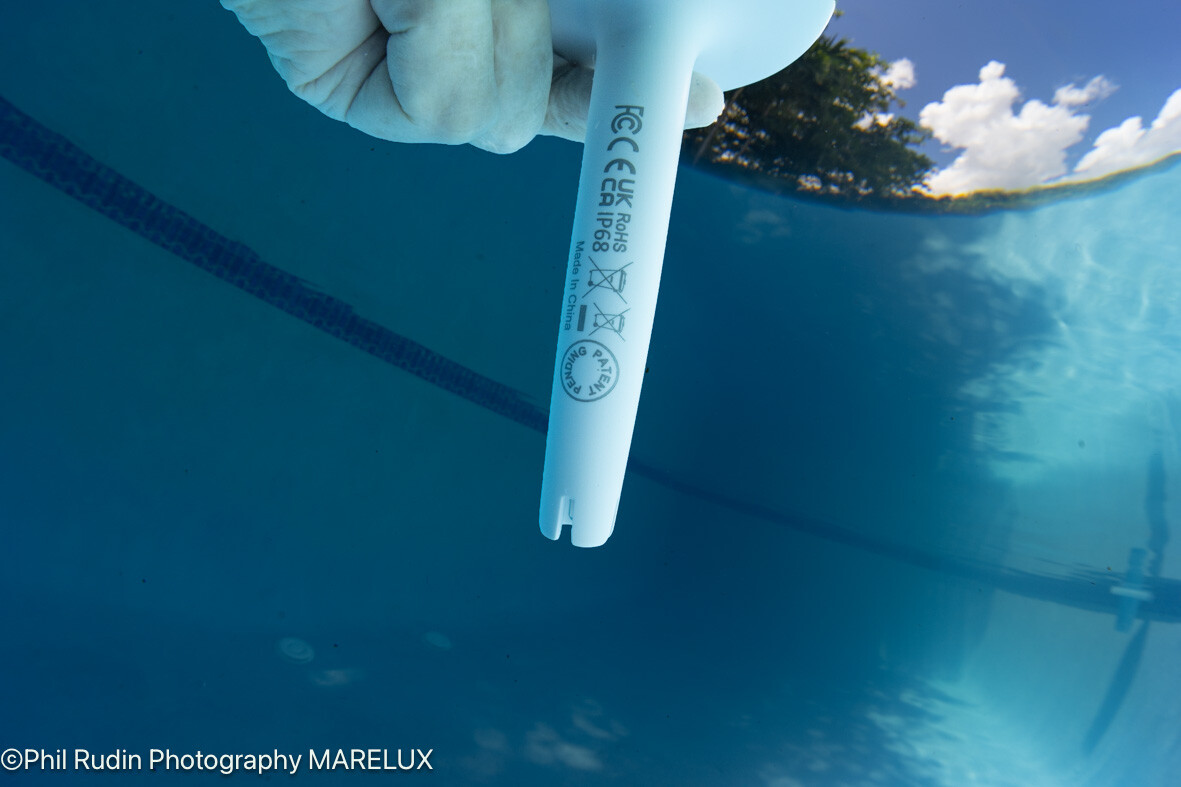
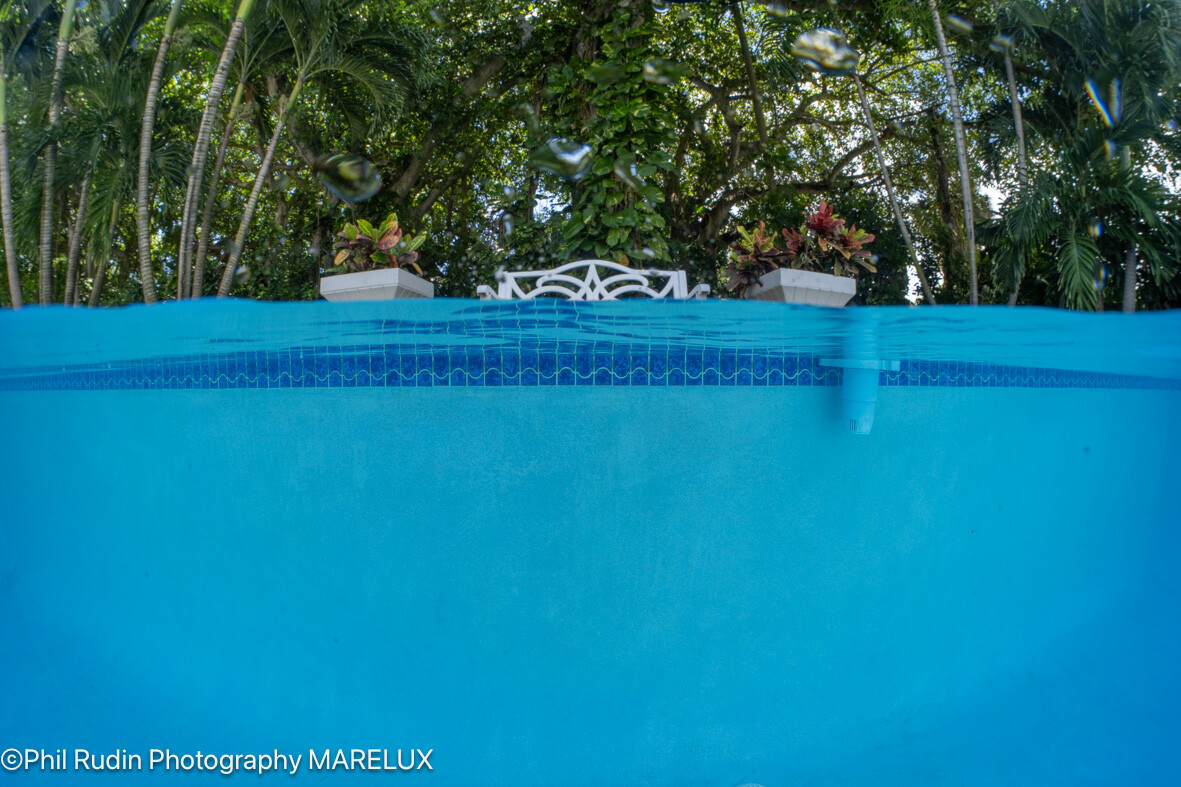
I have been testing the 7Artisans 10mm fisheye in the pool today between the rain and lightning storms we have been having for over two weeks in South Florida. All the rain water is clouding the pool and causing algae blooms.. The camera used is the 66mp Sony A7R VI, Marelux housing, Marelux 140mm dome port with the sun shade and 20mm port extension. Using the 20mm pushes the lenses closer the the port glass than I would like and with a 30mm extension the port shade vignettes noticeably. I am hoping Marelux will offer a 25mm extension which may work with the shade in place or at least greatly reduce vignetting. At some point I will try the 30mm extension with the shade removed. All images are full frame and shot at ISO-320, A-priority, at F/8, F/11 and F/16 for splits. When the lens is set on A for aperture control from the housing (without a gear) the lens reverts back to F/2.5 when shutdown and turned back on. For a bit of size reference the pool light is 15cm (5.91 inches) across and the closes shot is with the port touching the pool light. Like with all fisheye lenses shooting a flat wall the center is sharp and the edges and corners are soft. The pool jet (round white plastic) is 5.5cm (2.17 inches) and the closest image is touching the jet with the dome glass. The pool thermometer is 1.5cm (0.59 inches) across where it says patten pending. It is clear to me that as reported by YouTubers the lens is quite sharp and is clearly a great budget choice for an AF lens V the AF zooms. Build quality also seems good and the lens is a bit on the heavy side.
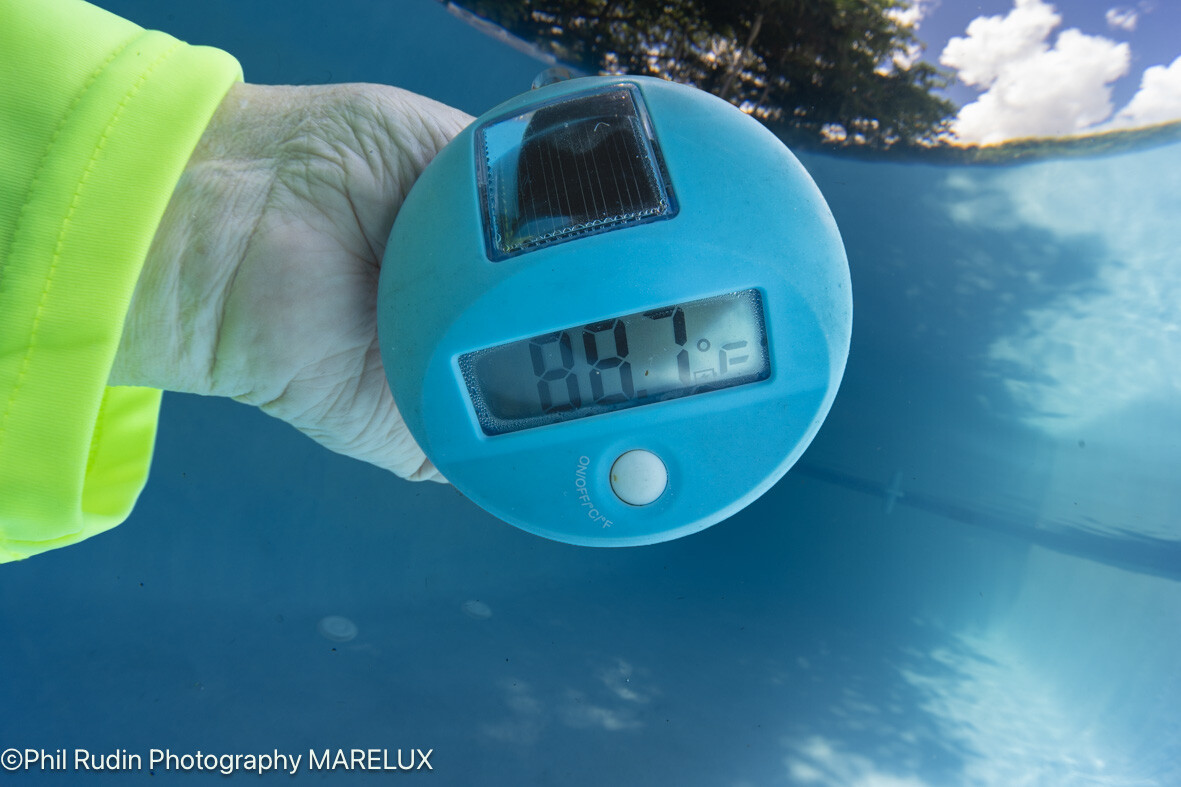
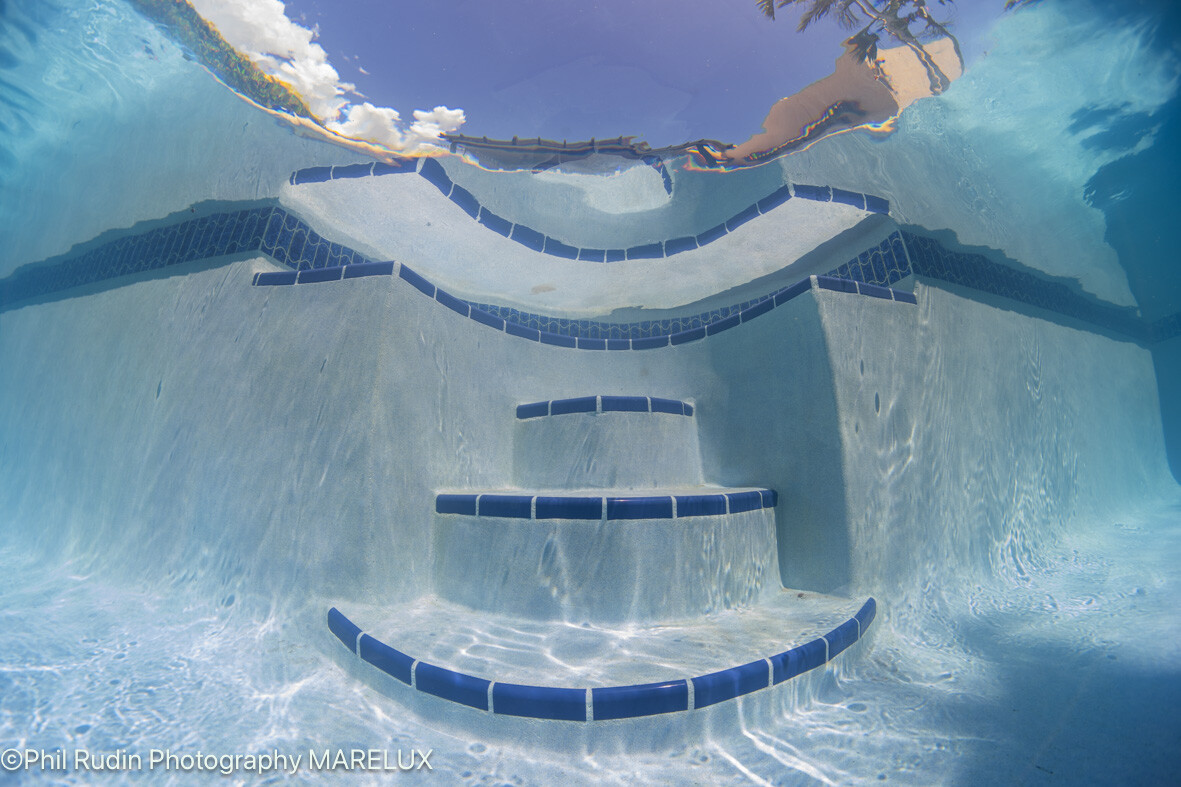
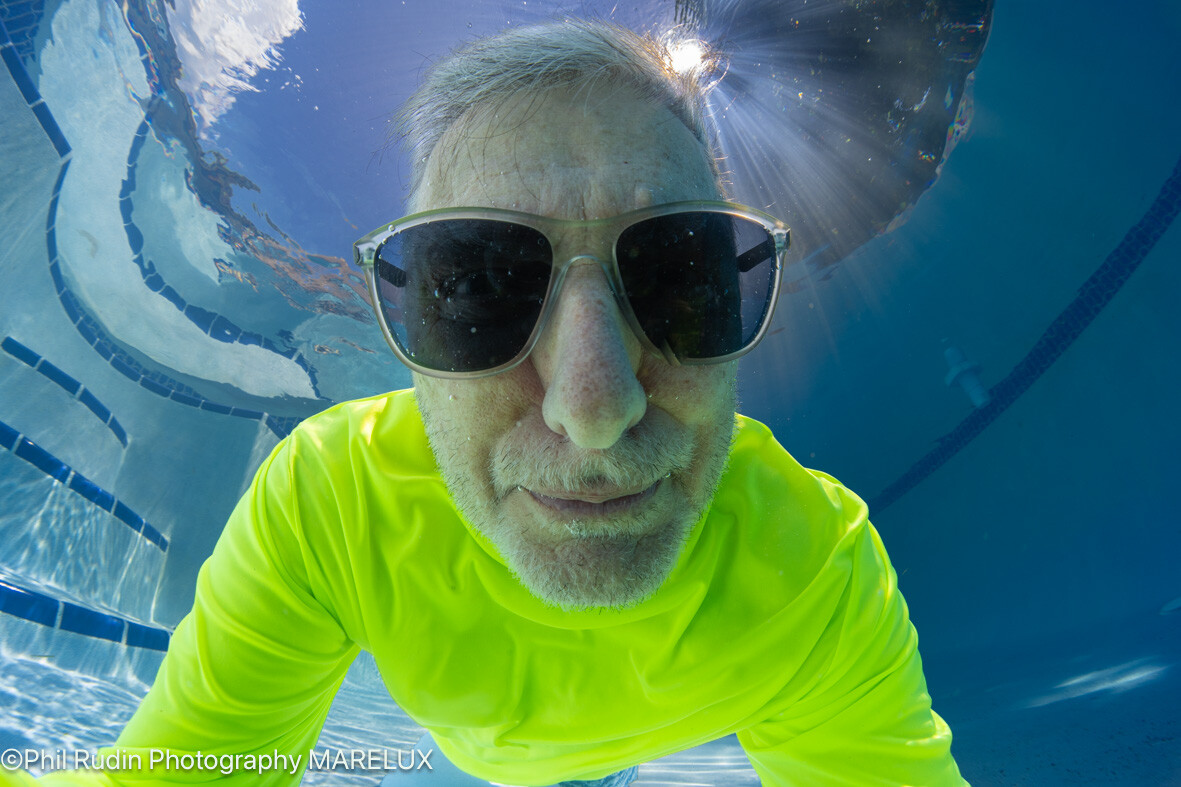
-
It appears we will have the answers to all or most of our questions on Tuesday Sept 8th when Sonyalpharumers.com say the lens and the 400mm and 600mm F/4.5 lenses will be announced by Sony. They say price around $1499.00.
-
My guess is world wide shipping in 6 to 8 weeks, so I have been told but things are subject to change and I am frequently the last to know.
-
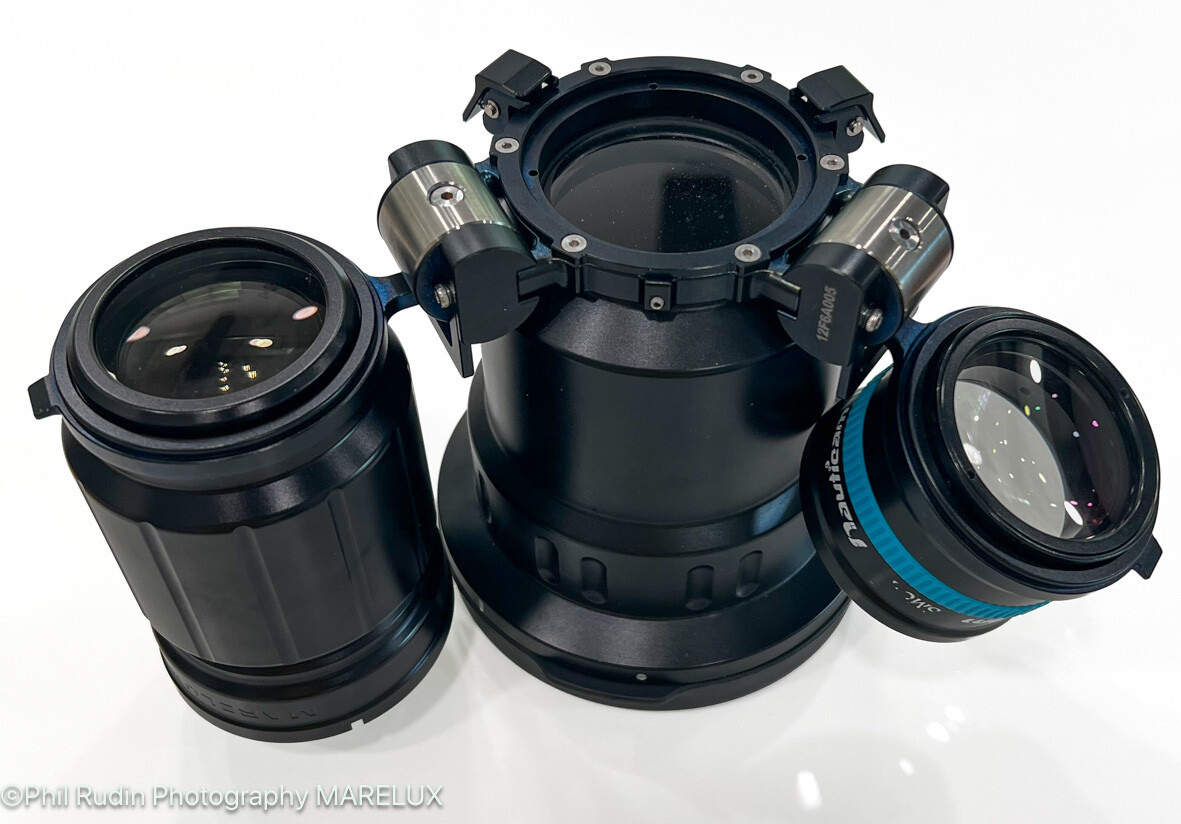
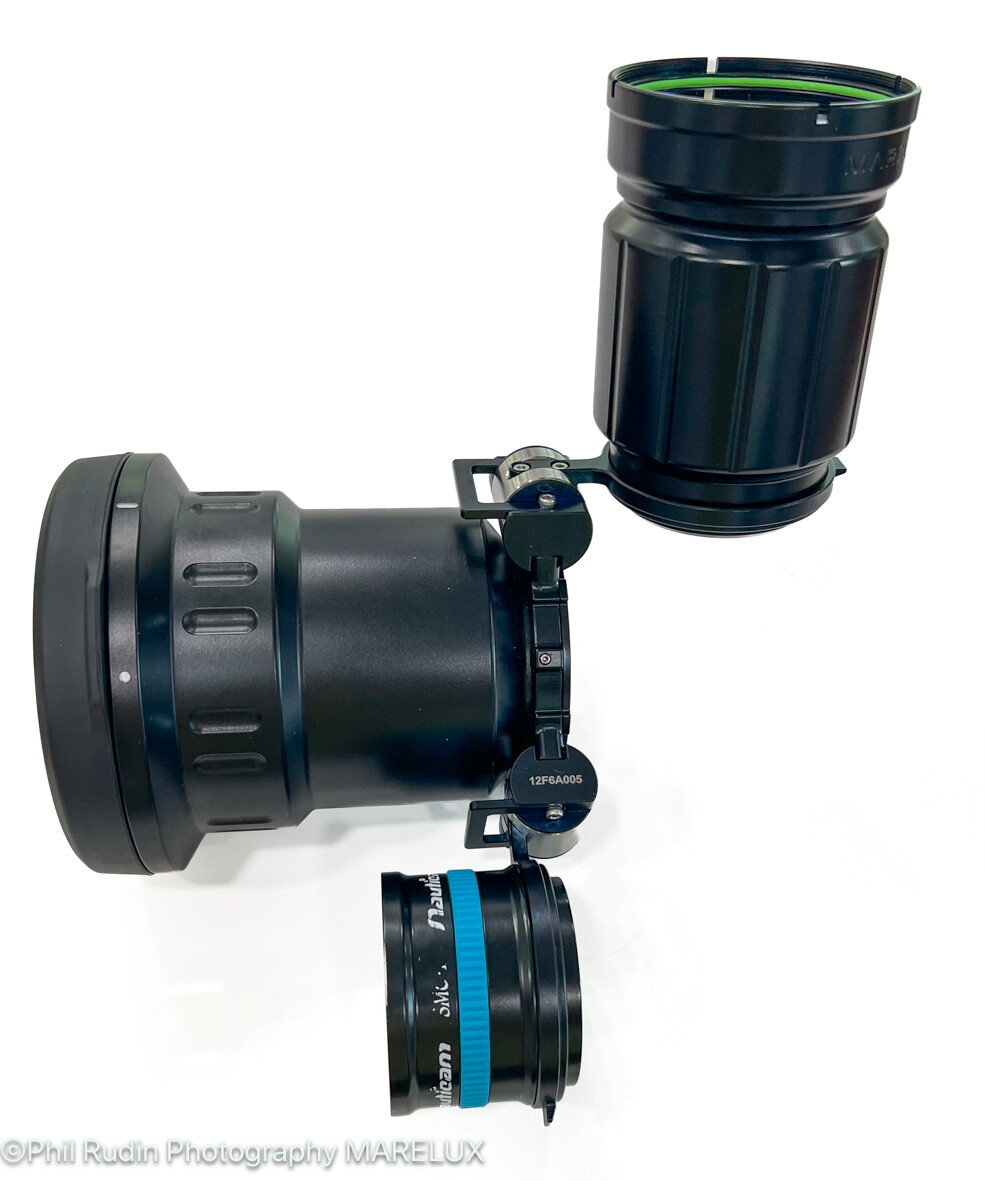
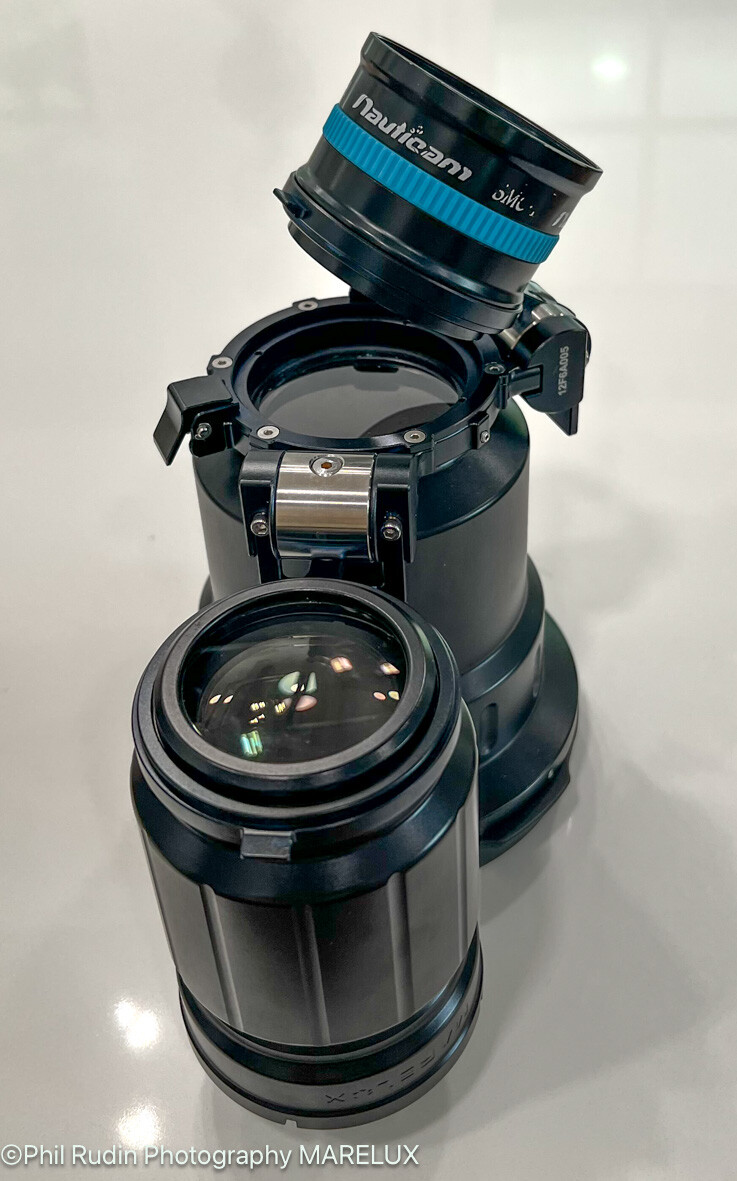
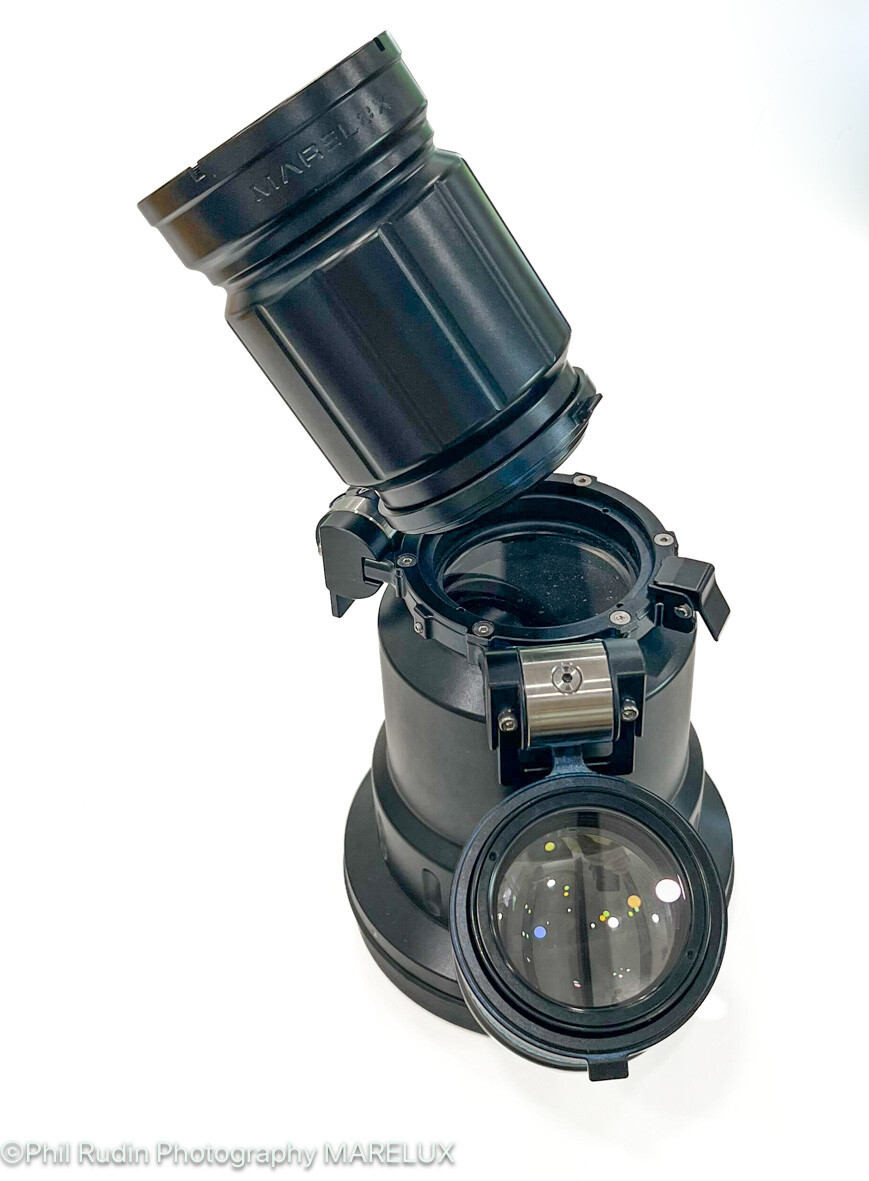
Hi Wahrmut, Did not forget you just had to get the equipment together to show what I think you are asking. First I don't have the SMC2 but the Marelux MV-60 is 5grams less than SMC-2 so close then I also added SMC-1 to show you how they sit on a macro port. The triple flip is about six weeks out from shipping so you will need to judge from the double flip that has the same design. Our first single flip used the same hinge everyone uses which will not support the weight of the SMC-1 beyond a 90 degree angle to the port glass. As a result Marelux designed a better hinge which does support the weight on land. I have attached several photos of the old single flip (old hinge) and the new with both lenses in several possessions,
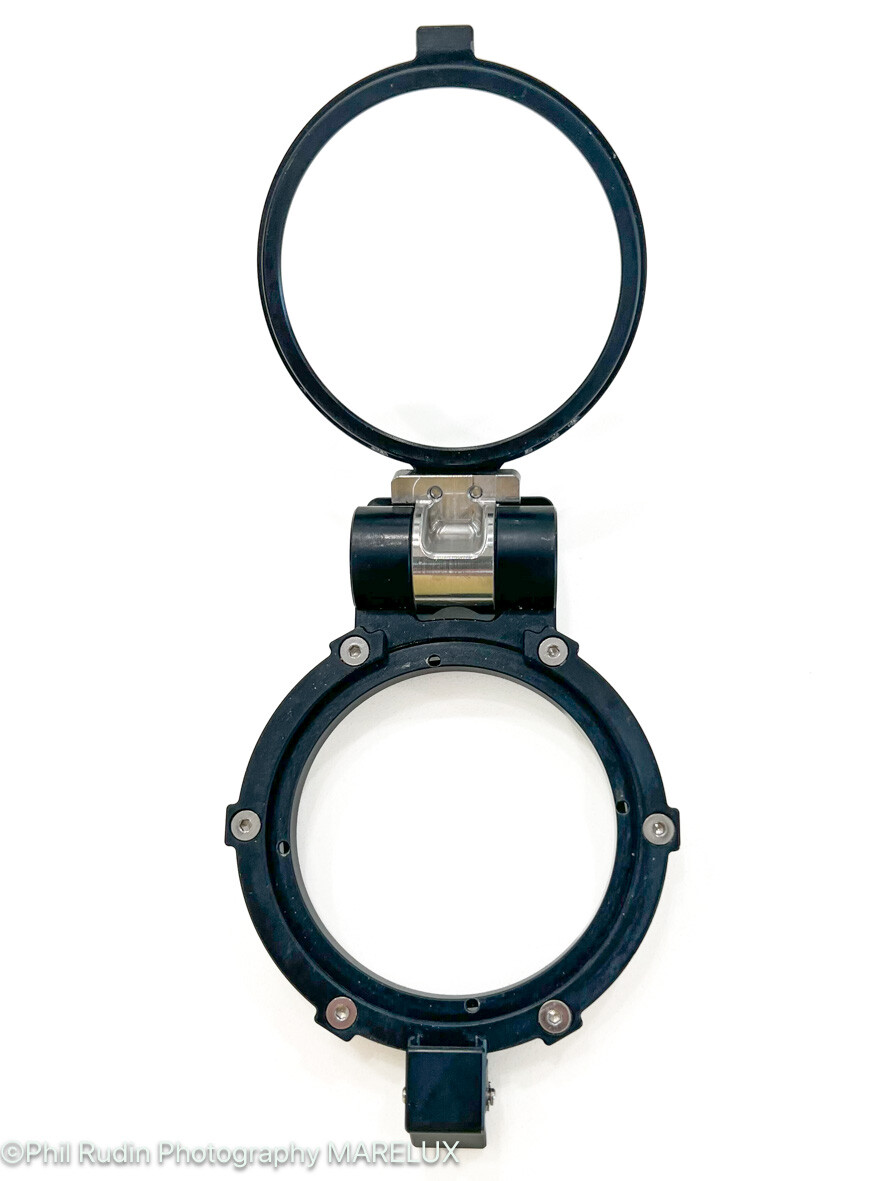
-
What I see appears to be the first auto focus fisheye zoom lens actually designed for a mirrorless sensor. The Canon RF 7-14mm F/2.8-3.5 L is I am sure a great lens but it is 109.4mm long which is reminiscent of a DSLR lens with a lens adapter attached. My guess is the New Sony lens will come in closer to 83/86mm with minimum focus distance around 14/15cm. I doubt that a Sony 1.4 or 2X TC will work with this lens, more likely an after market TC like those for the DSLR lenses will be needed, hoping to be wrong on this issue. The lens hood and port shade will need to be removed to work at the 8mm end. On the 14mm end the lens would go to a full 180 degrees rather than the 175 degrees with 15mm. I also think it will come in under $1900.00 to be competitive with the Canon.
-
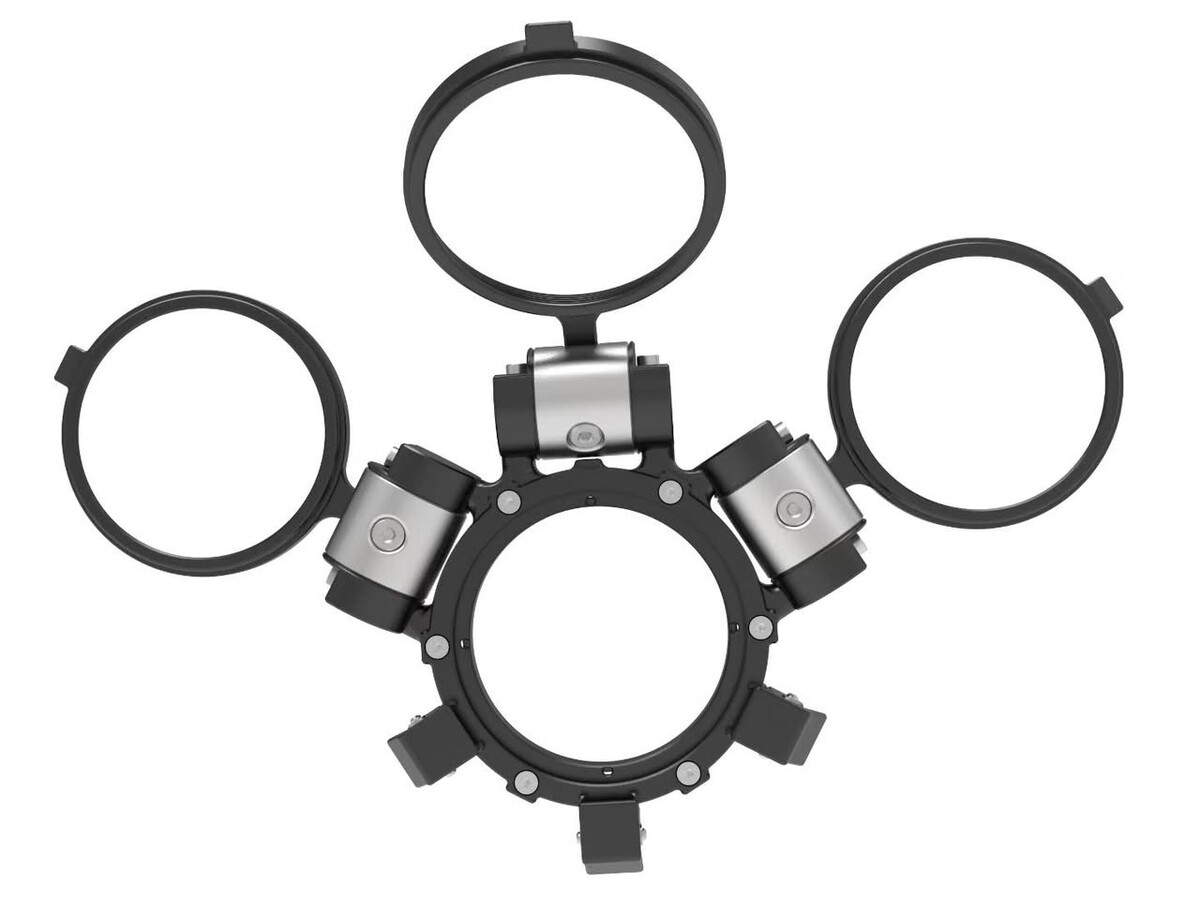
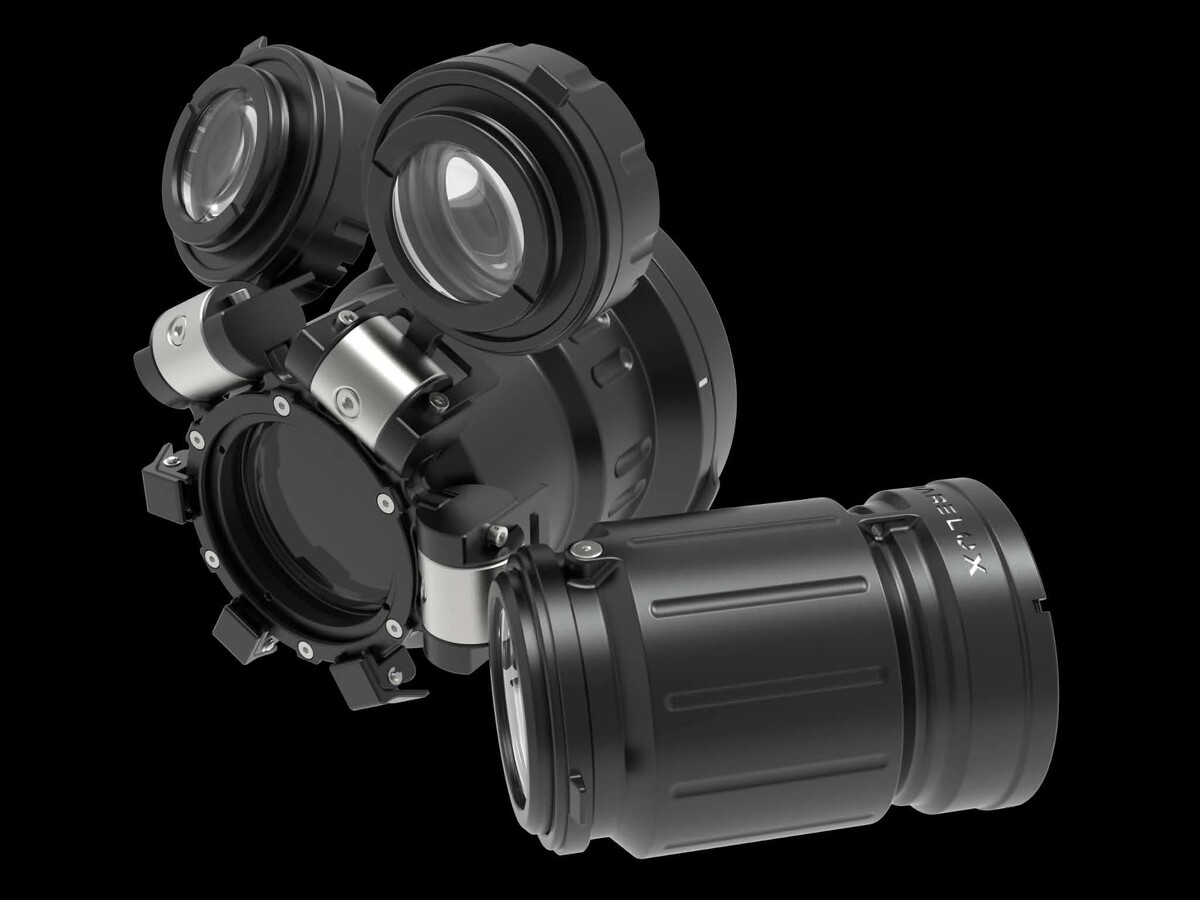
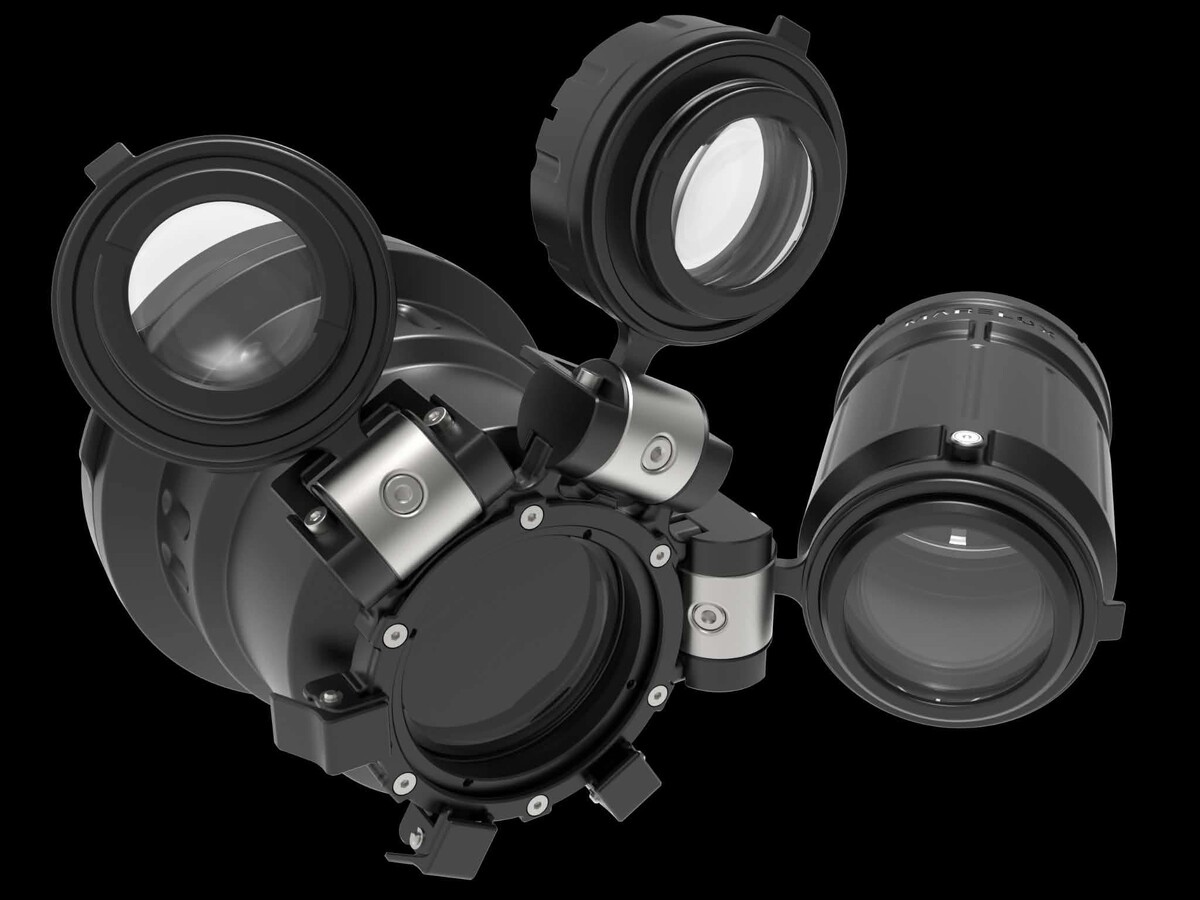
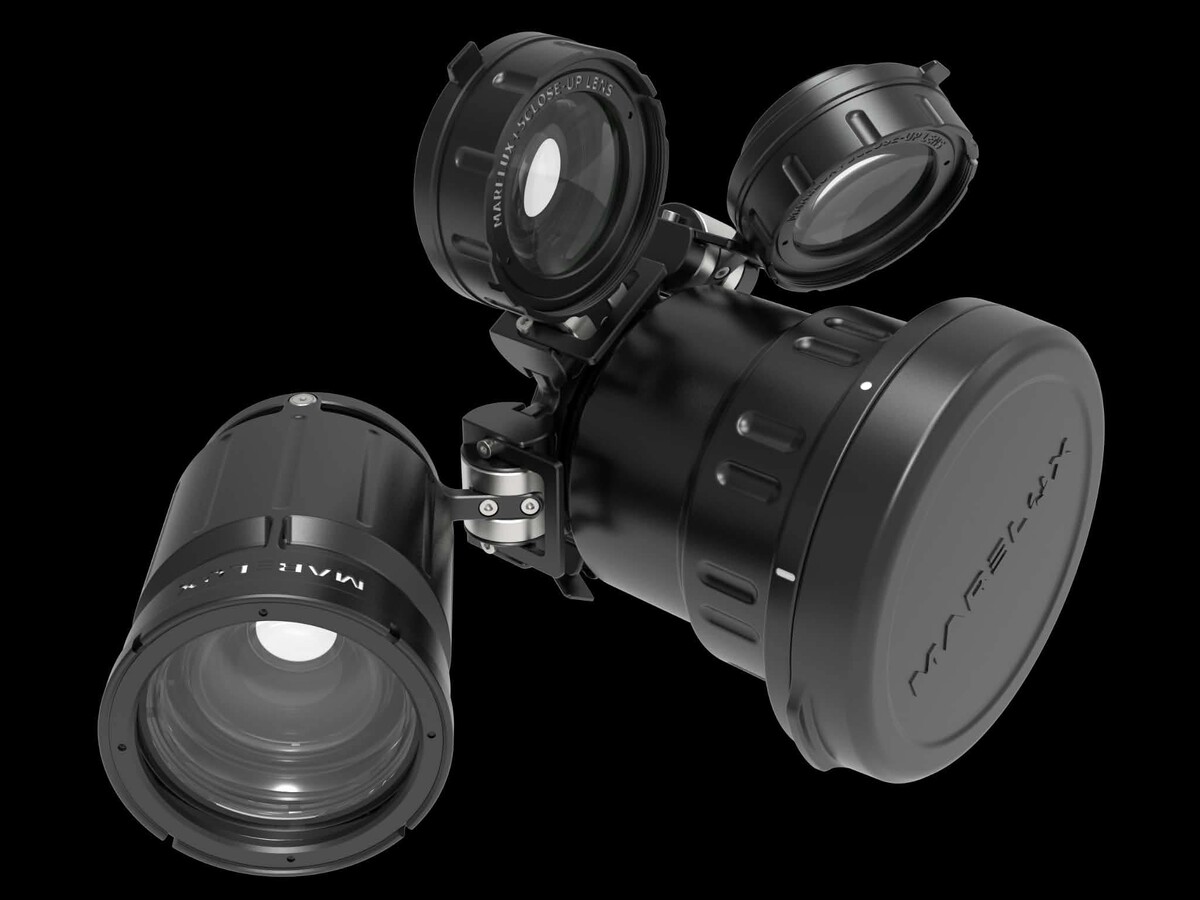
Today Marelux has announced the triple flip holder available soon for $399.00 in the US. Marelux Triple Flip Holder: The Ultimate Solution for Underwater Macro Photography Why the Triple Flip Holder is Essential A triple flip holder is a vital tool for underwater macro photographers. It mounts 3 different wet lenses simultaneously (such as +5, +10, or +15 diopters, or the newly introduced MV60 or MV24 wide-angle conversion lens). This setup gives you the ultimate versatility to switch between magnification levels instantly, or flip both lenses completely away to shoot through your native flat port with zero restrictions. The Flaws in Traditional Flip Holders Standard flip holders currently on the market suffer from two major design flaws: Corrosion and Jamming: Most brands utilize standard land-based mechanical designs featuring exposed internal springs and ball bearings. When exposed to harsh saltwater, these components inevitably corrode. Over time, the mechanism jams, requires constant lubricant sprays, and eventually fails completely. Lighting and Equipment Interference: Most holders offer only one standby position. If the lens rests at a strict 90-degree angle to the port, it blocks your strobes, which need to be tightly positioned near the macro port. If the lens flips beyond 90 degrees, larger and longer wet lenses can collide with your expensive camera housing or port, causing physical damage. The Patented Marelux Innovation Marelux is proud to introduce a patented design that permanently eliminates these industry-wide pain points: 1.O-Ring Sealed Lubrication Chamber: The rotating mechanism is housed in a fully sealed chamber, secured by precision O-rings and packed with liquid lubricant. Because saltwater cannot penetrate this boundary, the internal springs, bearings, and contact surfaces never corrode. It will never jam. 2.Two Instant Standby Positions: Switch between three secure holding angles in a split second. Use the active shooting position over the port, a 120-degree standby position for small, short wet lenses, to completely clear your strobe light paths, or an 90-degree standby position for larger, longer lenses, to safeguard your housing body 3.The left-side holder features a unique standby angle compared to the other two holders. This design allows users to mount larger wet lenses, such as the MV60 or MV24. While the second position uses a standard 90-degree angle, the first position is tilted slightly forward to prevent large lenses from colliding with the housing or macro port. Universal Compatibility The Marelux Triple Flip Holder is designed for maximum versatility across the industry. It is natively compatible with most major housing brandsfeaturing a standard M67 (67mm) threaded port. To adapt it to non-Marelux housings, simply remove the two anti-rotation positioning screws used for Marelux macro ports, and thread it directly into place.
-
It has an A setting on the aperture ring allowing it to be controlled from the camera.
-
All modern strobes, if you go back decades perhaps not. I think it would be a little presumpus to say every single strobe.