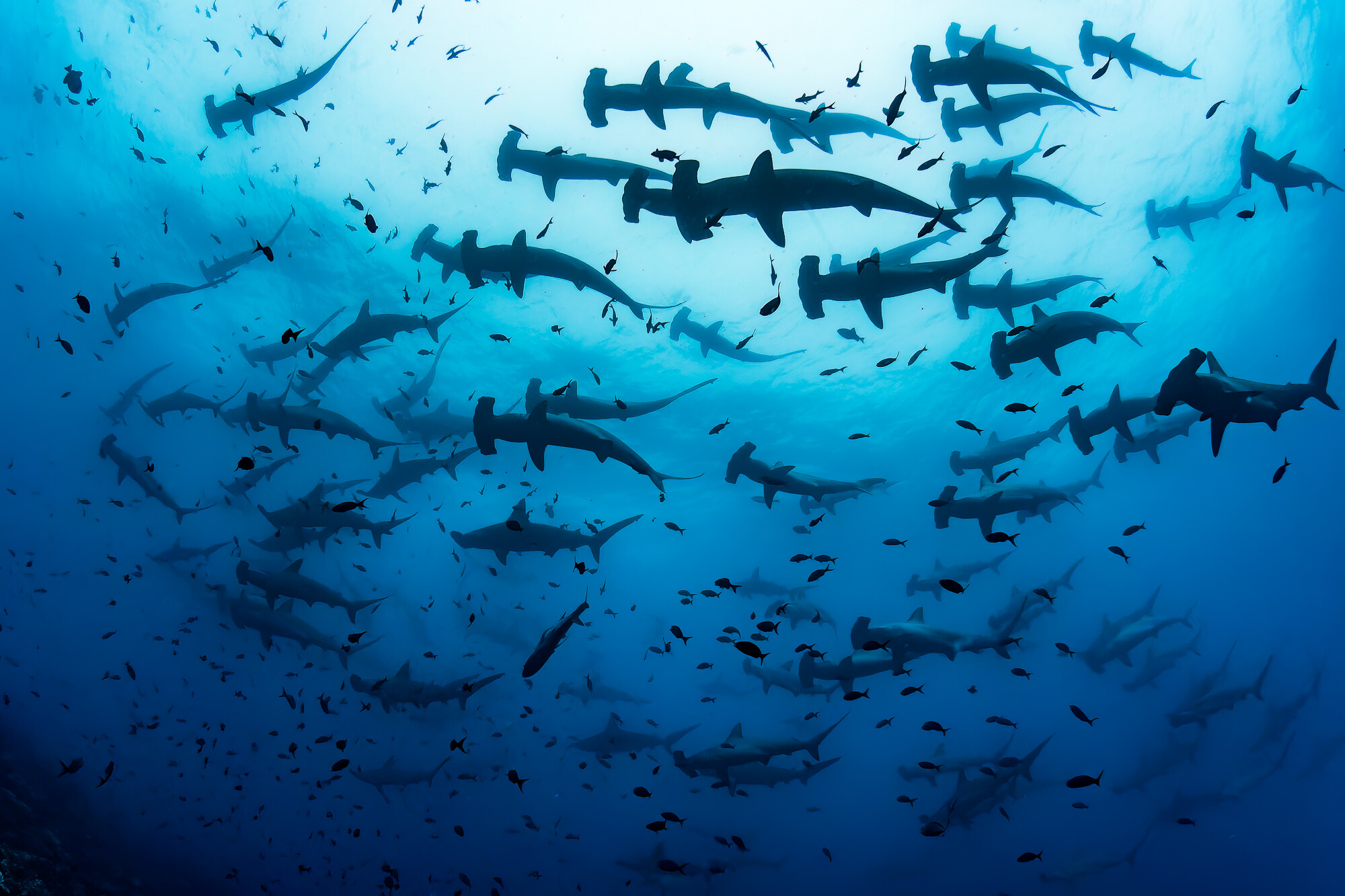
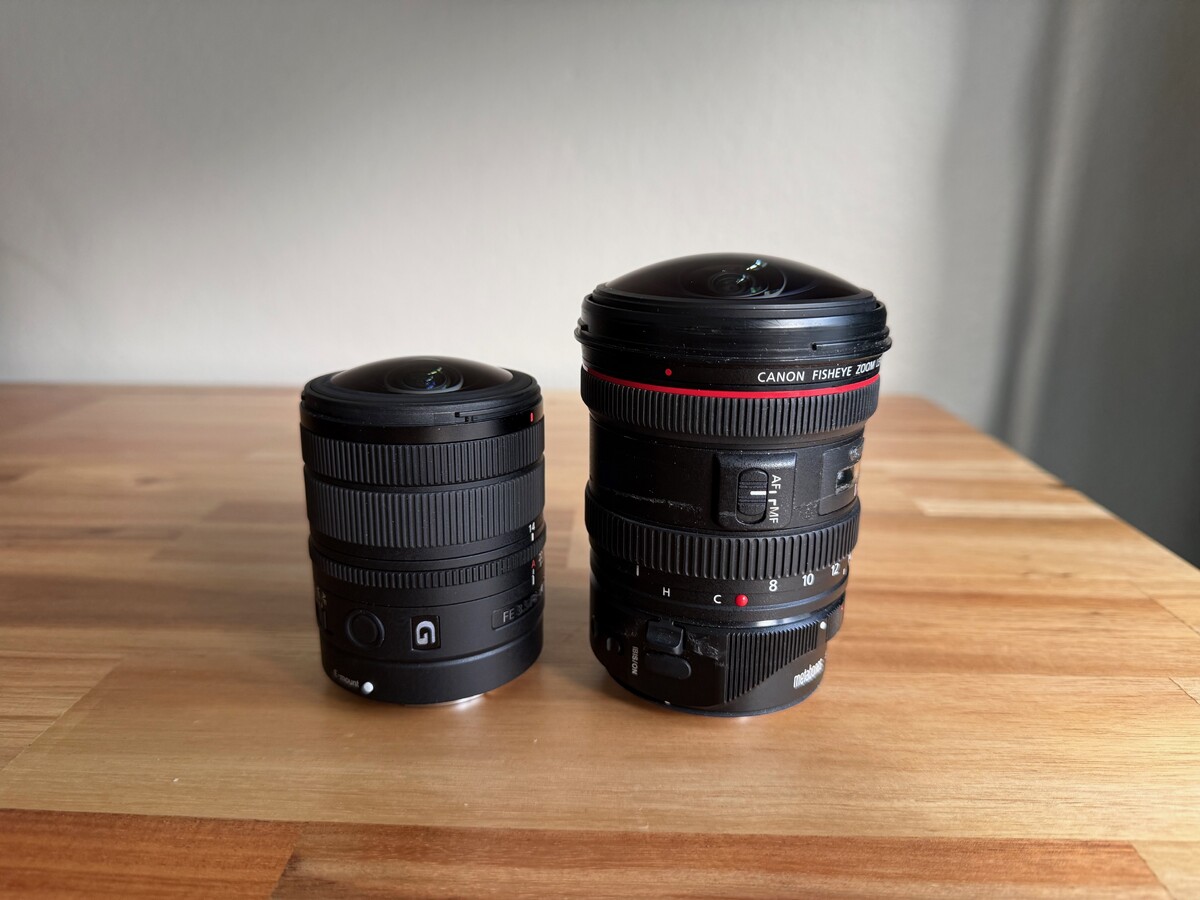
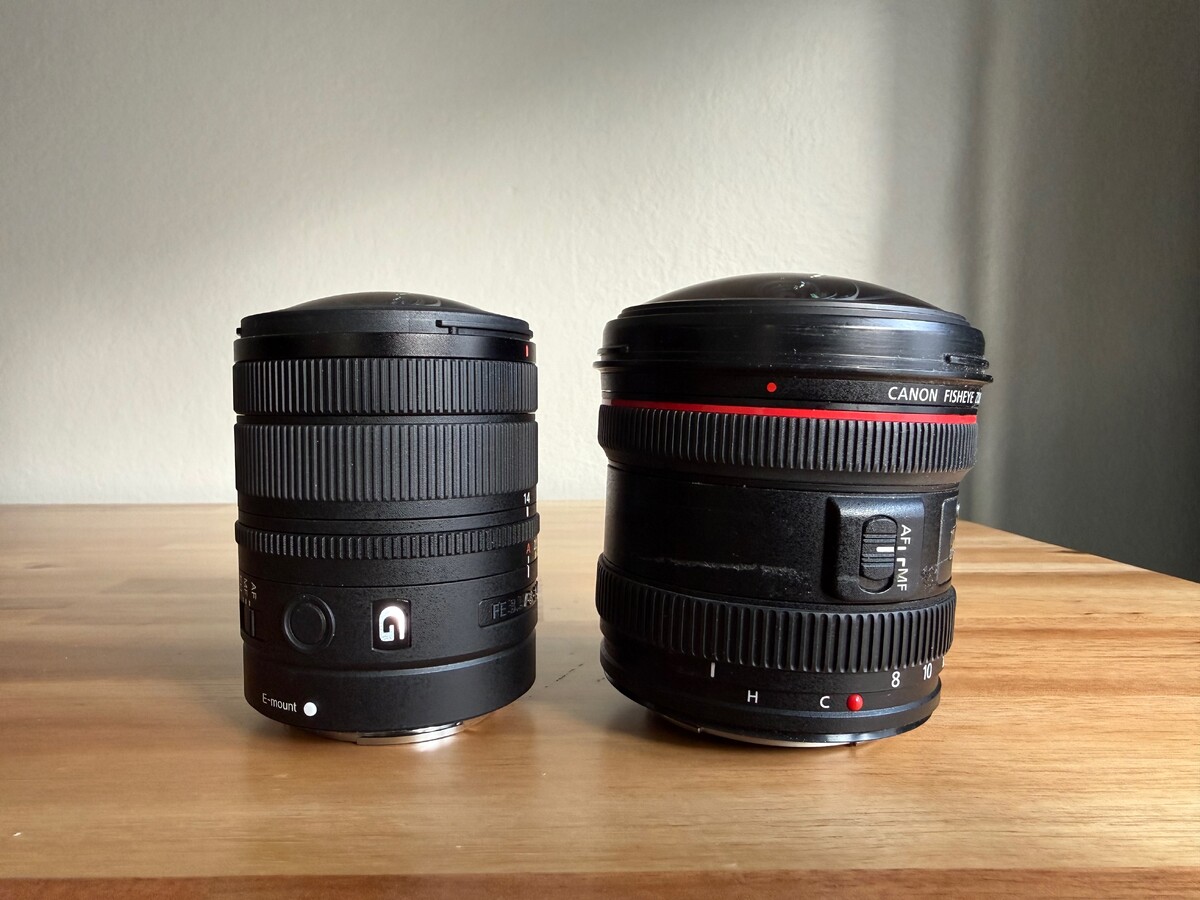
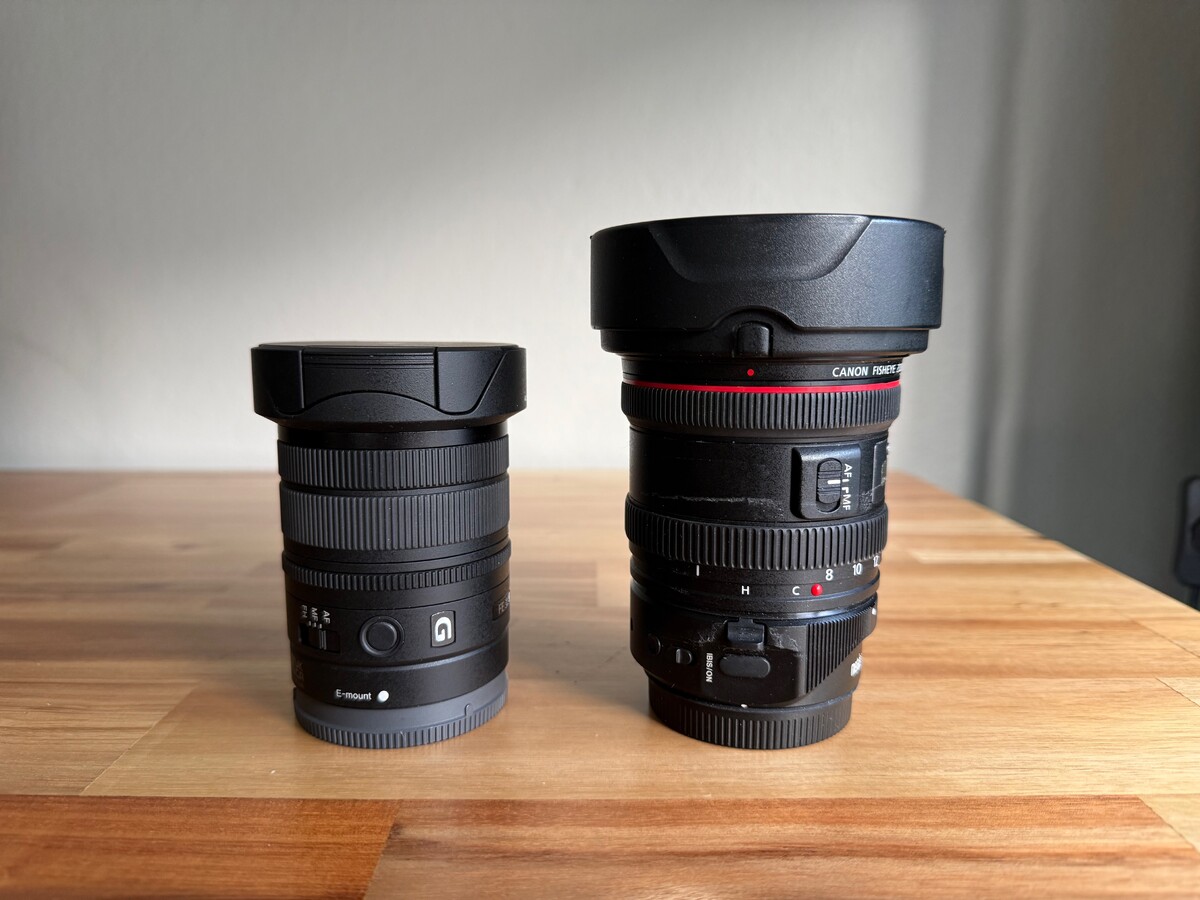
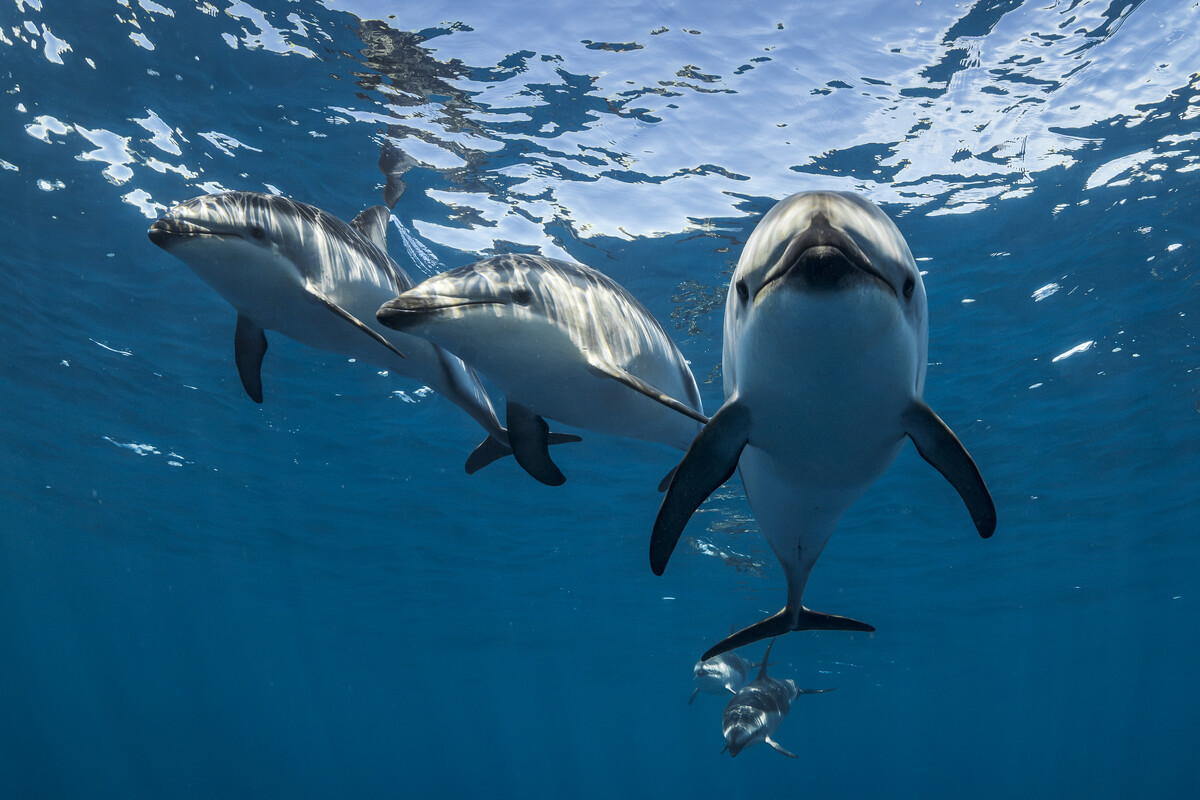
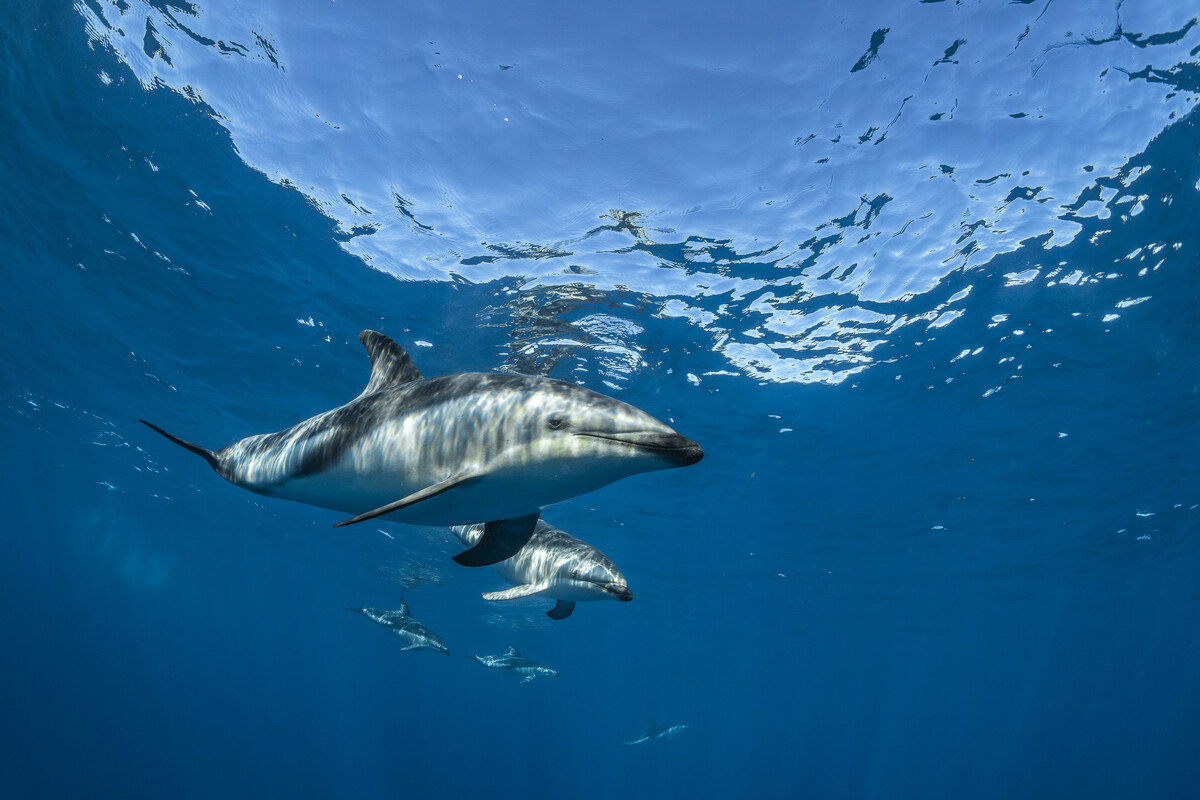
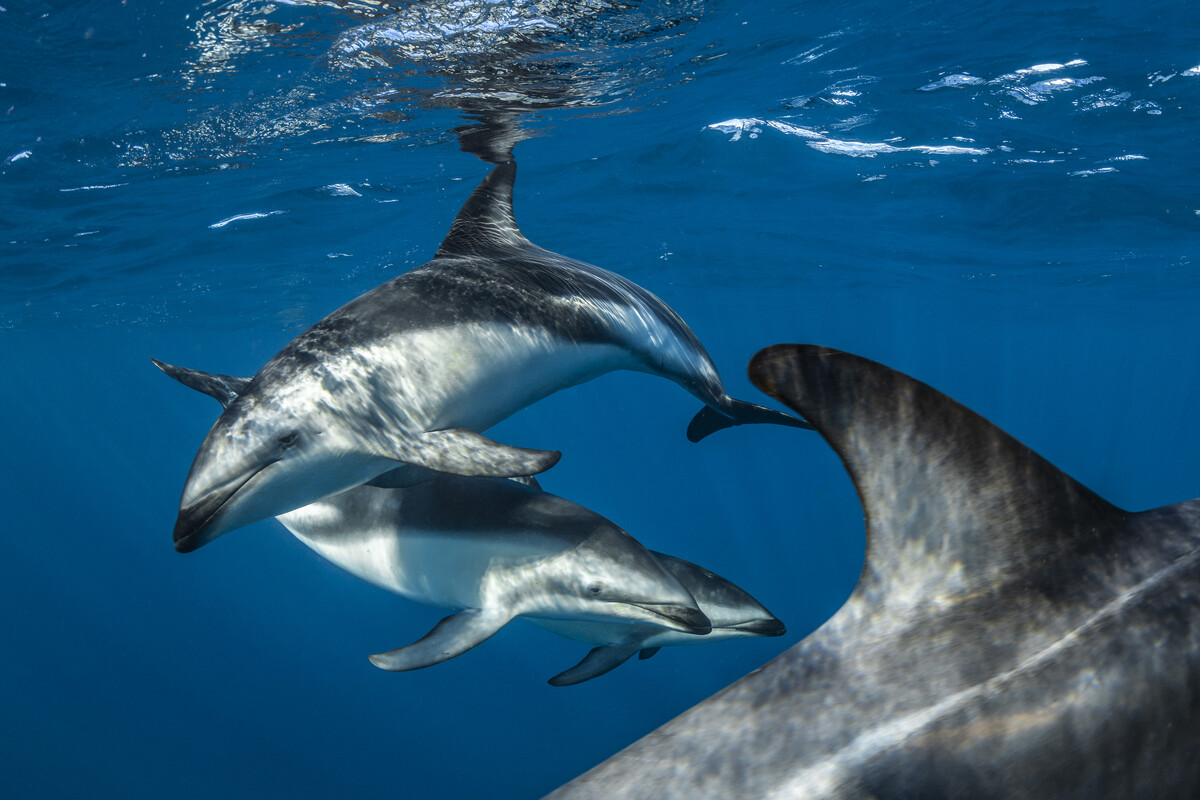
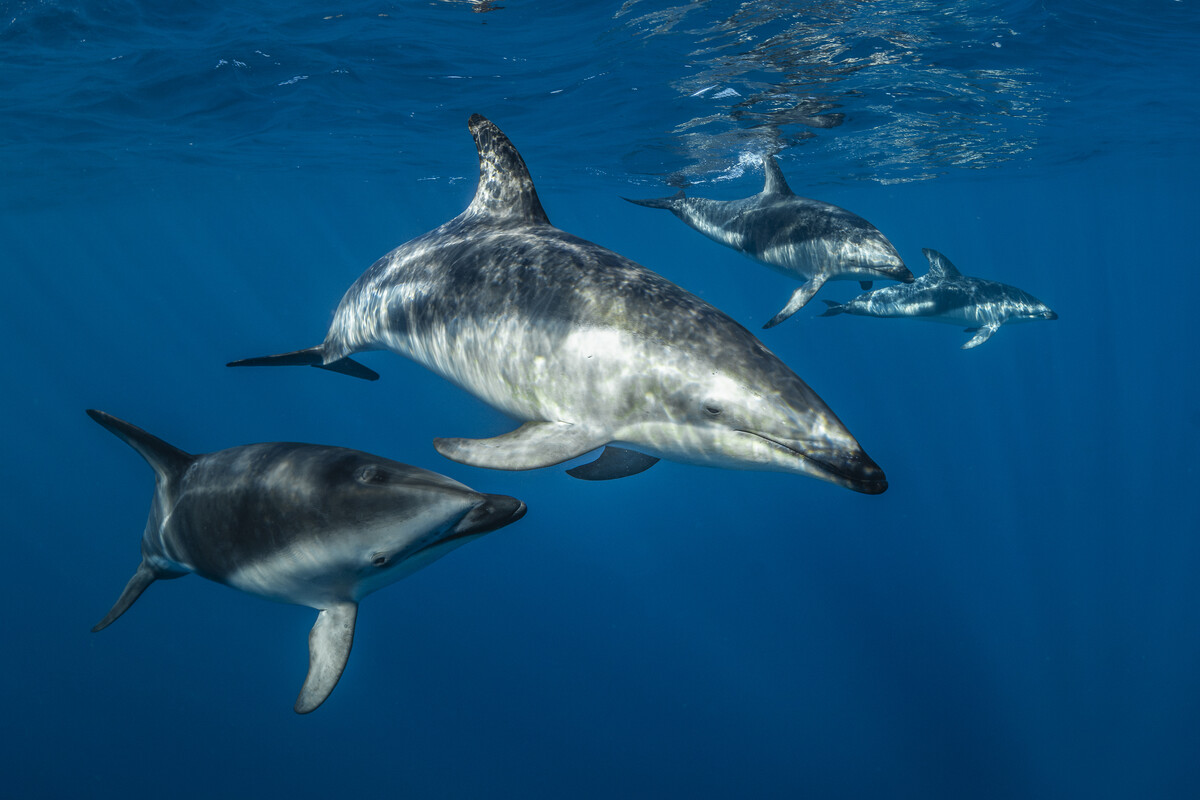
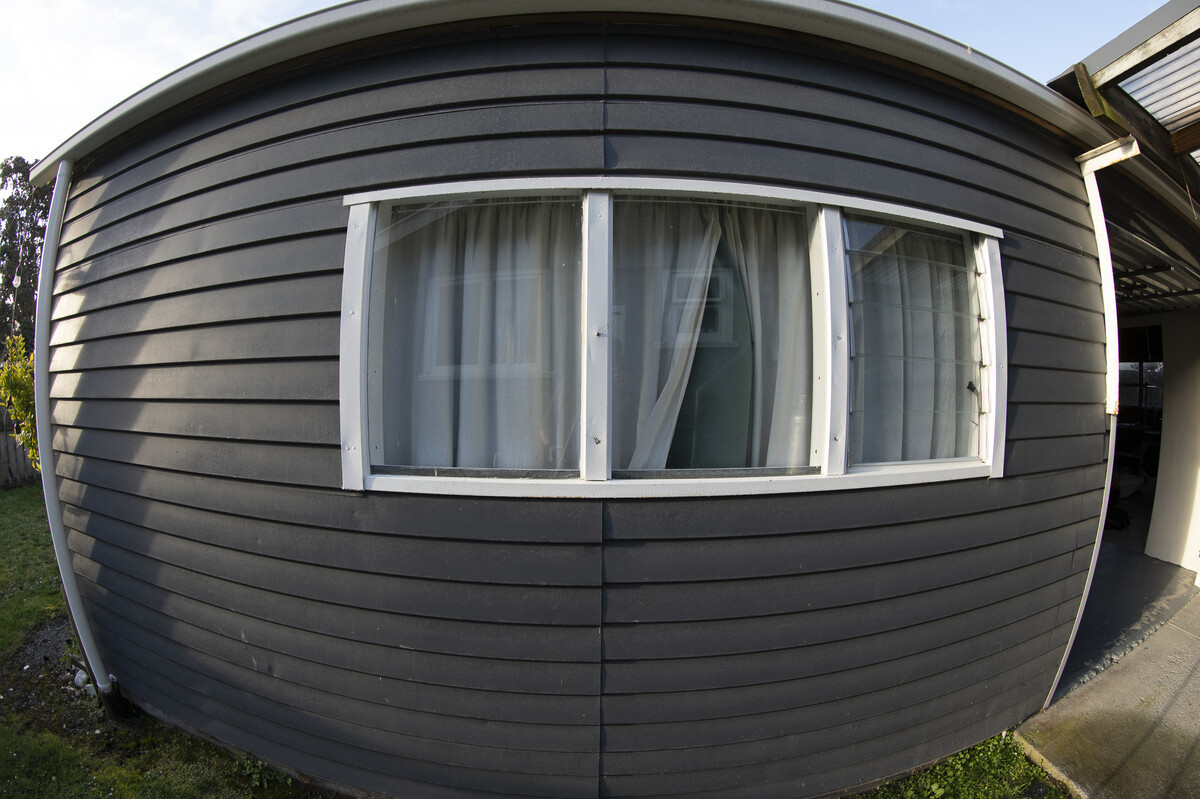
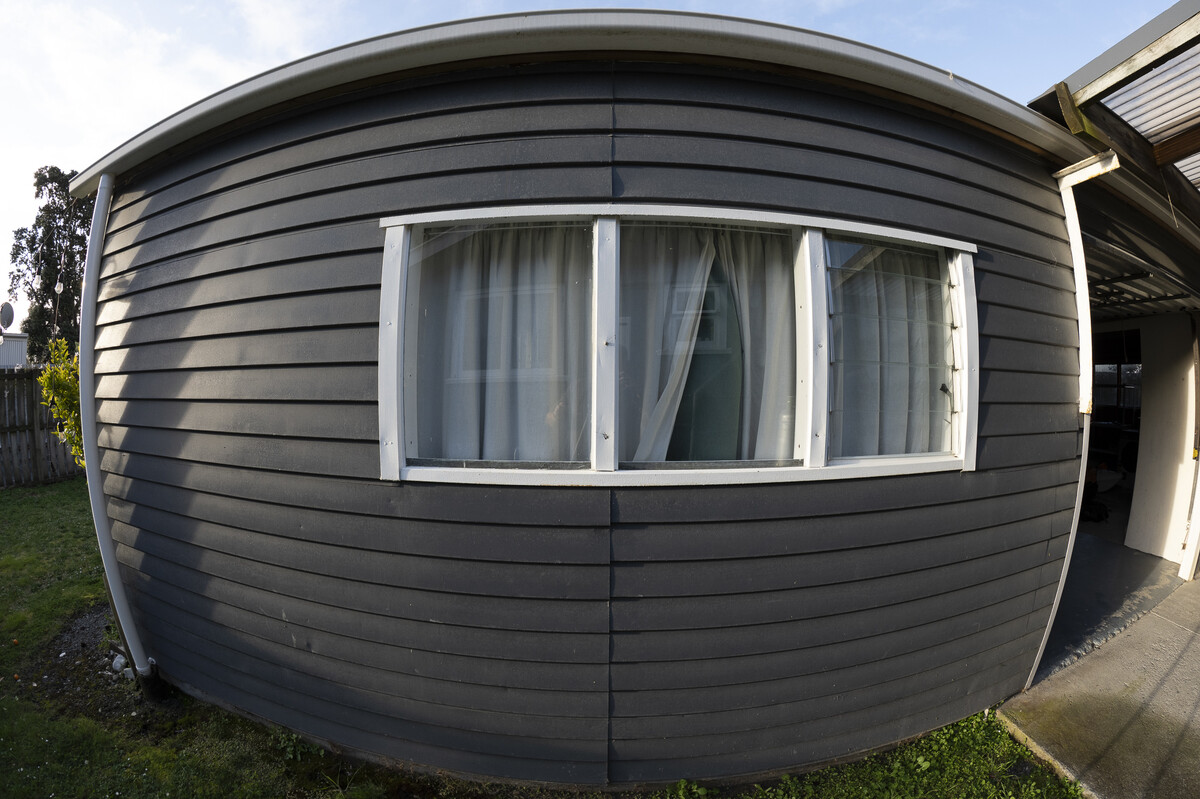
I'm a Sony Digital Imaging Advocate, working with Sony New Zealand. I've been lucky enough to have access to a pre-release FE 8-14 mm F3.5 Fisheye G, so I hope it'll be helpful to share some initial information on the lens here. A fisheye is my favourite lens underwater. For me, that's meant shooting with the Canon 8-15mm fisheye on a Metabones V since 2018. I've been using that with Nauticam's recommended port configuration: the 35.5 mm N100-N120 adapter, 30 mm extension ring, and the 140 dome port (18810/18811) with removable shade. New Sony 8-14 mm (left) in comparison to the Canon 8-15 mm (right). Top: Sony vs Canon + Metabones V. Middle: Sony vs Canon lenses. Bottom: Sony vs Canon + Metabones, with lens hoods attached. I was asked to try to get some underwater photos with this new lens. It's still wintry here in the South Island of New Zealand – 10ºC in the water – and the weather has been generally rubbish, so (a) the dive shop is closed, and (b) no sane tourists want to snorkel. That's limited my opportunity to actually use the lens to two – one, fortunately, rather good – snorkelling sessions with dusky dolphins. These dolphins are (extremely friendly) speedsters, and I'm not fully dialled in on settings / AF struggles with them, so hopefully the shots look nice – but don't read much into them in terms of actual lens capability. All dolphin shots are at f/10 and 1/500 or 1/640 sec (auto ISO) Anyway, some relevant information and stats on the new lens: Price in Australian dollars: AU$2,099 (I wasn't provided with other prices, but they should be out now or available shortly). Autofocus: capable of 120 fps tracking. Two linear focus motors. Min. focusing distance is 15 cm, for a 0.22x magnification ratio. Aperture is f/3.5 – f/22. Relies on in-camera stabilisation. Lightweight (314 g). It has a manual zoom ring. Zoom is internal. There's a 3-position zoom lock on the lens for full-frame circular fisheye (8 mm), full-frame diagonal fisheye (14 mm), and an intermediate lock position for APS-C diagonal fisheye. It has a rear filter holder (same size as the 12-24 mm GM and 14 mm GM lenses). It has an excellent new lens hood design that minimises the in-bag diameter of the lens, which I'm a big fan of. Sony teleconverters don't work with this lens. The Sony 8-14 mm is 82.8 mm long, compared to the Canon 8-15 mm (without Metabones V) at 83 mm. My understanding is that the Metabones V adds about 26 mm to the Canon's length. To use the Sony underwater, I simply removed the 30 mm extension ring and... thought positive thoughts. Hopefully some of you can do proper pool test shots soon, and I'm confident (= extremely hopeful) that Nauticam will produce a proper N100-optimised dome port for this lens. In the interim, I can at least say that the N100-N120 adapter -> 140 mm does work for large animals in the blue (i.e. not thinking about corner sharpness, which I haven't looked at). The Sony's diameter is 63.1 mm, compared to the Canon's 78.5 mm. I don't know enough about optics to surmise how that affects things. I took a fascinating comparison shot of the side of our garage with the Canon 8-15 mm (at 15 mm) and the Sony (at 14 mm) to show the field of view for each. Above: Canon 8-15 mm at 15 mm Below: Sony 8-14 mm at 14 mm I then took a few photos with the Sony at different apertures in case anyone wants to take a look. The raw test files are on Dropbox here: https://www.dropbox.com/scl/fo/n3h4zkyvnq0ngs2tjsw4l/AI88gajXJDUTGs0uuk7IwPw?rlkey=pf2farxnrnxgkvnqthktfffa0&dl=0. I have no doubt this will be a popular lens with underwater photographers, and a really important addition to the Sony lineup for many of us here. I am very happy that my pleas have been answered :) Simon.