Everything posted by Nemrod
-
BS charged him $250 dollars. And the issue continues now. It has malfunctioned from the beginning. Being my regular dive buddy, I have witnessed it virtually never having a green light. Despite the $250 repair and despite replacing the valve and the electronics. What part is the lemon, I am tending to believe now the whole caboodle.
-
Two issues issue I see and have observed with my buddy's camera, AOI Octo, the constantly flashing red vac light is being seen in the strobe windows and confusing his YS strobes. The other is that the trigger is very weak and is insufficient to reliably trigger a YSD3 strobe. Probably due to the trigger battery being always dead and under drain from the flashing red vacuum warning light. He might get a green light once out of ten. Ridiculous. His YSD3 strobes function perfectly with his backup TG. One or the other or neither work with the AOI reliably and have even locked up.
-
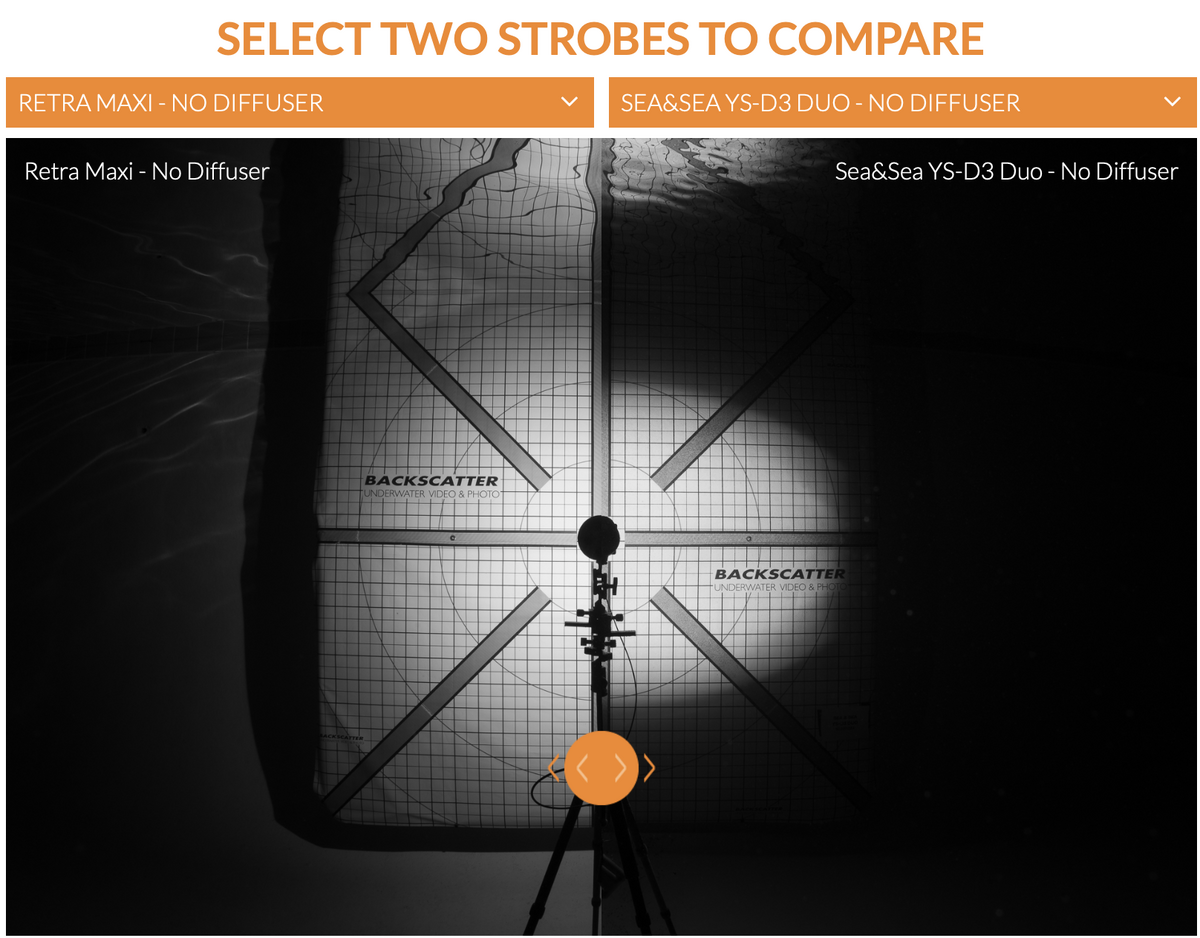
Not sure saltwater will make a difference. The Inon 330 did not just look brighter, it was brighter factually than the YS-D130. What is bizarre is that the S&S YS-D3 with the flat diffuser was also brighter and wider than the D130. Well, hmmm, strange. They were on my short list but the YS reputation saved me possibly.
-
Backscatter did include the D130 in their testing. Maybe not the real world, or maybe it was too real.
-
Yes, you are right. I give up. I have the entire system in my suitcase. I put the housing in it's original padded bag in the suitcase and bubble wrapped my strobes. WWL in it's original padded case. I will have two checked bags right near the 50 pounds limit. Arrrgggh. Laptop and lipo batteries in my little carry on. And my few meds I seem to suddenly need, I guess.
-
Leaving for the Maldives in a few days. The Canon/Nauticam R50 made the cut with a CMC-2 macro diopter and my WWL-1 for wide angle and two Retra Maxi strobes. I am not Business or First Class so limited to one tiny personal item and one small carry on up to 7kg. Strobes, arms, WWL-1 will be checked, no way around it. Domestic to the Carib destinations I carry all that on but do not have the restrictive limits that international carriers seem to delight in. I do not see how y'all carry on all the domes and strobes -- ?
-
There have only been a few studies to look at this question and the results were essentially that strobes did not disturb the creatures whereas video lights did. The study I am thinking of involved seahorses, known for being sensitive and shy. Handling, prodding, spending excessive time on a critter, even proximity alone, are likely to affect creatures as much as a quick photo. But, hang out on top of them and pester them, anyone would be annoyed. With or without a camera and strobes. From the test and in use, I have never seen a strobe that can go from so little to so much with the twist of the dial of the Retra Maxi. It is the most and possibly the least.
-
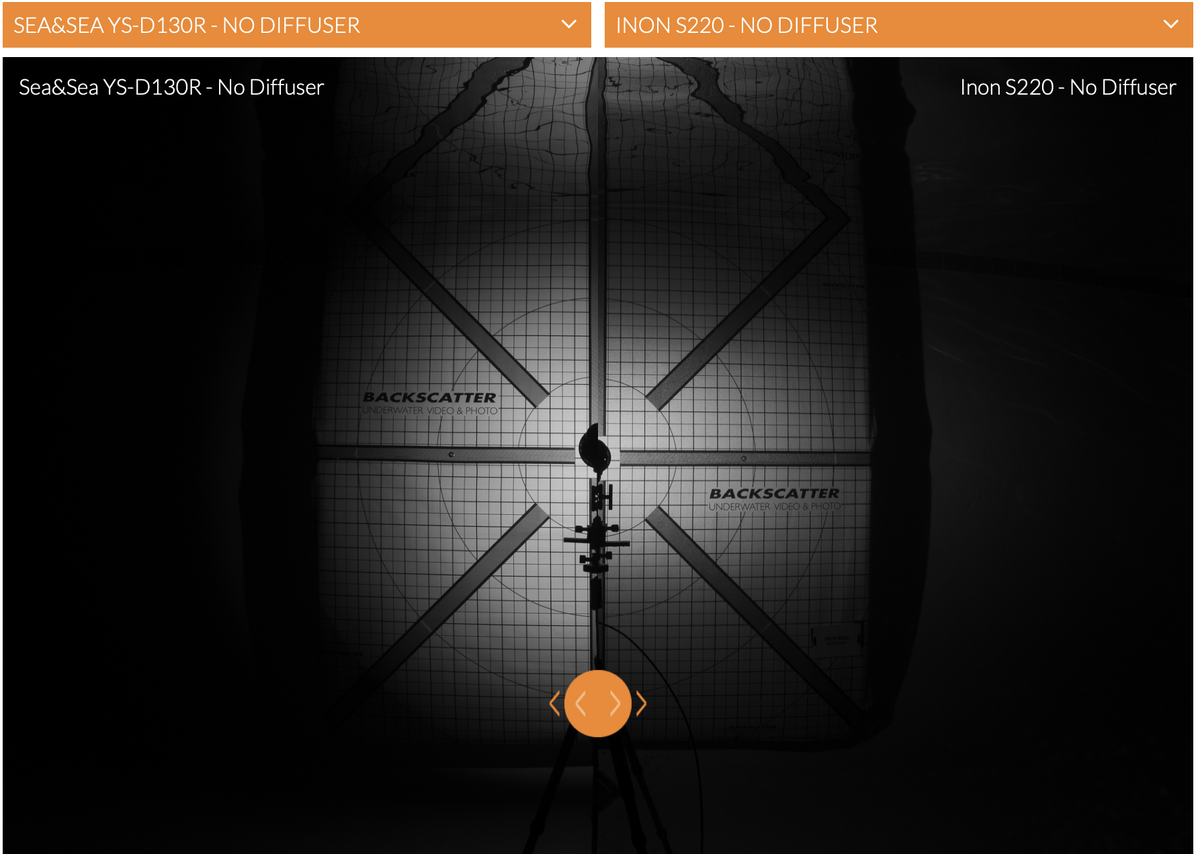
More convinced than ever that everybody needs a pair of the little Inon S220 strobes. Almost as bright as the new D130 in the center and notice the beam is wider in the horizontal axis than the D130. Clearly an elliptical beam, but that is per Inon design.
-
I want to thank Backscatter Photo for the most informative and fact based comparisons on strobes ever. We can quibble over details that might subtly affect the results here and there and improvements in the graphics but regardless, huge effort, thank you..
-
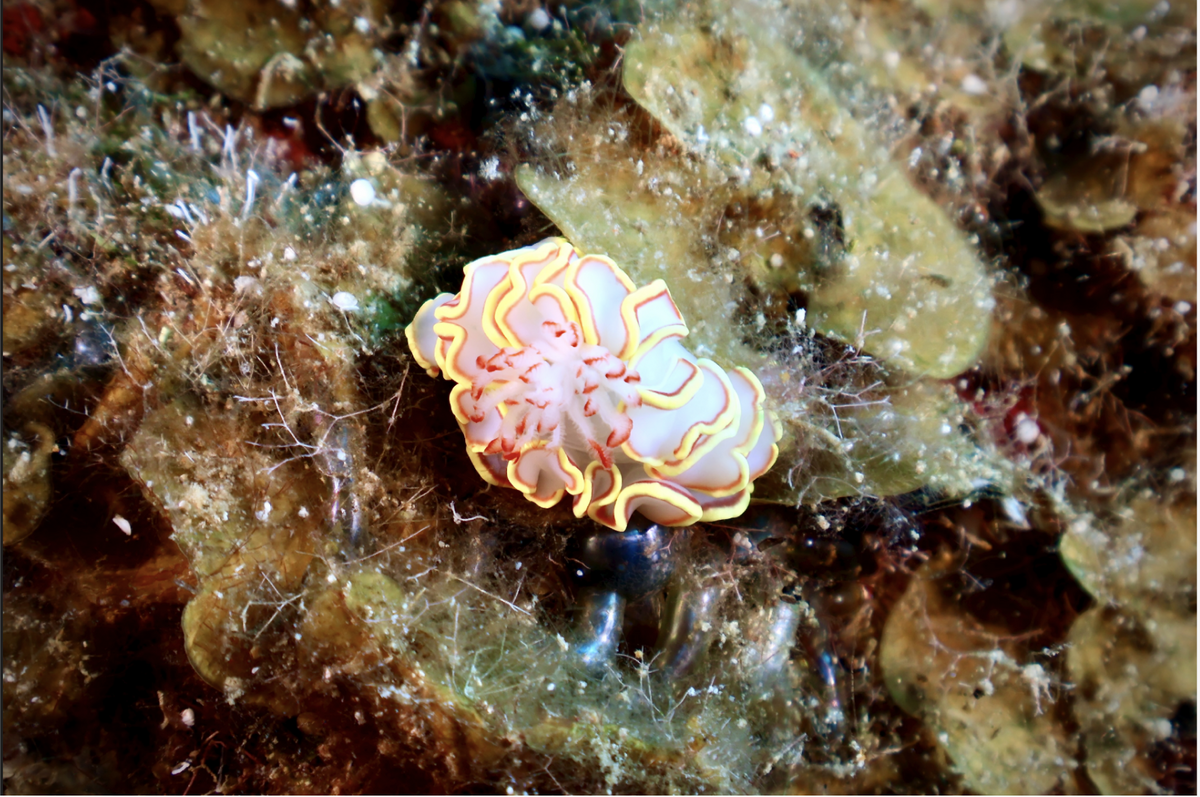
Nauticam NA-R50, WWL-1, Inon S220X2, Roatan:
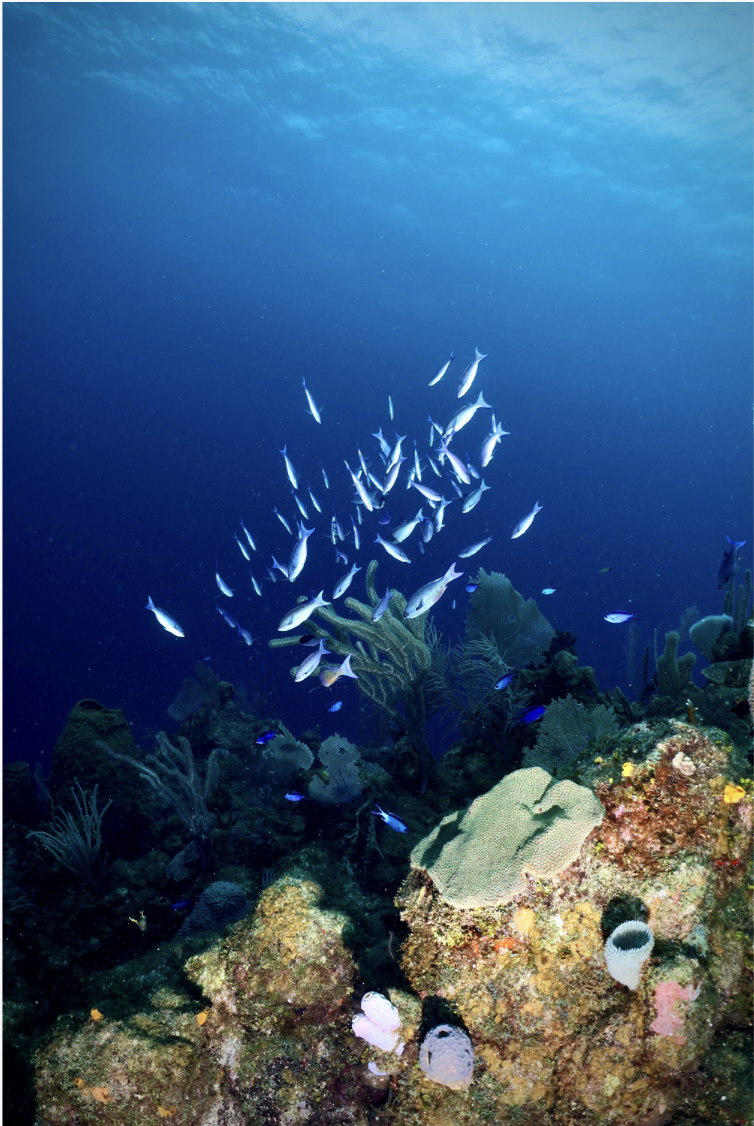
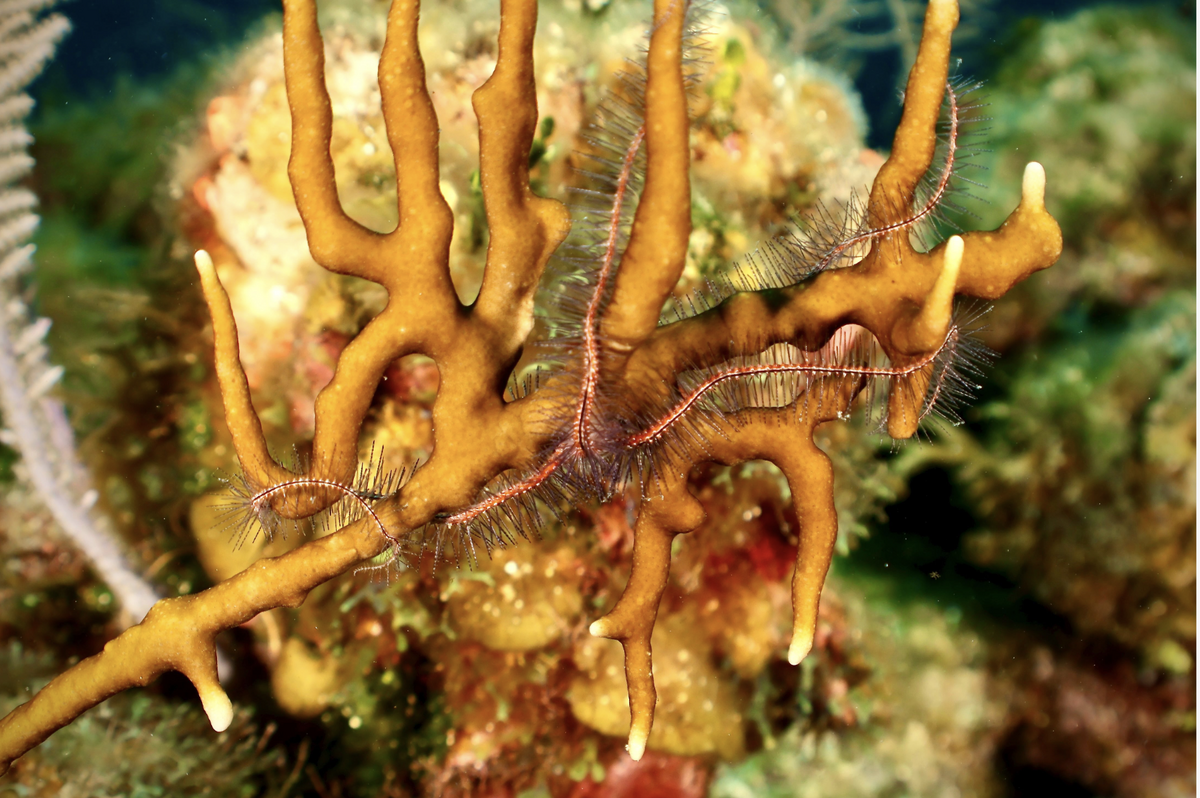
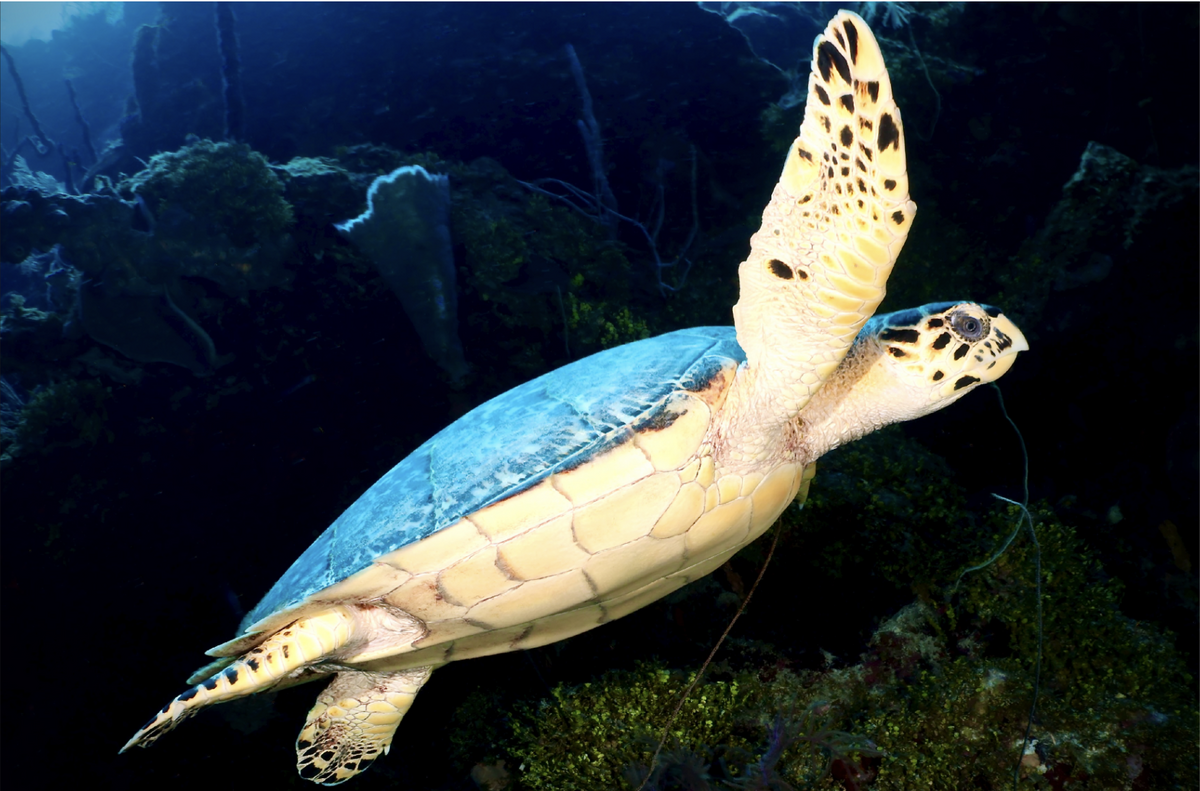
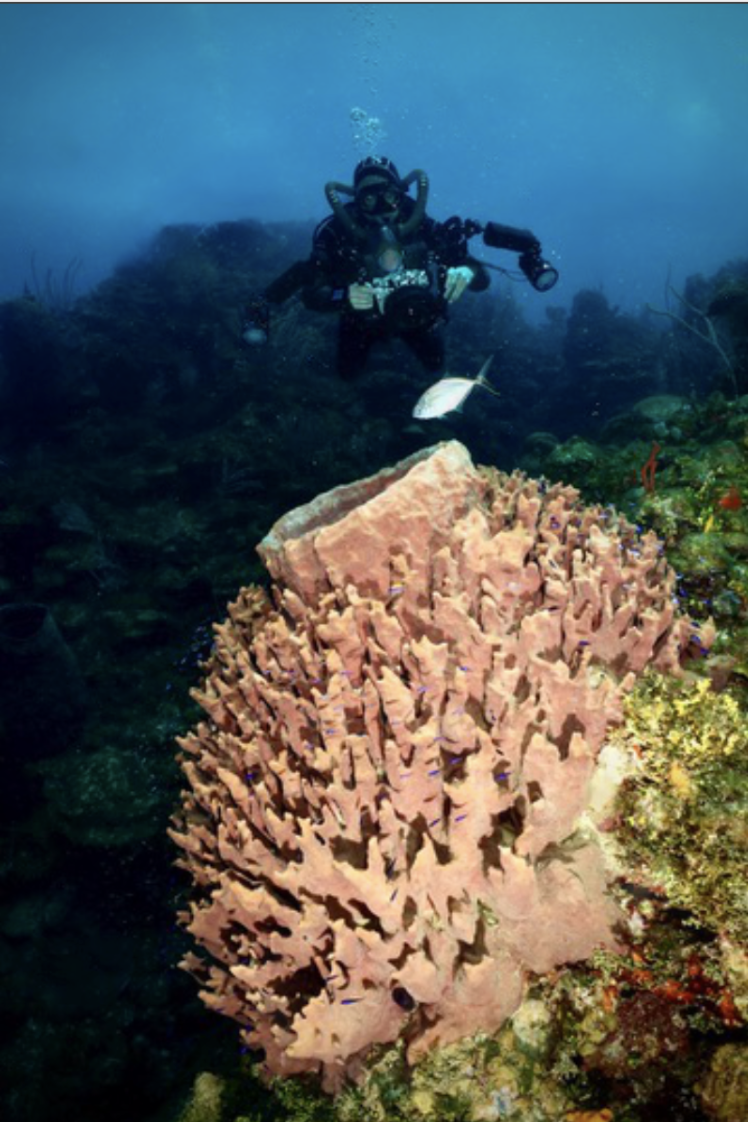
-
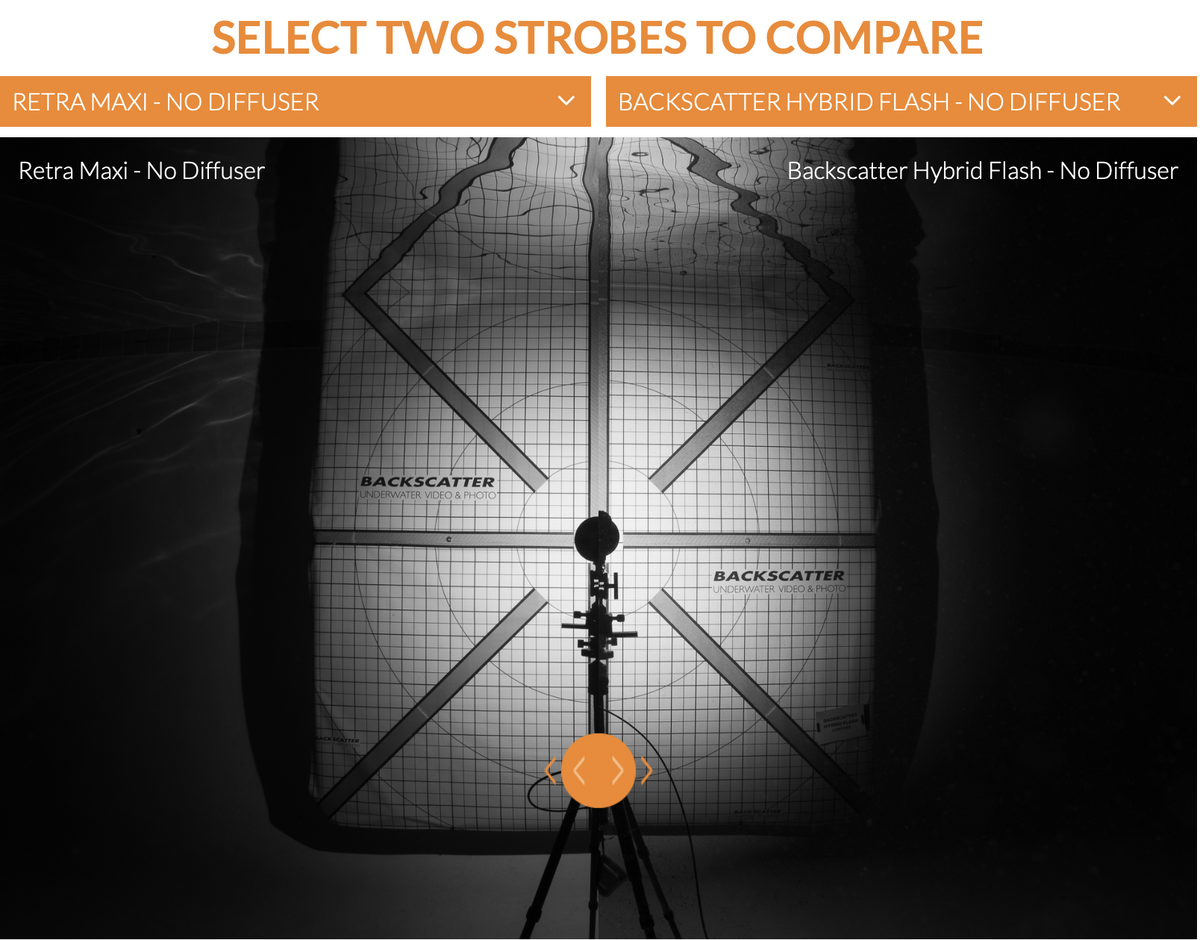
I think Back Scatter did make a useful and honest attempt to provide good data. I also agree with Retra that improvements could be made especially in the graphs and some of the measurement methodology. I really enjoy the side by side comparison where I can pick a strobe and add diffusers. There is no serviceability or reliability chart! Inon and YS for example. Basically throw away strobes. True, I have Inon strobes that are 20 years old and still going and several which developed various problems with switches and disappeared into the nether world when sent off for repair. I will gladly pay more, even a lot more for a strobe that has a strong warranty and can be repaired, serviced and even updated. This is fun! Nearly the same brightness in the center but clearly one strobe is producing a lot more power. The problem with GNs! And then the Maxi vs HF-1, just what I see there, the Maxi has a fuller, smoother light output and is if we must say it, slightly more powerful regardless of the charts, I am looking at it with my eyeballs!
-
You perhaps misunderstood, the 16-45 is the lens that AOI and Nauticam and Marelux R50 housings are designed to use with the intention that the range is expanded on the macro end using various available macro diopters like the CMC-1/2 and on the wide end by the WWL-1 or the AOI UWL-09Pro. Both producing a wide 130 degree field and a huge zoom range. My lament was that had it been a 16-45 I could use the WWL-1C being slightly smaller than the WWL-1 and the UWL-09. Of course the WWL-1C can still be mounted with the FOV limited to 118 degrees vs 130+.
-
I would like to see brightness measured as a ratio of center vs some standard degrees from center, like at 90 degrees to axis and 120 degrees to axis. Edit, I meant 45 and 60 degrees.
-
The R50 with the 18-45 suffers from the same things any lens does through a flat port in that wide is not very wide when it comes to big stuff and zoomed in is not quite zoomed enough for macro. Thus the Nauticam housing and the AOI housing are both configured for use with their respective macro diopters and wide angle lenses. Otherwise it is what I call a fish pic lens ;). My one real complaint for the lens is that it is an 18mm and would prefer it be a 16mm, thus the WWL-1B or the AOI UWL-09 will be needed instead of the slightly more compact WWL-1C. The pros are also the cons, no ports to tote about, no expensive trigger than does not work when I need it to, more travel friendly but relies upon external wet optics but you get by with a single camera lens and no domes, vfs, monitors. For surface photography, my complaint there is that please Canon, come on now, give the little thing a modicum of weather/dust sealing please. The R50 is fast to focus, not fussy about dim light, takes pictures like what you would expect of a Canon camera. The guys with the latest full frame Sony AR7-5-6-IIIV-B will not be impressed with their domes and monitors and whatever that $7,500 Nauticam lens is and 45 degree view finders, but heck, the idea was a compact outfit that can produce stunning photos and hold it's own and that is what it is.
-
Realizing many of the folks on this forum are very serious about everything they do I hardly see $5.00 as an impediment to entering a for the fun of it contest to support the site. Cap the entries to five photos and just charge a $20 entry fee. Or charge enough to enter that it would include a choice of a ball cap or a tee shirt. And if I or some of the less serious guys entered, uh, for the purpose of supporting the site, promise not to laugh, at least to our faces! Or a sticker for my camera case, "I am not a Professional, but I did enter a Water Pixels contest and they laughed" or something!
-
That is just it, you cannot have your cake and eat it too. Didn't that get somebodies head removed or was that "let them eat cake" or something! Anyways, to have a monitor or 45 degree VF and a dome, it is what it is. By going to the larger Maxi strobes which are neutral I was able to remove the outer float arms and just have bare skeleton arms outboard. View finder/monitor, no. Run and gun or jump and go, all of that stuff added negates the premise. In some future where I am exceedingly wealthy I will hire a porter to haul all my equipment about and when we see something photo worthy they will hand me my camera and assist. And serve as a model and set up off camera lighting. And if an OWT shows up hungry sacrifice themselves for benefit of my escape!
-
Basically no. The video light is on a programable switch position that is via the Retra app specified to be TTL cancel or the video light. Either but not both. And the programmable mode (U) position is on the mode dial and power is set on the strobe power dial. The focus light is available in all modes via a push of the center button a two power levels. And, yes, it does shut off when the strobe is triggered. I find both focus lights to be adequate for lighting my way through swim throughs or a night dive. I do not think the HF1 can do that either but I admit to not being particularly smitten with it once I found out it had no support for Canon/Nikon and Sony only via yet another $ trigger and no universal TTL. And it is plastic, yuk.
-
Like the WWL-1 or WWL-C or not, this "scenario" is exactly why I have the NA-R50 and the WWL and CMC lenses and my new Maxi strobes. The rig can cover a huge range of opportunities and is relatively compact and travel friendly. No unreliable triggers, no ports, no multiple lenses and domes. No I do not switch from the WWL to a CMC in the water but it usually becomes quickly apparent that an area is more suited to one than the other.
-
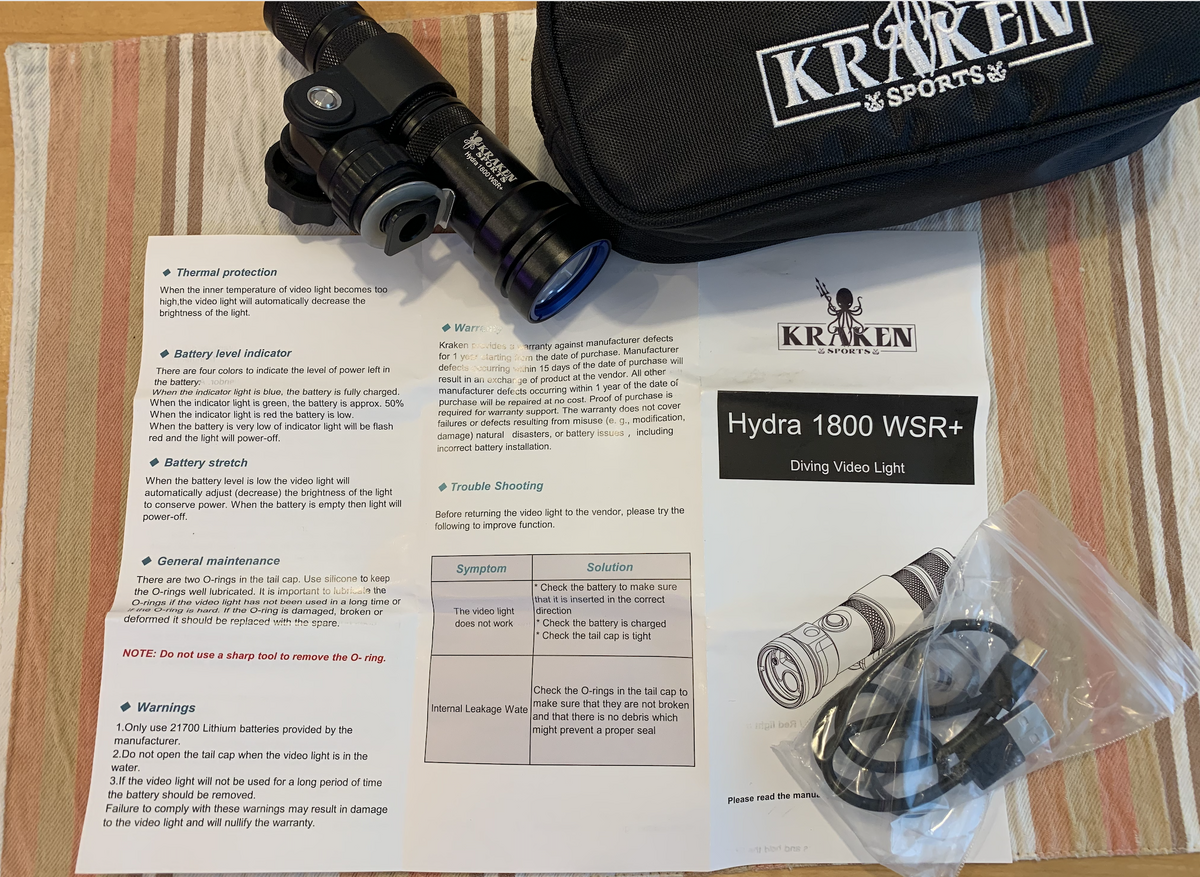
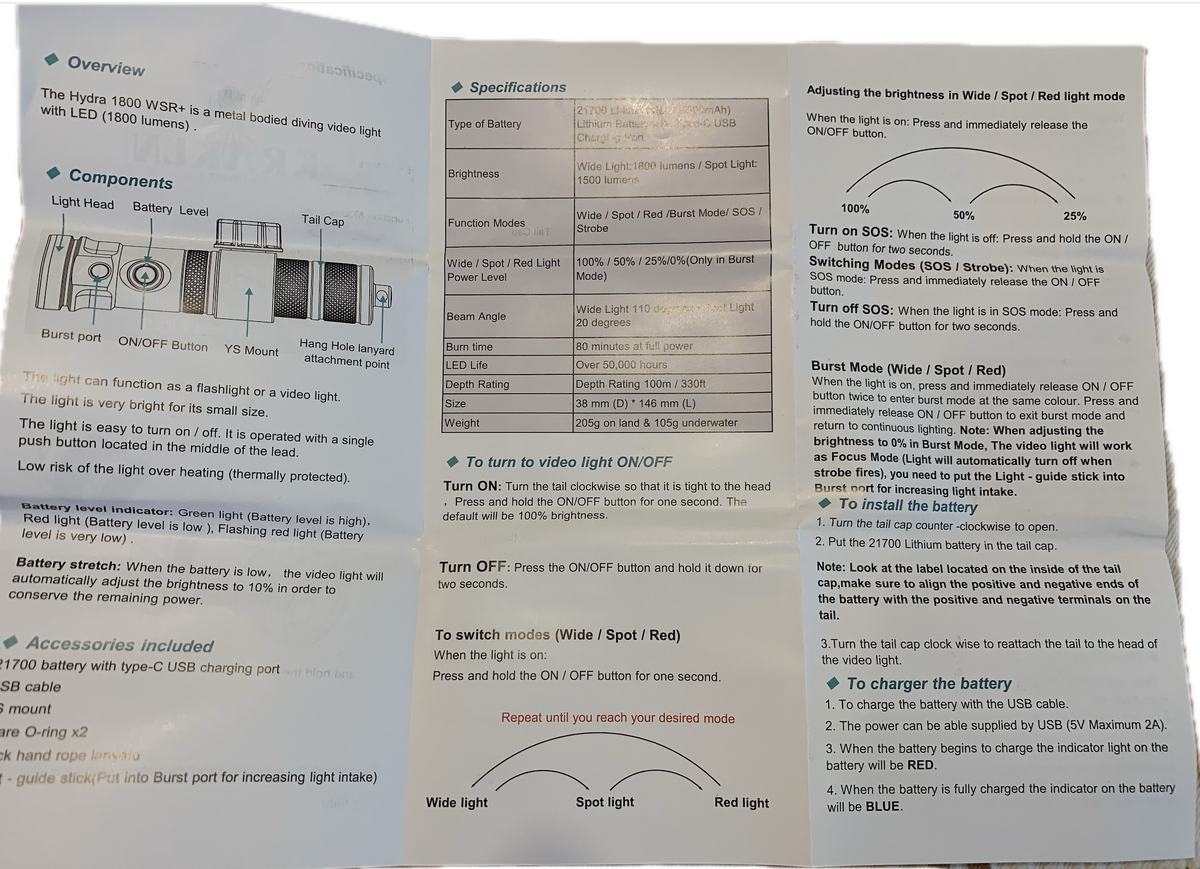
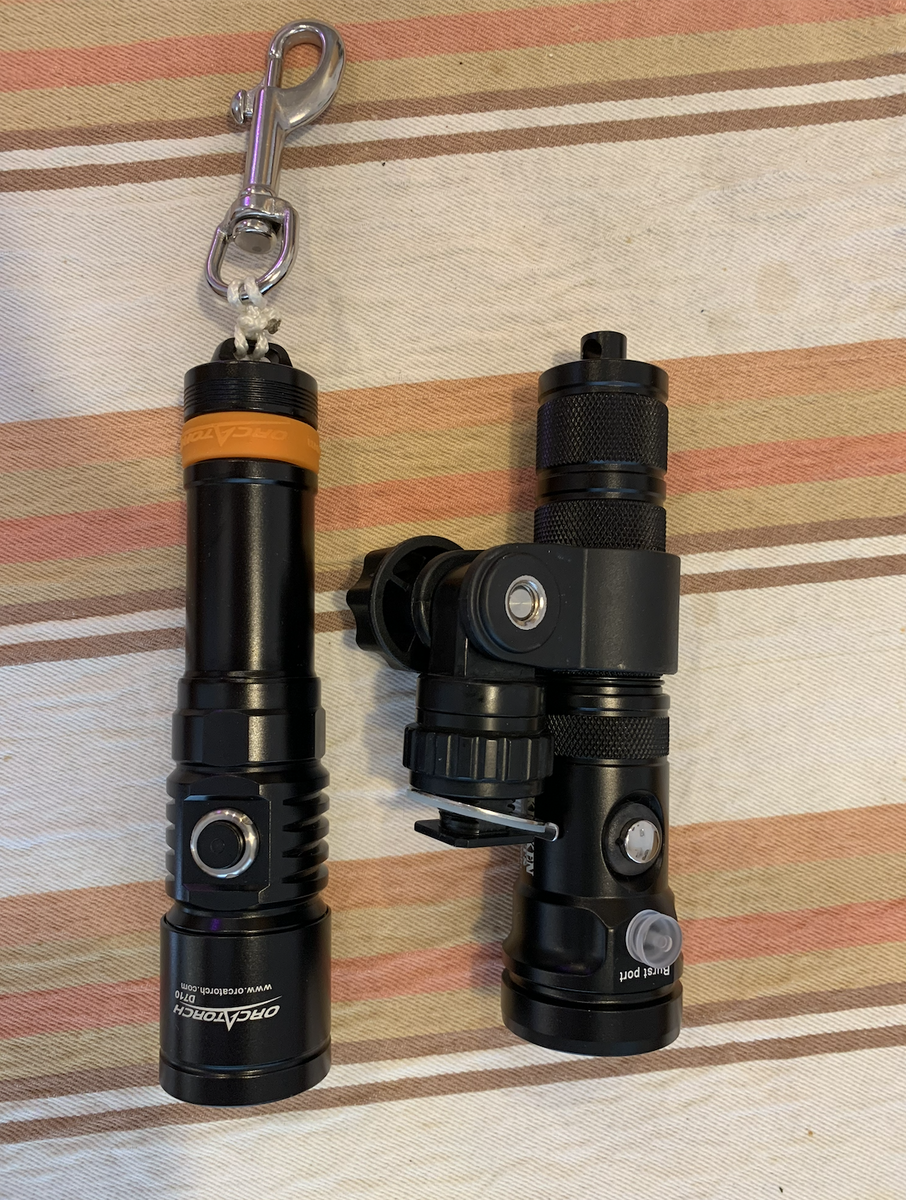
Dave, The Kraken 1800 WSR is a single button. It uses the single button to navigate between several modes. But in any mode, pressing the single command button twice quickly will place the light in auto-off (Burst) mode. I had previous the 1500 model and after much use it succumbed to corrosion and the lens gland leaked. My new one I shall endeavor to be more careful with it to clean it well. I have an Orca 710, it is a slightly larger light than the Kraken unit.
-
It requires a double push to activate the auto-off feature in any mode. LOL, I have to read the instructions every time I use the darn thing. But I like my Kraken 1800 WSR Focus Light and it works good. Or maybe it was a single quick push, darn it!
-
The auto off feature is important to me. Both my older Inons and my new Retra strobes have an auto off feature and my Kraken 1800 and former 1500 light that rides atop my housing also has an auto-off mode. I find it not required to hook an optical cable to the Kraken, it sees the strobes flash just fine. The purpose/use of the auto off is to prevent backscatter illumination. Most noticeable when I use the focus light mounted in the cold shoe on my Nauticam, especially at night. For integral strobe focus lights perhaps less useful since anything the focus light illuminates will be illuminated by the strobe light as well, not so with a focus light mounted over the lens port.
-
Sea Grape.
-
Like any tool or technique, it is useful when it is and not when it is not.
-
The ball mount does not come installed. They were in a separate bag with the grease and spares and an Allen key. My recommendation is to remove the ball mount for transport to conserve on space and to remove the ball mount after a dive trip so that trapped saltwater there will not seize the threads or cause corrosion. A little dab of silicone grease will help as an anti-seize. This is not a fault or defect nor a complaint, just normal maintenance on an expensive item you will want to enjoy for many years.
-
There is a single screw through the middle of the ball mount that goes into a sturdy thread in the strobe case. There is a plastic gasket to isolate (for corrosion) and an anti-rotation pin. Very solid mounting.