Skip to content

Lights, Strobes, and Lighting Technique / Archived topic

RETRA Strobe Thread

Started by guyharrisonphoto ·

  • 698Posts
  • 698Replies

Read-only discussion

RETRA Strobe Thread

698 posts
  1. 1 hour ago, Silvana said:

    I would be curios on a feedback on Retra strobes with the extra battery compartment, also how you like the snoot

    The superchargers bring three main bonuses:

    1. Eight batteries easily last 3-4 dives, so there's no need to change batteries while on a day boat, or, for that matter, bring spares.
    2. Recycle times are sufficiently fast to sustain shooting half-power at 3fps - useful for action or blackwater
    3. They make convenient handles to aim the strobes, especially when snooting

    As for the LSD, it is somewhat challenging to use, but not too bad. The bright aiming light on Retra Pro being aligned with the main flash bulb make positioning it a lot easier than some other options. Backscatter MF-1 is probably a better option specifically for snooting, if only because it's a lot more compact - Retra + LSD + supercharger is seriously bulky - but no other strobe on the market is as flexible as the Retra. My favorite accessory is actually the reflector.

  2. I'm using the Retras with the Supercharger and LSD too.

    As Barmaglot says, the Superchargers make a huge difference to battery life which, I find, is especially important with the LSD. I use the standard mask set quite a bit and this often requires an increase on the strobe's power - often to +3 if the smaller mask holes are used.

    I agree on the 3-4 dives with the 8x AA batteries. Say about 350-400 images with Eneloop Pros

    I've not used the Backscatter MF-1 but, got to say, I love the LSD and use it on pretty much every macro dive now. Its ability to target light accurately when used with the Retras is brilliant. When I had the LSD on my Inon Z240 strobes I reckoned on about 50% accuracy of the direction of light. With the Retras its 95%. 

    Yes, as Barmaglot says, it is bulky but when added to a generally big SLR system, the difference is not that significant (I'm using a D500 in a Subal housing with 2x Retras). As he says, it is super flexible and with the right arm combination (I use a 5" + 8") you can get the LSD pointing inside (corals, tube worms) or backlighting subjects.

    It does take some getting used to to get the aiming spot-on and not casting the subject in shadow rather than really lighting it - but it's only practice. I was using it with a Nikkor 105mm lens on the D500 and then switched to the Nikkor 60mm which is a breeze. For the first time in ages yesterday I used it again with the 105mm and had forgotten how extra challenging that is on DX with a snoot! But, again, it's just practice. The Retra strobe/LSD combination certainly makes it about as straightforward as it could be.

    I've also just got the Retra Macro rings and have those on the right-hand strobe and the LSD on the left (it makes for good handling if you are right-handed) and am finding that combination terrific for all macro subjects.

  3. 16 hours ago, Barmaglot said:

    The superchargers bring three main bonuses:

    1. Eight batteries easily last 3-4 dives, so there's no need to change batteries while on a day boat, or, for that matter, bring spares.
    2. Recycle times are sufficiently fast to sustain shooting half-power at 3fps - useful for action or blackwater
    3. They make convenient handles to aim the strobes, especially when snooting

    As for the LSD, it is somewhat challenging to use, but not too bad. The bright aiming light on Retra Pro being aligned with the main flash bulb make positioning it a lot easier than some other options. Backscatter MF-1 is probably a better option specifically for snooting, if only because it's a lot more compact - Retra + LSD + supercharger is seriously bulky - but no other strobe on the market is as flexible as the Retra. My favorite accessory is actually the reflector.
    Thank you for the comments! Regarding #3, i heard that handling the strobes from the extra batteries compartment can cause leaks. This is from a person that was not actually using them, so I was taking it with a grain of salt. Happy to hear your experience is different as I am interested to transition to Retra strobes.

  4. 7 hours ago, TimG said:

    I'm using the Retras with the Supercharger and LSD too.

    As Barmaglot says, the Superchargers make a huge difference to battery life which, I find, is especially important with the LSD. I use the standard mask set quite a bit and this often requires an increase on the strobe's power - often to +3 if the smaller mask holes are used.

    I agree on the 3-4 dives with the 8x AA batteries. Say about 350-400 images with Eneloop Pros

    I've not used the Backscatter MF-1 but, got to say, I love the LSD and use it on pretty much every macro dive now. Its ability to target light accurately when used with the Retras is brilliant. When I had the LSD on my Inon Z240 strobes I reckoned on about 50% accuracy of the direction of light. With the Retras its 95%. 

    Yes, as Barmaglot says, it is bulky but when added to a generally big SLR system, the difference is not that significant (I'm using a D500 in a Subal housing with 2x Retras). As he says, it is super flexible and with the right arm combination (I use a 5" + 8") you can get the LSD pointing inside (corals, tube worms) or backlighting subjects.

    It does take some getting used to to get the aiming spot-on and not casting the subject in shadow rather than really lighting it - but it's only practice. I was using it with a Nikkor 105mm lens on the D500 and then switched to the Nikkor 60mm which is a breeze. For the first time in ages yesterday I used it again with the 105mm and had forgotten how extra challenging that is on DX with a snoot! But, again, it's just practice. The Retra strobe/LSD combination certainly makes it about as straightforward as it could be.

    I've also just got the Retra Macro rings and have those on the right-hand strobe and the LSD on the left (it makes for good handling if you are right-handed) and am finding that combination terrific for all macro subjects.

    Thank you Tim for moving my question to the proper thread and I will be more careful to not ask side questions again. Is great to read through this extensive thread. While I travel for warmer diving about 2 times a year, the vast majority of my diving is at shores in South California where is dark and murky. As such, macro is the best bet for photography and I surely love it. Snoot is of the essence and I am generally pleased with the Sea&Sea one for YS-D3. But the guide light for aiming is too weak if I find a subject in the shallows in a sunny day, I get a lot of black screen shots. I would like a stronger light of beam and this is where I started to look at Retra snoot.

    I also find the supercharger very enticing if I can shoot over 350 images before I need to change the batteries.

    Thanks for the reply and the wealth of info this forum provides, it is much appreciated.

    Edited by Silvana
  5. 30 minutes ago, Silvana said:

    Thank you Tim for moving my question to the proper thread and I will be more careful to not ask side questions again

    Not a problem at all. Ask away!

  6. 9 hours ago, TimG said:

    I've also just got the Retra Macro rings and have those on the right-hand strobe and the LSD on the left (it makes for good handling if you are right-handed) and am finding that combination terrific for all macro subjects.

    Tim,

    Two questions please:

    1. What does the macro ring do?

    2. How difficult is to remove the snoot in the water? I am asking this as I am typically setup for macro but occasionally I run into a larger beautiful subject (octopus etc) and I fumble to remove the snoot and put back the diffusion disk on the strobe to shoot with both strobes. I currently have Sea&Sea YS-D3 strobes and snoot/diffusion disk have bayonet mounting. Removing the snoot is not hard in the water, more of a problem of how to present it from floating in front of the strobe :).

    Thanks!

  7. 5 minutes ago, Silvana said:

    Tim,

    Two questions please:

    1. What does the macro ring do?

    2. How difficult is to remove the snoot in the water? I am asking this as I am typically setup for macro but occasionally I run into a larger beautiful subject (octopus etc) and I fumble to remove the snoot and put back the diffusion disk on the strobe to shoot with both strobes. I currently have Sea&Sea YS-D3 strobes and snoot/diffusion disk have bayonet mounting. Removing the snoot is not hard in the water, more of a problem of how to present it from floating in front of the strobe :).

    Thanks!

    The macro rings (there are two of them) narrow the beam of light down in two stages by creating a smaller opening on the front of the strobe. See the Retra photo which might help my explanation:

    https://www.retra-uwt.com/collections/shop/products/macro-rings

    The LSD, indeed all the Retra light shaping accessories, are very easy to remove or add underwater. The strobes have a bayonet fitting around the front and the accessories just bayonet on.

    Most of the accessories have a sturdy rope loop on them. I rigged up a 6" piece of Paracord  with a carabiner at each end. One end is clipped to my BC and tucks into a pouch; the free end I just clip on whatever Retra accessory I'm either carrying for possible use or that I want to remove mid-dive.  

    The reflector, the various domes, the LSD and the holder (the "Reduction Ring") for the macro rings all have the loop.

  8. 4 hours ago, Silvana said:

    Regarding #3, i heard that handling the strobes from the extra batteries compartment can cause leaks. This is from a person that was not actually using them, so I was taking it with a grain of salt.

    https://www.retra-uwt.com/blogs/news/introducing-the-supercharger

    Quote

    Once mounted the Supercharger is very compact and the construction is robust. The photographer can hold onto the Supercharger when adjusting the flashgun underwater.

    I'll take the word of the manufacturer over some random person ;)

    1 hour ago, TimG said:

    The reflector, the various domes, the LSD and the holder (the "Reduction Ring") for the macro rings all have the loop.

    Small nitpick - the reflectors don't actually have those little loops; the reduction rings upon which they mount do.

  9. 36 minutes ago, Barmaglot said:

    Small nitpick - the reflectors don't actually have those little loops; the reduction rings upon which they mount do.

    You're right of course. Sorry, the reflector fits on to a reduction ring which does have the loop and then bayonets on to the strobe.


    Edited by TimG
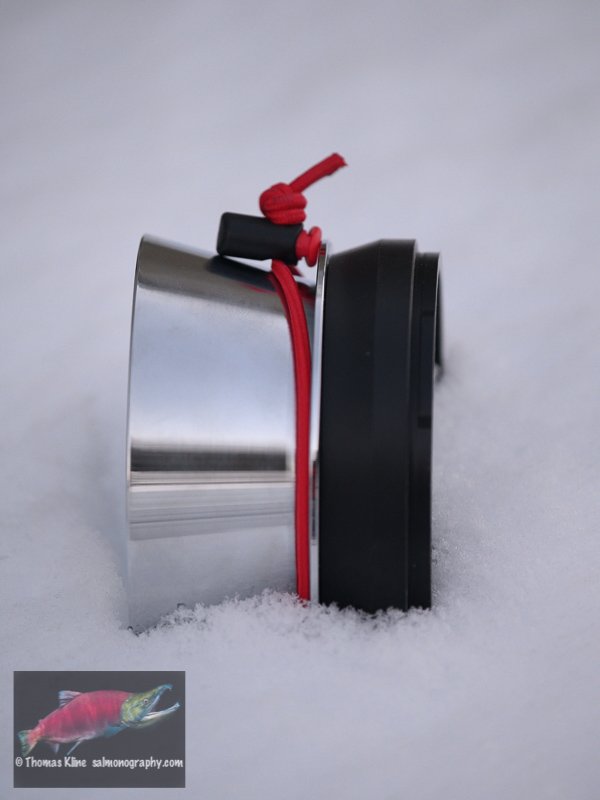
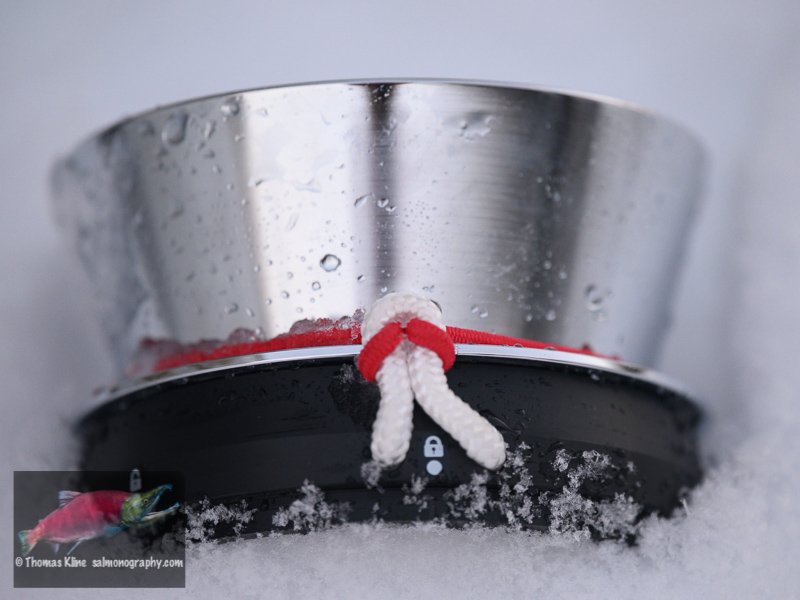
  10. I solved the problem using a Think Tank whip. https://www.thinktankphoto.com/collections/cable-management/products/red-whips-v2-0

    One could thread in a second whip or a ring (split ring or a solid one) to use it as Tim suggests. My use thus far has been in very shallow water so no need to clip on. One could, alternatively, glue the reflector to the reduction ring for a more permanent association.

    _Z6X7468.jpg

    _Z6X7471.jpg

    Edited by Tom_Kline
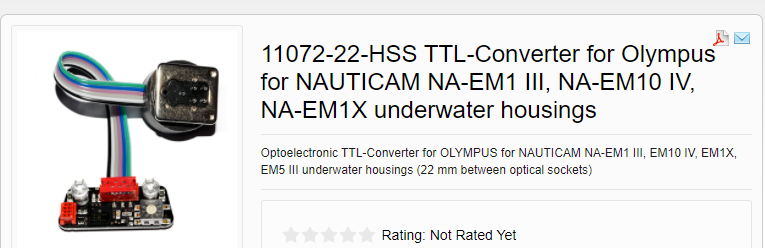
  11. Looking to get input on a flash trigger to operate HSS with Retra Pro x.

    Camera is an Olympus EM1 Mk3 in a Nauticam housing.

    As far as I can tell, UW technics and Turtle make flash triggers for my setup. I believe the turtle one can be used in manual. Not sure about the UW Technics?

    Does anyone have any advice on these or any other product that I can use to HSS the strobes in manual mode with my set up?

    Thanks

    Edited by Mark Green
  12. 33 minutes ago, Mark Green said:

    Looking to get input on a flash trigger to operate HSS with Retra Pro x.

    Camera is an Olympus EM1 Mk3 in a Nauticam housing.

    As far as I can tell, UW technics and Turtle make flash triggers for my setup. I believe the turtle one can be used in manual. Not sure about the UW Technics?

    Does anyone have any advice on these or any other product that I can use to HSS the strobes in manual mode with my set up?

    Thanks

    I got the Turtle Mobie for a Panasonic GX9 in a Nauticam housing about a year ago.   I have not tried on the Olympus EM5 which I also own but it should work as well (happy with the compact GX9 now!).

    My experience is positive because of the excellent support I got and the flexibility of the solution.   I can choose to configure it on the PC either in Turtle Manual mode (and Retra will work in HSS) or TTL mode (all other Retra options work but no HSS and only at maximum synch speed).  In the water I have used only in manual mode since HSS was the main reason I purchased it.  It works well all the way  up to 1/4000 and its internal battery charge lasts forever...  

    I also checked UW technics but I was told the GX9 is missing a pin in the hotshoe socket (G9 also).  I believe that pin is needed to give power to the UW technics solution which does not have its own internal battery.  However the Olympus should have no problem whatsoever.

    Only thing I really miss, as you may already know, the full power of the Retra is not available in HSS mode.  

    Andrea

    Edited by nudibranco
  13. 1 hour ago, Mark Green said:

    Does anyone have any advice on these or any other product that I can use to HSS the strobes in manual mode with my set up?

    Hey Mark

    Maybe worth dropping a message to Oskar at Retra and get their view?

    I'm using the UW Technics HSS board for Nikon with Retra Pro X and Primes. Works like a charm. No problems at all. Easy to switch between Manual, HSS and even TTL. Very good support from Pavel who is a regular contributor here.

  14. 2 hours ago, Mark Green said:

    As far as I can tell, UW technics and Turtle make flash triggers for my setup. I believe the turtle one can be used in manual. Not sure about the UW Technics?

    I have the UW-Technics trigger; it can be used in manual mode - in fact, that's how I use it nearly all the time. The HSS mode is manual-only.

  15. 10 hours ago, nudibranco said:

    Only thing I really miss, as you may already know, the full power of the Retra is not available in HSS mode.  

    This is a characteristic of HSS in general. For HSS to work a much longer light pulse is emitted and if you are using slower speeds it will not be visible in the image. Here is a nice article explaining the operation and also how the UW Technics converters work: https://wetpixel.com/articles/uw-technics-offer-ttl-board-with-hss-support

  16. Thanks for your help everyone. I am thinking that the option below may be the best choice?

    image.png.ddab467116381b65249cfb2d8917ec3f.png

  17. hi all,

    On the topic of HSS, do we have a feel of how different the light output is vs normal shooting?

    For example, I'd be keen to know if HSS max output is 1 stop less than regular full power output, or 2 stops less, 3 stops less, etc.


    Reason I ask: so far I've only seen examples of HSS used for macro in shallow waters. I am rather interested by fast wide-angle action close to the surface, where I would keep my aperture at around f/8 or f/11 (on a Nikon D500) but I am envisioning that shooting at 1/1000th or 1/2000th shutter speed would let me:

    1/ freeze those fast swimming subjects (1/250th doesn't cut it for excited fur seals)

    2/ cut massively ambient light, to let my strobes paint colours

    But that would work only if my Retra Pros (original version) can deliver enough light at 1 or 1.5 meters, in HSS mode :dunno:


    cheers

    Nicolas

  18. HSS guide number will vary with shutter speed.  You can get a sense of this by looking at the specs for Nikon speedlights.  On the SB-5000 speedlight it states that going from 1/500 to 1/1000 shutter speed you lose one stop.  I would expect similar performance changes for the Retra output as it would be pulsed in a similar manner to how the SB-5000 would be pulsed to achieve the same sort of illumination coverage.  (page H-29 of SB-5000 reference manual). 

    The performance will start to drop from the max sync speed, assuming that is 1/250 then you would lose one stop of flash power at 1/500 and an additional stop for each stop you reduce shutter speed. Ultimately it will max out as the capacitor will empty and you then have to wait as if you had just let a full power blast go.  This is a ball park estimate but I don't expect it would be too far out.

  19. On 1/25/2022 at 9:45 PM, ChrisRoss said:

    HSS guide number will vary with shutter speed.  You can get a sense of this by looking at the specs for Nikon speedlights.  On the SB-5000 speedlight it states that going from 1/500 to 1/1000 shutter speed you lose one stop.  I would expect similar performance changes for the Retra output as it would be pulsed in a similar manner to how the SB-5000 would be pulsed to achieve the same sort of illumination coverage.  (page H-29 of SB-5000 reference manual). 

    The performance will start to drop from the max sync speed, assuming that is 1/250 then you would lose one stop of flash power at 1/500 and an additional stop for each stop you reduce shutter speed. Ultimately it will max out as the capacitor will empty and you then have to wait as if you had just let a full power blast go.  This is a ball park estimate but I don't expect it would be too far out.

    Cheers Chris, your reasoning makes sense to me.

    If it's correct however, that invalidates HSS as a solution for wide-angle work where the ambient light is too strong.


    Say I am shooting at 1/250s (my max speed) and I have satisfactory depth of field at f/11, I've minimized my ISO, but my strobe power isn't sufficient to overcome the ambient light on my subject.

    If I use HSS to halve ambient light (going to 1/500), with your model I'm also halving strobe illumination.

    If I use HSS to halve ambient light again (going to 1/1000), with your model I'm also halving strobe illumination...

    Then I am not giving strobe light any advantage over artificial light.

    Yet, I am having to open my aperture further (or increase ISOs) to compensate the reduced light.


    I can very much see how this is valuable when you want to keep an open aperture despite bright ambient light, but looks like there is no underwater wide-angle benefit.

  20. 32 minutes ago, Nicool said:

    Cheers Chris, your reasoning makes sense to me.

    If it's correct however, that invalidates HSS as a solution for wide-angle work where the ambient light is too strong.


    Say I am shooting at 1/250s (my max speed) and I have satisfactory depth of field at f/11, I've minimized my ISO, but my strobe power isn't sufficient to overcome the ambient light on my subject.

    If I use HSS to halve ambient light (going to 1/500), with your model I'm also halving strobe illumination.

    If I use HSS to halve ambient light again (going to 1/1000), with your model I'm also halving strobe illumination...

    Then I am not giving strobe light any advantage over artificial light.

    Yet, I am having to open my aperture further (or increase ISOs) to compensate the reduced light.


    I can very much see how this is valuable when you want to keep an open aperture despite bright ambient light, but looks like there is no underwater wide-angle benefit.

    That's the nature of HSS - the strobe has a very short duration much less than the time the shutter is open.  HSS works by pulsing the flash constantly during the time the shutter widow crosses the the sensor.  It lowers the intensity by not being on all the time but still needs to put out more light.   You can make a reasonable judgement of the impact by the strobe power you use now - if you are on 1/4 power one stop takes you to half power for example.

    Of course if you move shutter speed you have to compensate somewhere else if you want to avoid your ambient lit background heading rapidly towards black. Moving aperture open or ISO up both bring the background back up  and increase the flash exposure, so get you back to your starting point on both ambient/flash balance and background brightness.  So if you can balance ambient and flash with your current strobe using within the flash sync speed, the balance can remain the same in theory with HSS operation.  You could use any mix of f stop and ISO to adjust the exposure.

    For your example of seal photography I also suspect you could open up a stop - if they are in open water generally corner detail is not so important.  What sort of shutter speed are you thinking you will need?

Account

Navigation

Search

Search

Configure browser push notifications

Chrome (Android)
  1. Tap the lock icon next to the address bar.
  2. Tap Permissions → Notifications.
  3. Adjust your preference.
Chrome (Desktop)
  1. Click the padlock icon in the address bar.
  2. Select Site settings.
  3. Find Notifications and adjust your preference.