Everything posted by Isaac Szabo
-
Removing more material from one spot on a dome will result in an optical distortion. Ideally you should remove the same amount of material from the whole dome.
-
Thanks @GeckoSub! There are lots of slicer settings I change to get watertight/airtight prints, but the most fundamental one is increasing the flow rate/extrusion multiplier to the 1.15-1.2 range. If you cut a cross section of a normal FDM 3D print and view it under high magnification, there are air gaps between all the lines of extruded plastic, whereas I'm extruding enough extra material to make the prints completely solid. I have done some work on a Nikonos 15mm conversion, and I'm hoping to find time to finish that project this winter.
-
It just depends on what you shoot. For macro, I agree that high dynamic range is often not needed. But I’m primarily a shallow water wide angle shooter, and the background in those shots is natural light, where high dynamic range can make all the difference between a shot working or not. The real noise/image quality differences are greater than shown on the DXO graphs. To make a fair comparison, images need to be normalized to the same resolution. However, DXO downsizes the images to 8mp, which is very inadequate for photographers licensing their photos, making large prints, entering big contests, etc. For people like myself who want to make full use of the 60mp of the Sony A7RV, the useful comparison would be enlarging the Olympus files to 60mp for the comparison (or at least normalize both to a decent resolution in the 30-50mp range). With my FF setup, I do not have to stop down more or use a higher ISO than MFT. My wide angle can give sharp edges at f/2.8. Though if I am using optics that require stopping down more, my preference is to increase strobe power and exposure length rather than increasing ISO. Either way, I’m rarely shooting at higher ISO than I would be on MFT. Anyway, there is no one best sensor size. It varies according to the priorities of the individual. For many photographers, MFT provides adequate image quality for how they use their photos, so the size/cost advantages make it their best choice. But for other photographers, maximizing image quality/resolution is the priority, so FF is the best choice.
-
If image quality is a priority and you plan on making large prints, high resolution (40-60mp) full frame is the best tool for the job. I absolutely benefit from the lower noise, better dynamic range, and higher resolution of full frame sensors compared to smaller ones. But I’m a pixel peeper who prioritizes image quality and sells photos that get printed large. On the other hand, others commenting here are completely right that sensor size doesn’t matter nearly as much if you’re only sharing images on the web/social media.
-
@jyuny1 Almost everything looks correct to me except for "The distance from the sensor plane to the Nauticam N120 housing interface is approximately 45.2 mm". Did you measure that yourself, or did you look it up somewhere? I believe 45mm is the distance for Sony N100 housings and that the correct value for Nikon N120 housings is 82mm. If I'm correct, I think that would result in an ideal extension length of around 28mm, so a standard 30mm extension should work well.
-
Cool. Yes I do have waterproof caps for sealing both ends of the extensions.
-
@Dave_Hicks Sure, no problem. Though my 100m chamber has an inner diameter of only a little over 100mm. It can fit N100 stuff but not N120. My larger chamber can fit N120 stuff and even housings, but it maxes out around 55m.
-
If you want to send it to me, I can easily test it to the 100m that the Nauticam stuff is rated to.
-
@Adventurer In the case of my Nikon 60mm and Zen dome example above, there is no loss of focus range since the MFD of the lens is only a couple of millimeters beyond the dome. However, in other scenarios in which proper dome positioning involves placing the dome significantly closer than the lens's MFD, a small amount of close focus range can be lost. But you don't use a macro dome if you want to maximize magnification. It's for improving edge sharpness and/or restoring the air FOV so you can better shoot slightly larger macro subjects. I haven't tried using a diopter on the macro lens in these scenarios, but it seems like it could maybe work as long as you don't lose too much of your far focus ability.
-
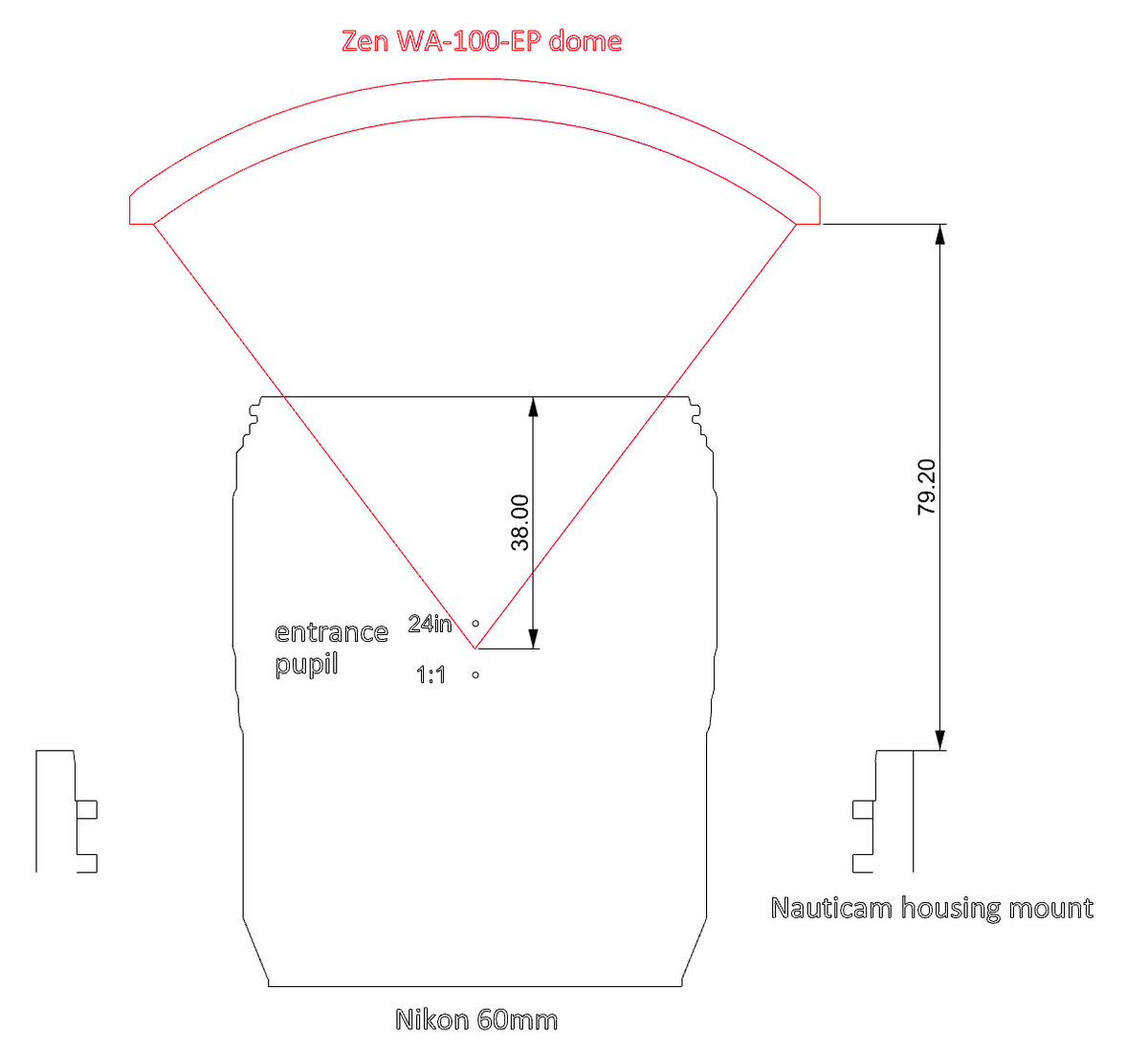
No problem. I suppose I should have mentioned that I calculated the center of curvature of the Zen dome to be around 64mm from the base of the dome, just in case anyone wants to use the Zen dome for other port designs.
-
For what it's worth, here's an image illustrating some of the key distances from when I made a dome port for the Nikon 60mm for Matthew Sullivan. To optimize image quality, you want the center of curvature of the dome to be aligned with the entrance pupil of the lens. I measured the Nikon 60mm entrance pupil to be around 34-42mm behind the front of the lens (it varies with focus distance, so I went with a central value of 38mm). As an aside, the photons to photos optical bench theoretically puts the entrance pupil a few millimeters farther back (I'm not sure which is more accurate). Anyway, Matt has said that this setup is exceptionally sharp edge to edge, so the design seems to have worked out correctly.
-
Wonderful! Glad you got it working.
-
No problem. My sense was that moving the VF shutter farther away from the VF sensor was what made the difference. Even before I added fresh paint, unlatching the back and letting it sit a few millimeters further back from normal made the switch very reliable. Either way, hopefully it gives you some avenues to pursue to try to get yours working.
-
Sorry, I was trying to save you from having to turn the camera off and on every time you want to switch. I don't use the VF/LCD switch myself as I always use a monitor, but after playing around with mine, I discovered that mine only works when the back of the housing is unlatched and a few millimeters further back than when it's latched. In other words, it seems that when the housing is closed, the VF shutter is too close to the camera to work properly. I then tried bending the VF shutter back some, though there's very little room to bend it back since the housing VF is right behind it. I also tried adding a little bit of fresh white paint inside the little rectangle at the bottom of the shutter (I suspect it plays a role since it passes over the VF sensor). After doing both of these things, my switch now sometimes works with the back latched, but it's still not reliable like when the back is unlatched. I think bending the shutter back was the thing that helped rather than adding the paint. So for a fix (assuming yours has the same issue as mine), I would suggest looking into ways to either move the shutter slightly back or the camera slightly forward.
-
You should be able to set "Finder/Monitor" to one of the "Manual" modes and set a custom button (such as C3) to "Finder/Moniter Sel." to allow you to quickly switch between them.
-
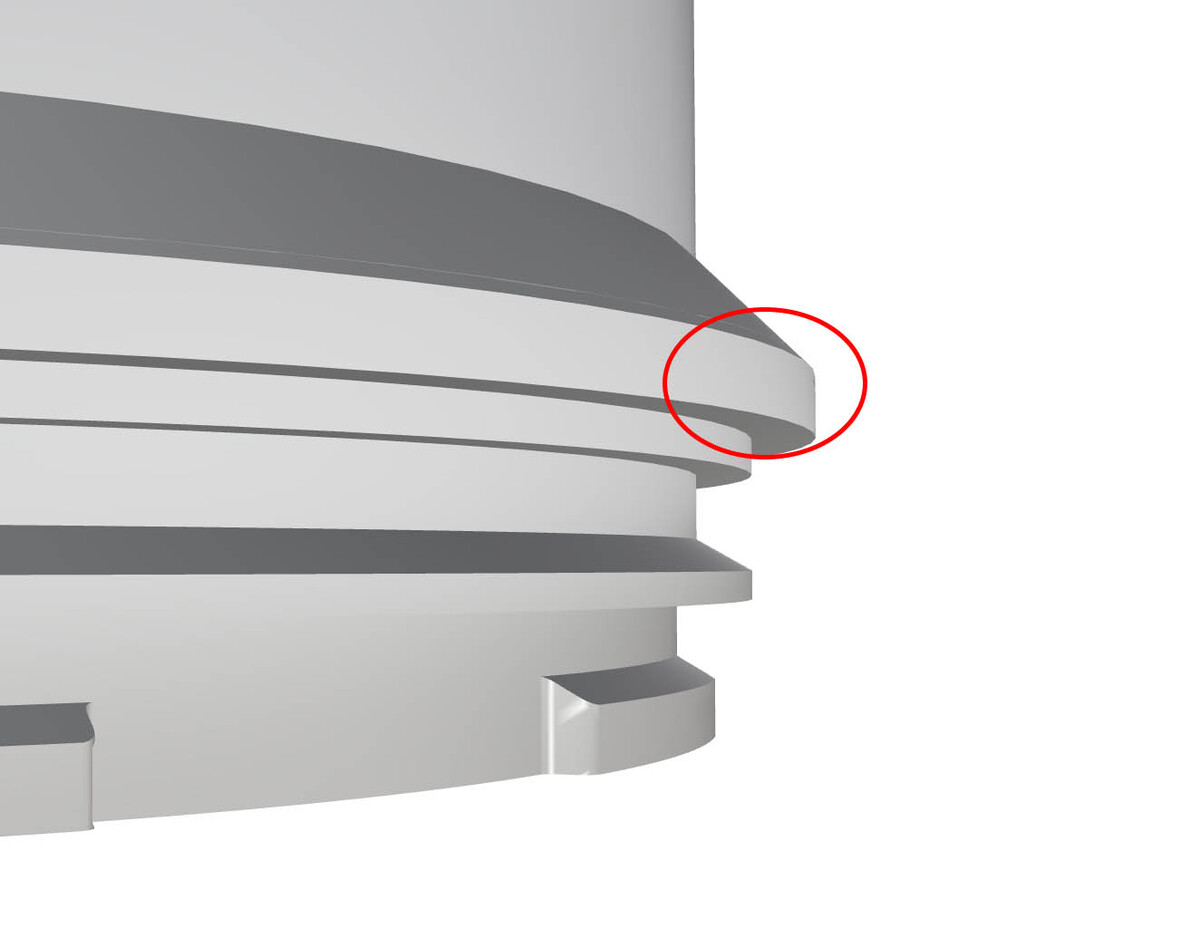
Really nice work. However, are you perhaps missing the feature that supports the port from being pushed back into the housing under pressure (circled in the image below)? If so, the port might only be supported by the plastic tabs of the locking mechanism (that's the case on my N100 housing).
-
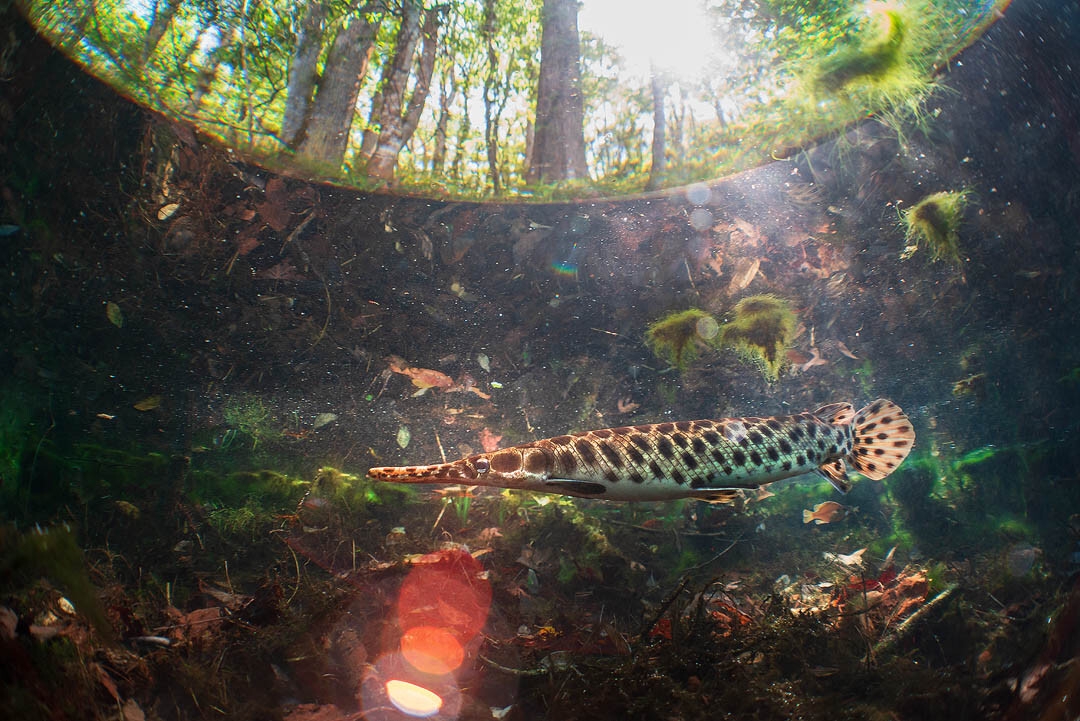
I found the WWL-1 with Sony 28mm quite prone to flare.
-
I've used the Canon 60mm but not the MFO-3 yet. The 60mm on full frame behind a flat port doesn't give the best image quality. It's useable, but from what I've seen, the MFO-3 should be better. The 90mm + MFO-3 is also wider than the 60mm, and it can focus closer. And native autofocus may offer some advantages versus the adapted 60mm. Adding in the versatility of being able to switch between the 90mm and MFO-3 underwater, to me, the MFO-3 seems like the more desirable option.
-
@dentrock Mine is the latest version with VXD. However, I only tested it briefly with a few domes using AF-S on my A7RII in my home test pool. I was only testing for sharpness. I was not testing autofocus performance. I have not shot it behind a dome for real world photos yet. I'll likely start doing that in the coming months, but I'm not necessarily a hard core AF-C user. I could try an AF-C test in my test pool, but since we have different cameras (with different AF settings), I'm afraid my results wouldn't necessarily apply to your setup. In summary, I would not recommend that you make the switch based on my positive report since I was only looking at sharpness, not AF-C performance. By the way, ignoring the AF-C issues for a moment, I'm curious if the Sony 100mm behind a dome gave you edge to edge sharpness if you did manage to get a shot in focus?
-
First let me say that I applaud all of your efforts to provide free models and inexpensive parts to the community. In this case my feedback is that I personally wouldn't want to use a cap that leaves open the possibility of objects poking through and scratching the dome or the cap material being bent into the dome (and again potentially scratching it if something like sand is in there).
-
For me there is a very significant improvement with long macros as well, though different people have different standards for what is/isn't acceptable.
-
Do you happen to have a link with price? And do you happen to know what the curvature of the dome is?
-
One interesting thing to note when using domes for macros is that the plane of focus changes from being straight with a flat port to curving a little bit away from the camera with a dome port.
-
Ah, yeah that site doesn't have most of the lenses I'm working with. It does have the Sony 90mm, but I'm not sure I trust what it says since it differs from what I measured. I also don't think it gives any info on how the entrance pupil changes with focus (unless I'm missing something).
-
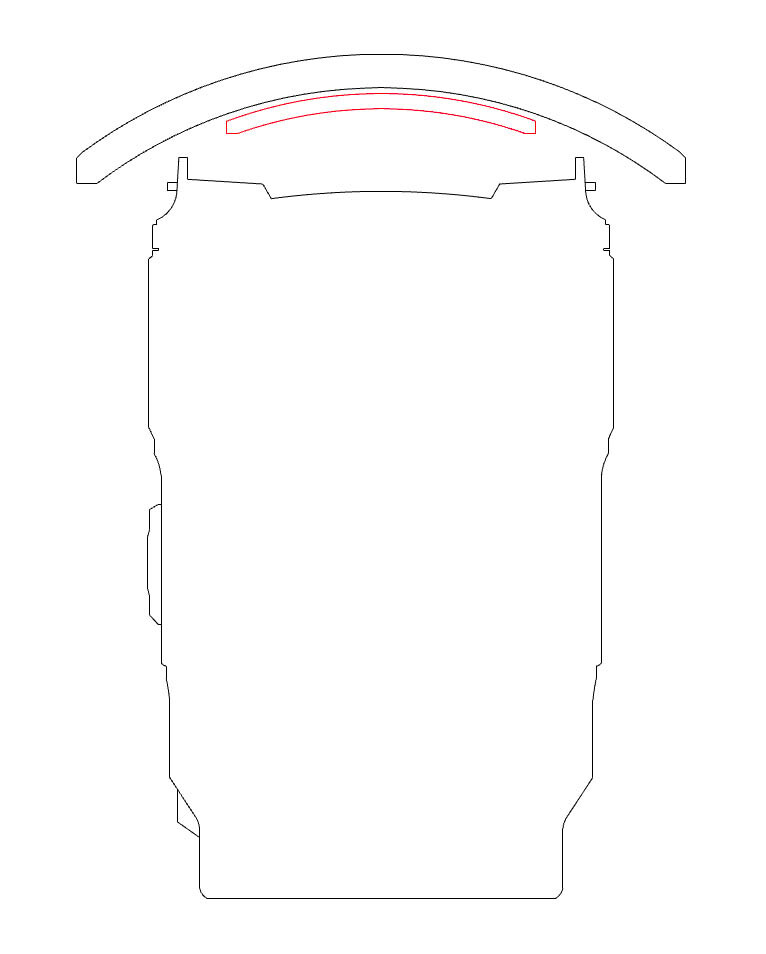
This doesn't necessarily have to be the case. Most dome sections are much larger than they need to be to cover the narrow FOV of macro lenses. For example, today I am testing a small (~50mm) section I cut from a 150mm diameter acrylic dome (shown in red) with the Tamron 90mm. So far, the results are looking very good (on par with the Zen dome shown in black):