Everything posted by DreiFish
-
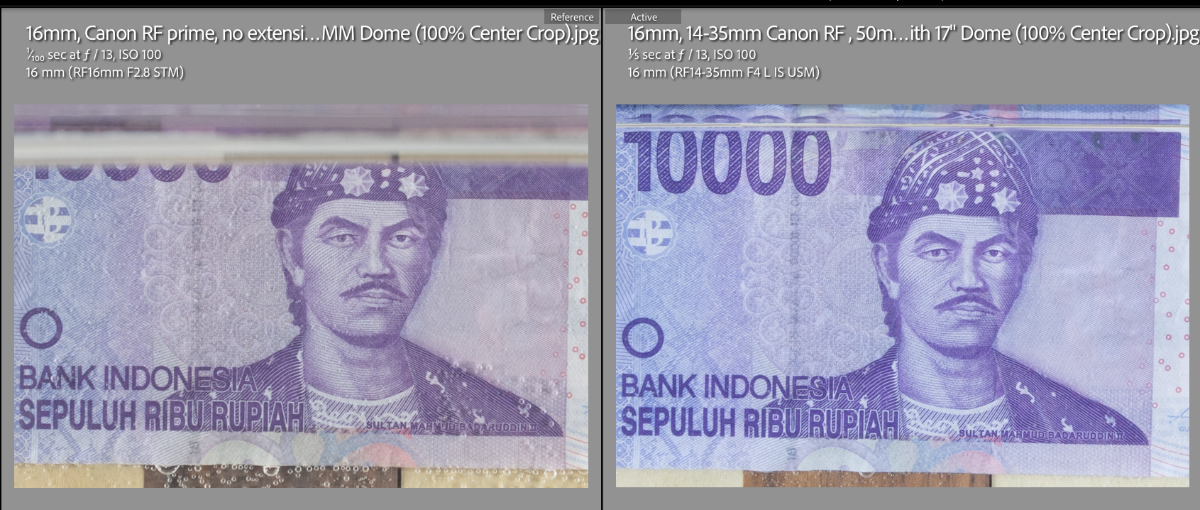
 Hi Adventurer, I have compared the RF 14-35L vs the RF 15-30 and RF 10-20L lenses. Thread here: The 15-30 is marginally sharper than the 14-35, but it's a pretty minor difference. The RF 10-20 is actually better than both of them at 14 and 15mm. But it's certainly not a night and day difference, and many may still prefer the 14-35mm for the greater zoom range. As for the 16mm.. I have to disagree. I've also tested this combination, and the real issue is that it needs a negative extension of about 20mm on N120 to put the entry pupil at the center of the dome. Comparing it directly with the RF 14-35mm at 16mm, the 16mm prime isn't really any sharper (but it's not worse either). Maybe just marginally better than the RF14-35 in the corners. Finally, while the 8-15mm fisheye + 2x TC gives you a nice zoom range, there's definitely a noticeable image quality degradation and loss of light transmission, and worse autofocus. But at the end of the day, I think Sony still offers a better solution for using the 8-15mm Canon fisheye with a metabones adapter and the Sony 2x TC, which is optically superior to the Kenko 2x TC. Maybe the autofocus is slightly more finicky, but it's still usable (you don't need much from the AF system when shooting this wide).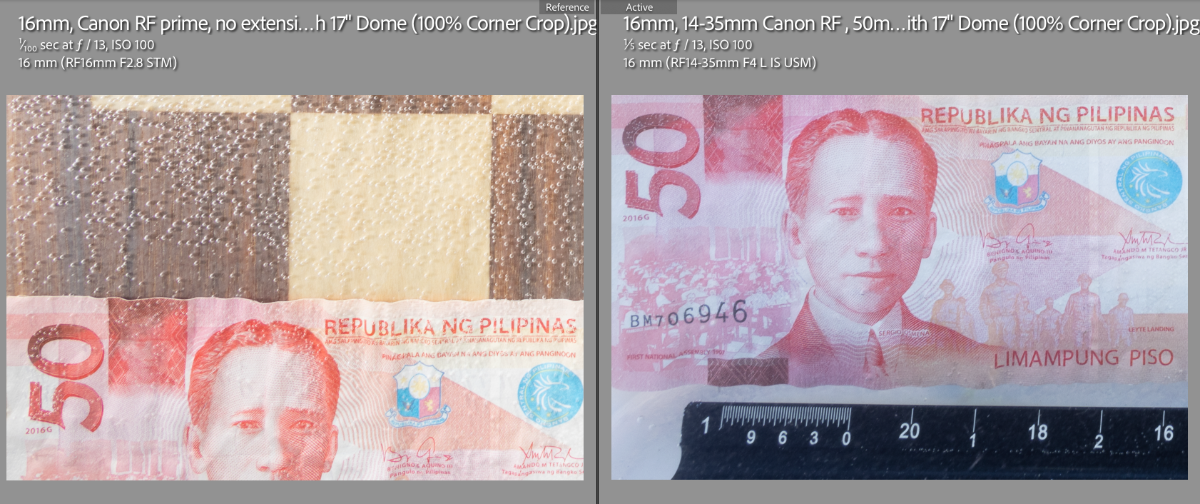
-
Thanks Alex, that's very helpful. Totally agree that recycling times are not that relevant in general underwater wide angle shooting. They're probably only interesting for fast action pelagic shooting, and perhaps not that important there either if once a strobe can take 3-5 frames a second.
-
By all accounts the Ef 8-15 fisheye works great on sony's latest cameras with an adapter. I've used it before with the Sony A7RII and it was more than adequate for wide angle photos. So.. I don't think the native fisheye argument holds much water. You can use the same lens with Sony cameras and metabones adapter just fine, and many people do. Aditionally, there is a conversion available to use the Nikonos 13 fisheye as a 'native' Sony lens, which is not an option with Canon currently. So on balance, for wide angle photography, if fisheye is your thing, I still think Sony system offers more options. You also can theoretically use the new Sigma 15mm F1.4 fisheye lens natively on Sony, though I haven't heard of anyone trying that underwater yet. Also, if you want the EF 8-15 + 2xTC, you can do that on Sony with either the Kenko EF 2x TC or the higher quality Sony FE 2x TC. With Canon, you can't use the RF 2x TC, only the Kenko. Now when it comes to Nauticam optics, it's a hard call. Sony system has better lenses that can be used with the WWL-1B, WACP-C and WACP-1. Canon has the 14-35 and 15-35 for use with the WACP-2. With Sony, you can use the 16-35 GM II with the WACP-2, which is a slightly sharper lens than either the RF 14-35 or 15-35, but you do only get 128 degrees diagonal at the wide end vs. 140 degrees with the 14mm. But even there, there is the Sony 14mm F1.8 GM prime that probably gets you better overall IQ than any of the zoom lenses, and also the Sigma 14mm F1.4 Art lens. So what the Sony system loses with the WACP-2 is perhaps a bit of zoom versatility, but not image quality to Canon. Nauticam FCP also favors Sony on balance. You can use it with the Sony 28-60 and the newer 24-50F2.8 G lens. Plus the 14mmF1.8 prime for circular fisheye. With Canon, if you want to use the full zoom range, you're stuck with either the 24-50F4-6.3 lens which is a pretty unimpressive kit lens, or the (quite old) EF 28-70F3.5-F4.5 zoom, which is a touch sharper, but still not great. Your best option for image quality might be the RF 14-35 which gets you both a circular fisheye at 14mm and limited fisheye zoom between 28-35mm. But then it's only a 170 to 122 degree zoom range, similar to the 8-15mm fisheye + 1.4x TC. When it comes to lenses behind a dome.. you get a auto-focus capable Laowa 10mm (which is sharper and can be used with a smaller dome (140mm dome) than the Canon RF 10-20mm (needs 230mm dome) -- I've tested both). You also get the 16-35 F2.8 GM II and new 16-25F2.8 G lenses, which are as good as any zoom lens on Canon and (unlike the Canon options) can perform well with a 180mm dome. So perhaps less pronounced an advantage for Sony lens selection when it comes to rectilinear lenses behind a dome, but if size enters the equation, the advantage is big -- none of the Canon rectilinear prime options work well with anything less than a 230mm dome. Wholistically, I'd argue that the lens selection on Sony is a bit better than currently with Canon for underwater use when it comes to wide angle. Macro is a more balanced picture with some wins for Canon.
-
Shorter flash duration is better (i.e. the flash outputs all the power it's capable of outputting in a shorter window). If the flash duration is faster than the shutter speed you're using (which is limited by your camera's flash sync speed), then you will capture the full illumination the strobe is capable of on the sensor. Conversely, if you set a shutter speed shorter than the flash duration, say, 1/200s and the flash requires 1/100s to output a full burst, then you'll only capture part of the illumination. Generally, it's not an issue as most flashes are at least 1/300s or faster, and most cameras have flash sync speeds slower than 1/300s. So.. you'll always get the full flash output. The only exception I know of is the Ikelite DS230, which is slow, and needs a full 1/100s to output full power. That means at many common shutter speeds used for underwater photography, you can't take advantage of the full power of the flash. HSS works differently than a full burst. It fires a series of short bursts (at lower power) in quick succession, which is necessary in order to match the falling curtain of the camera's shutter as it travels across the frame if shooting at shutter speeds higher than the camera's native flash sync speed. Because of this, a flash in HSS mode will output less overall light then the same flash fired normally. Flash sync speed and HSS capacity are not really related I don't think, though it's reasonable to conclude a flash with a faster flash duration should be able to output comparatively more light in HSS mode than a flash with a longer flash duration. The Ikelite DS230s for example don't have an HSS mode, but if they did, it would probably not be great because the flash tube needs to be 'lit' for a long time (comparatively) to output its full power and probably can only output a small fraction of that power during the shorter times needed to implement HSS.
-
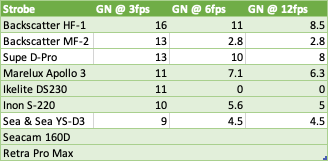
@Alex_Mustard curious about a bit more detail on the Retra Pro Max vs. Seacam 160d comparison. You said the "light [is] very, very similar to the Retras, just with slightly more throw and slightly less softness. The light output level is near as damn it the same as the Retras with real subjects." You also said "The Kraken KS-160 [read also here Supe D-Pro] has a nice quality of light. But it does not have as much light output as the Retra and and Seacam." and "The Backscatter HF-1 does not have the natural quality of light of the strobes above. But boy, does it have a lot of power. And it also has a well judged diffuser (the flat warmest one) that gives it a very decent quality of light, when attached. While still giving out more power than those above." This accords with my (in air) testing of the Supe D-Pro and Backscatter HF-1. Retras (and thus presumably Seacams) are GN22 (according to Backscatter), Supe D-Pro is GN20, Backscatter HF-1 is GN29 with flat 4500k diffuser (GN 31 with flat 5500k diffuser). Throw in also the Ikelite DS230 in for good measure (GN 31 with no diffuser). Questions 1. How is the color temperature between the Retras and the Seacams? Any noticeable difference? 2. What about recycling times between these two? Again, any noticeable difference? If not, I would say the Retras are probably the better strobe for most, especially when you consider the power vault battery pack and the all-day (or multiple day) shooting capacity it enables. The Seacams remain the better option if electrical sync connections and their more accurate TTL modes are important. Or if you have a use case for the stroboscopic mode I guess.
-
Careful with doing this test in air, as it may lead to more powerful video lights significantly overheating -- which may also lower lumen output I guess? It's a test best done in a water tank. I have the Divepro G18 (18k lumen video lights). I'll see if I can test the light output and whether it decreases with battery discharge at a later date. Amen. 90 degree beam angle is very desirable. It's one of the few things that has left me scratching my head about Keldan's otherwise sound design choices -- why, oh why, did they go with a 120 degree in air / 110 degree in water beam angle? Good information as usual, Ben. Thanks for this.
-
Hmm.. not sure that video tells us much about the usable dynamic range on the R5II since the scenes are pretty low dynamic range scenes?
-
Hi Phil, Lens hood occlusion looks very similar to what I got with the Nauticam R5C housing with no extension (~58.8mm lens mount to front of housing distance) and 140mm dome. So I guess we can conclude that (a) Marelux distance from camera lens mount to front of housing is indeed around 30mm (not the 43mm earlier reported) and that (b) Nauticam 140mm dome and Marelux 140mm are probably very similar if not identical. Phil, was there any noticable improvement from using the Sea & Sea conversion lens?
-
Hey Chris, I agree that the big front elements are the biggest limiting factor in terms of which taking lens can work with which Nauticam wet contact optic. Filter thread size is not a perfect proxy for this, but it's a reasonable one. So with that in mind: WWL-C seem limited to ~60mm filter size (Reference point: Canon RF 24-50F4.5-6.3 is a 58mm filter thread) WWL-1/1B seem limited to ~60mm filter size (Reference point: Sony 28-60 has a 41mm filter size, Sony 28mmF2.8 prime is 49mm filter size -- but I imagine it can use lenses with a front element at least as big as the WWL-C) WACP-C seems limited to 67mm filter size or smaller (reference point is that you can used the new Sony 24-50F2.8 G, with a 67mm filter size) WACP-1 seems to be limited to 77mm filter size or smaller? (reference point is that I've used the Canon RF 14-3F4 L lens, which has a 77mm filter size) WACP-2 seems to be able to use at least 82mm filter sizes (reference poin is the Canon RF 15-35F2.8 L lens One other important limiting factor is how much the lens moves in and out during zooming and focusing, which impacts what extension rings are needed and whether the full focal range can be used. Lenses that extend furthest at the widest focal range (or zoom internally) are the ideal candidates here.
-
This explanation seems dangerously simplistic -- first, Nauticam has designed the WACP-2 (which is a water correction optic specifically for modern lenses with larger front elements that couldn't be accommodated on the WACP-1. These lenses also tend to have more complex optical formulas. I don't see why there would be something in the more complex designs that would make them perform worse with nauticam's water contact optics than older more simple lens designs. In fact, my experience is the direct opposite -- I've used both an old EF 28-70F3.5-4.5 zoom lens and a modern RF 14-35L lens with the WACP-1 on Canon R5C, and the RF 14-35L produced noticably better image quality in terms of resolution and contrast (in the 28-35mm limited range). So I don't think you're right that using a better taking lens behind the WACP-C is not going to lead to better image quality. To my knowledge, all the WACP-C/1/L is doing is (a) demagnifying and (b) taking what would be a curved image because of the water-air interface and rendering it flatter for the taking lens to more easily cope with. It's a bit wishful thinking to believe it somehow interacts with older lenses to produce better image quality than you can get from more complex modern lenses.
-
Chris, did you ever do any measurements of the brightness of the Seacam 160Ds vs. the Retra Pros? I had the same model of the Retras, curious to know if the improvements you've noticed with Seacam are primarily related to beam spread and color temperature or also power/recycling times. The limited testing I've found on the web (including Retra's old tests of the Retra Pro vs. Seacam 150s) suggests that power and light spread are quite close, while color temperature is maybe a few hundred degrees Keldan warmer on the Seacams. Would love to hear your experience -- Retras, Seacam and Ikelite DS230 are currently on my radar. Funny, I've had the same inconsistent experience with flash triggers. Setting aside that TTL reliability will probably never match native TTL protocols, the flash trigger introduces one additional point of failure. Not to mention an additional battery to manage. There's definitely been times when I've left the trigger off by mistake or the battery dies (or other unexplained bugs that are hard to pin down to either the trigger or the strobe). The electrical sync solution at least gives you a single manufacturer to troubleshoot with (or complain to). I also got a SeaFrogs trigger for same purposes. Cheap! But I quickly discovered same limitations -- battery only lasts one dive, and you need to turn it on right before the dive or it will drain if left on overnight (e.g. if you like to set up your camera the night before and pull vacuum). 100% agree. Sadly, I've had the same issues with UWTechnics trigger recently acquired for my wife's Nauticam R6 Mark II housing. The flash will unexpectedly stop working after a few shots in the middle of a dive. Usually changing batteries brings things back to normal, but the problem starts again soon after. It's madly frustrating -- and why I bought the SeaFrogs trigger as a back-up. Ultimately, the Nauticam manual flash triggers are the most reliable solution I've found so far, and they have pretty good battery life too. But no fancy features like TTL or HSS modes, of course..
-
The water contact optics only perform as well as the 'taking' lens used behind them. Their main purpose is to neutralize the virtual image otherwise created by the water to air interface. As far as I know, they can't make a lens that's bad on land perform better underwater than it does on land. What they can do is minimize the image quality loss from being in water that you would otherwise get with a dome port.
-
Huh! Well caught. 12 bit readout instead of 14 bit does put a significant cap on the DR capabilities in raw. I recall some earlier speculation on CanonRumors (no doubt fueled by Canon) that the R1 and R5 would come with 16 stops of dynamic range and a DGO sensor, which would've been revolutionary. Looks like the reality is much more pedestrian.
-
Can't help with the in-water testing behind Nauticam wet optics, but you can compare land results here: https://www.the-digital-picture.com/Reviews/ISO-12233-Sample-Crops.aspx?Lens=1687&Camera=1538&Sample=0&FLI=0&API=4&LensComp=1525&CameraComp=1175&SampleComp=0&FLIComp=0&APIComp=3 At 28mm F8, it seems like the 24-50G has less chromatic aberration and better midframe and corner sharpness. Center looks pretty similar. Just for kicks, I compared the 28-60 vs the Canon RF24-50 F4.5-6.3. Chromatic aberration is similar, but the Sony lens is definitely sharper everywhere across the frame. Interestingly, the Canon shows less barrel distortion. https://www.the-digital-picture.com/Reviews/ISO-12233-Sample-Crops.aspx?Lens=1642&Camera=1508&Sample=0&FLI=1&API=3&LensComp=1525&CameraComp=1175&SampleComp=0&FLIComp=0&APIComp=3
-
100% agree (and what I was trying to illustrate earlier in this thread). Basically every strobe produced in the last 10-15 years is quite capable of producing great results in most shooting scenarios, and you'd be hard-pressed to tell from the final image which strobe was used. Interesting point to highlight, Barmoglot. Anyone who uses the Retra V4 strobes in TTL mode regularly and can comment on their capabilities there?
-
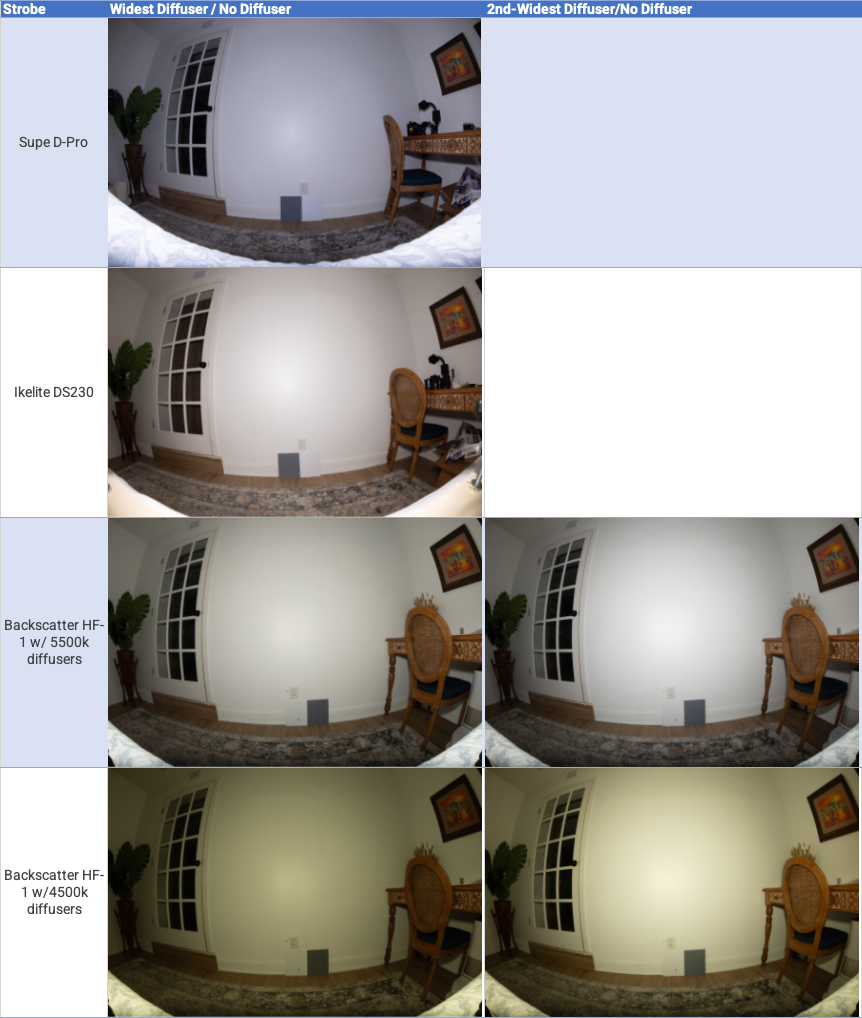
This is a great observation I didn't initially catch in reviewing my shots, Wolfgang -- you're right, center illumination (which is what I was measuring) may be the same between the circular flash tube strobes and the straight flash tube strobes with a diffuser, but the circular flash tubes throw more light towards the edges of the shot like on the carpet. I have a look through the comparison images I took again and now I do see a clear difference in light coverage between the circular flash tube strobes and the Backscatter HF-1/Sea & Sea YS-D3 and the Marelux Apollo 3 with their diffusers... Basically, the diffusers aren't necessarily spreading the beam wider, they're just dimming down the center and thus making the overall illumination more even. But importantly, they're not really increasing the amount of light that falls towards the edges of the image. This is visible when you look at no diffuser vs. flat diffuser, but it's even more evident with the dome diffusers. In each case, edge illumination remains basically the same -- it's just the center that is attenuated, leading to overall more 'even' light intensity across the frame. Makes me rethink my earlier conclusions about diffusers and straight flash tube strobes. If you care about edge illumination, it seems that what you really should be focusing on is how well the strobe performs without diffusers or light modifying accessories, as they don't (can't?) actually improve the brightness of the edges, they can only dim down the center hotspot.
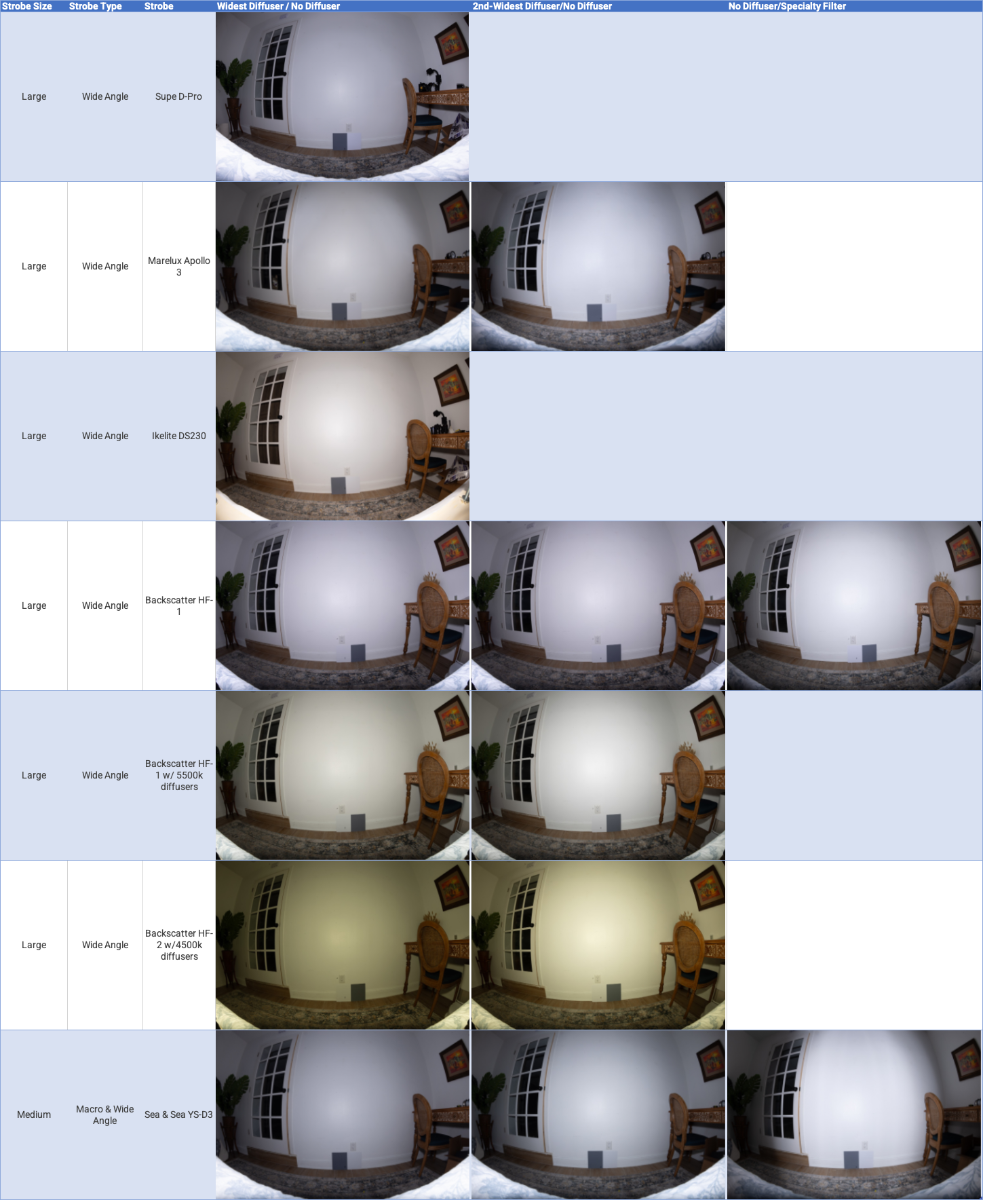
-
For me, the R5II is only a better camera than the R5C for video if there's a significant boost in dynamic range. And that remains to be seen, when it's out and in the hands of reviewers. The enhancements for photography I would say (especially for underwater) are pretty inconsequential. I've been looking for a smaller, photo-first camera, and was waiting for the R5II (and R1) to see how it would stack up against the Sony A1. From what I've seen so far, A1 is still the more capable camera, even 5 years old. It's got that 1/400s shutter (R5II is still stuck at 1/250th), matching 30fps still capability, and a slightly faster sensor readout speed. Yes, you don't get 8k60 or raw video internally, but raw video is pretty impractical for every-day shooting. The real benefit I see with the Sony A1 though is the lens ecosystem for underwater use. There's unique lenses that aren't available on the Canon side so far, like the 16-25F2.8G, 24-40F2.8G, Laowa 10mm Autofocus prime and (perhaps less unique, the 16-35F2.8 GM that can be used with good results with a 180mm dome). Sony also has better quality lenses for use with Nauticam's wet optics, like the 28-60F3.5-F5.6 (by all accounts, better than the Canon RF 24-50F3.5-6.3) for the WWL-1, WACP-C, WACP-1 and FCP, and, likely, the 24-50F2.8 G for the WACP-C/1/FCP. Where Canon comes ahead is the RF 14-35F4 for use with the WACP-2 if you want the absolute best wide angle quality (and can make peace with the price and size) and the RF 10-20L4 zoom for the widest rectilinear zoom (which needs a 230mm dome for good results though). So.. if size is a consideration, I think as of today, the Sony system is better for photography underwater. On the video side things are more matched, though even there the A7SIII is a powerhouse not to be discounted. And it's helpful that you can use the A1 and A7SIII in the same housing.
-
Before moving on (and to prove that I'm not against changing my opinion in light of contradictory evidence), I scoured the Retra site to pull up the specs of the Gen 1 - Gen 4 flagship Retra flashes for a meaningful comparison. I excluded from the table features and specs that remain the same across all 4 generations (or at least V2-V4 that use circular flash tubes). Retra has gotten a bit vague in its marketing of the power Vault, so I had to calculate the actual number of flash at full and half power based on the energy density of the Vault (40wh) vs 4 enerloop pros (12wh) or 8 enerloop pros (24wh). Similarly, while they give the weight with the power vault on land and in water with the V4 strobe, they don't specify it for the V2 and V3, so I had to reverse engineer those numbers. Finally, while Retra published precise figures for recycling times to 80% and 40% power for the V1-V3 strobes, for the V4 strobes they only publish a 0-3s range, and claim that the power vault improves recycling times 10% over the previous generation booster/supercharger. So the recycling time numbers are also calculated for the v4 strobe. With those caveats in mind, here's my observations: Light output and quality of course remain the same There's a 20% improvement in flash recycling times between V2 and V3. Assuming V4 didn't improve this absent the power vault, that's a 30% improvement at best between the V2 strobes I used before and the V4 + power Vault. Nice, but not exactly game changing. There's a much more notable improvement in maximum number of shots, especially with the V4 version. 43% more shots without the vault, and if you add the power vault into the picture, the V4 is capable of almost 6 times the shots of the V2 with no batteries. That should allow for 3 dives easily with no recharging -- perhaps even 2 full days of diving depending on your use. The weight of the strobe has decreased slightly from V2 to V4, (probably not meaningful), but the underwater boyancy has improved much more meaningfully from 160g negative to 50g negative (with booster) The V4 strobes are longer by 18mm, which is where the buoyancy improvements are coming from. Add the power vault, and you're around 200m x 102.5mm diameter, which is very similar dimensions to the Seacam 160Ds and other large strobes. (but they're 300 gram lighter still So, to summarize, vastly improved battery capacity, improved weight, improved buoyancy (wasn't ever a problem for me), and slightly faster recycling times (unlikely to be a game changer). With the tradeoff being larger footprint and of course 2x price. Does this mean the V4 strobes are a totally different animal than the V2 strobes I've used and thus my subjective experience is irrelevant? Yes when it comes to battery capacity. But not when it comes to ergonomics or light quality. *
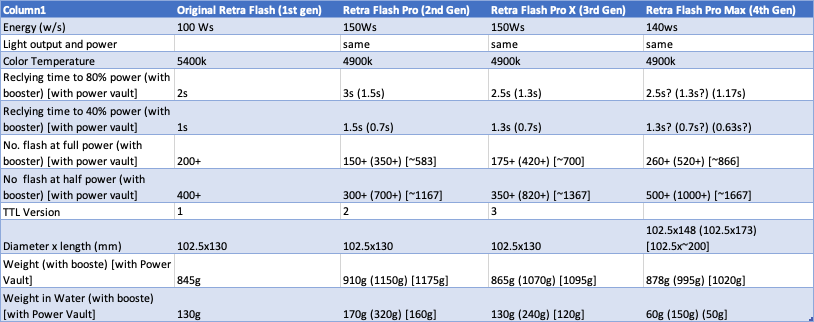
-
This would perhaps be a fair criticism had I not shot the Retra Pros for 2 years on hundreds of dives. Are you going to claim the experience with the Retra Pros doesn't translate over to the Pro Max? The differences between the two versions are pretty minor. Again, hyperbole: "the Pro Max is a very clear step up from old Pro in many areas" -- can you quantify the statement? According to Retra, the light output and quality remains the same. The size and ergonomics are 95% the same. Sure, they're a bit more efficient so you might get, 20, 30, maybe even 50% more battery capacity. Do you get 3 dives out of them consistently without the boosters/power Vaults? And they have OLED display for battery percentage vs. colored lights (some people actually prefer the old colored lights approach).
-
Cenote Carwash near Tulum, Mexico. After recent rains, the tanins from the surrounding jungle enter the water, transforming it into kaleidoscopic shades of green (in this case.. I'm told sometimes it's red). I've no idea if Waterpixels / Chrome will allow this to be posted in HDR -- you could also try to look at it on Instagram: https://www.instagram.com/fridgemagnetfilms/. I exported it from Lightroom using HDR enabled in the P3 color space. (Edited in HDR using Lightroom, then Photoshop. Unfortunately, I've discovered that HDR requires 32-bit float representation in Photoshop, which means you can't use some common tools like the spot healing brush. This is a big bummer -- otherwise I would've tried to remove some of (my own) bubbles in the upper section of the picture.) Anyone know any tools that allow spot healing in an HDR image? This is shot at ISO 1600, f 1/15 to account for the very low light environment, meaning there's a bit of motion blur on the diver (and foreground trees).
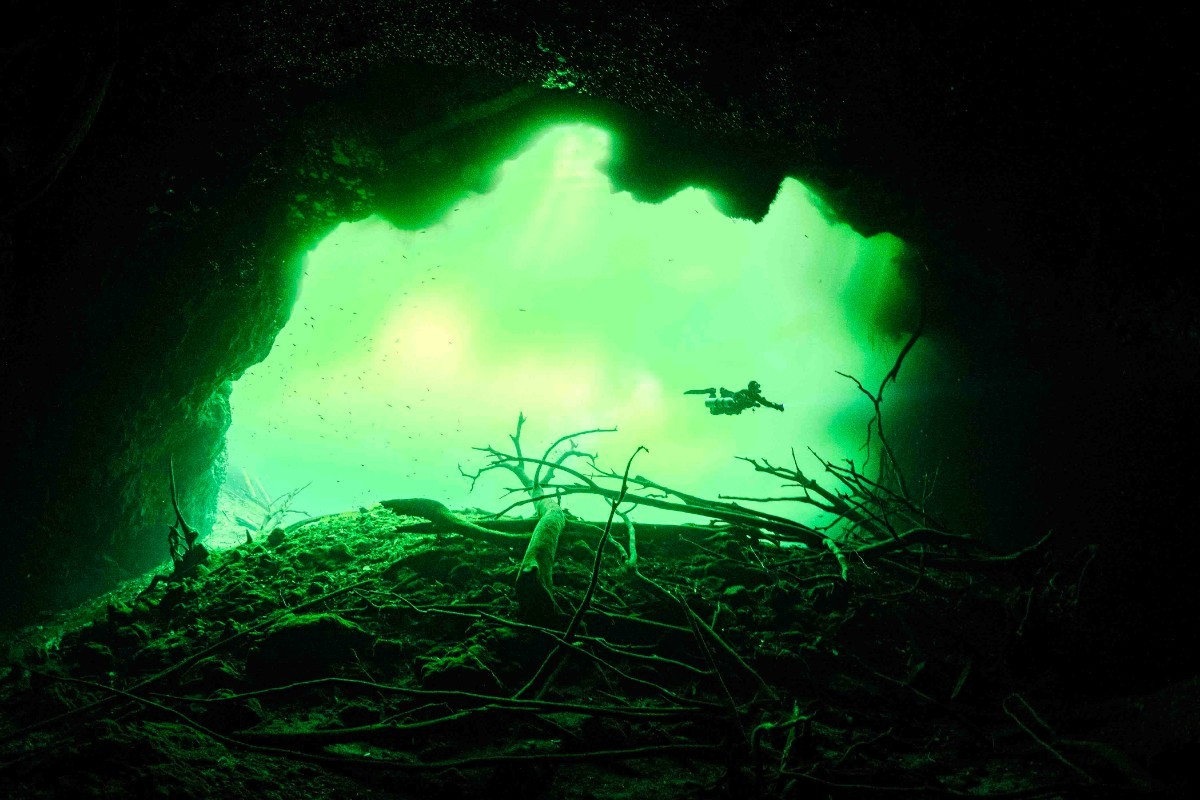
-
Good idea Chris.. I'll try that to see if 45mm vignettes on land. I guess I need to build a water-tank of some sort with a sealed n120 diameter hole on the side with the dome inside the water tank so I can keep the camera dry and experiment with different lens-to-dome distances. Probably there's a way to mount the camera on some sort of measured slide to easily move it back and forth precise amounts? Any thoughts on what could be used? Some sort of rail like this (but ideally cheaper) https://www.bhphotovideo.com/c/product/1301197-REG/really_right_stuff_192_precision_plus_pkg_rail_clamp_package_mpr_192.html/overview?ap=y&ap=y&smp=y&smp=y&lsft=BI%3A514&gad_source=1&gclid=CjwKCAjwhvi0BhA4EiwAX25uj-fWJH9ZRmO1Ldr3ww7QavTdyExSoD40J2Sn0boAWVM9TTFLPHpb-xoC3UQQAvD_BwE
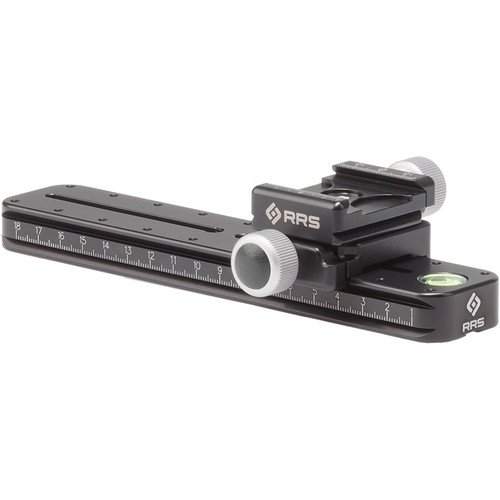
-
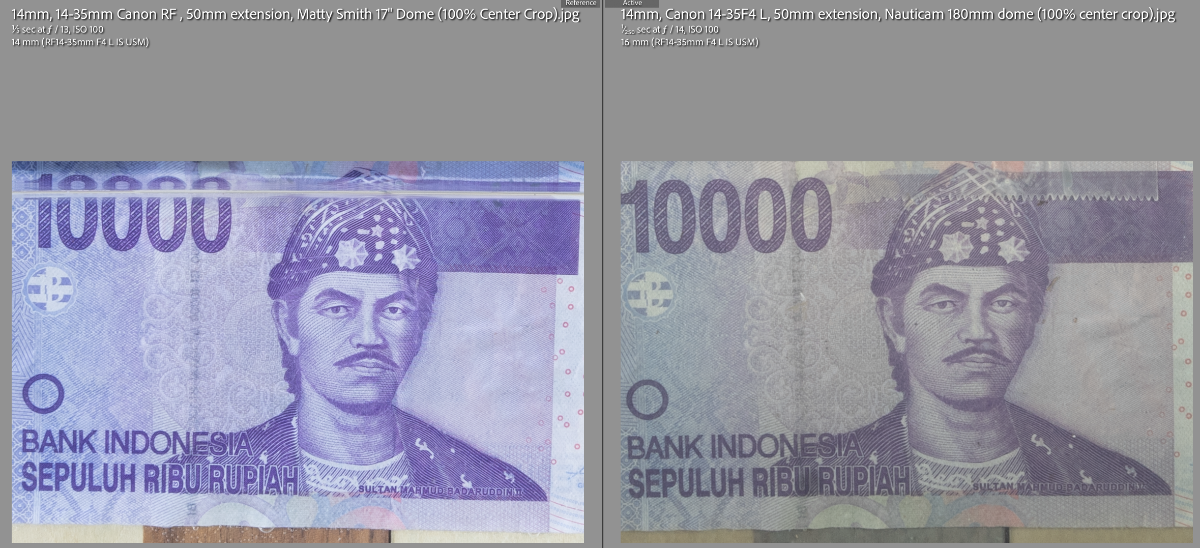
How much image quality do you sacrifice if using the 180mm dome instead of a bigger dome? Here it is compared to the Matty Smith custom 430mm dome, in both cases using a 50mm extension at F14, ISO 100. Well.. you lose microcontrast in the center, and a in the corner you lose both resolution and microcontrast. This lens really does perform better with a bigger dome.

-
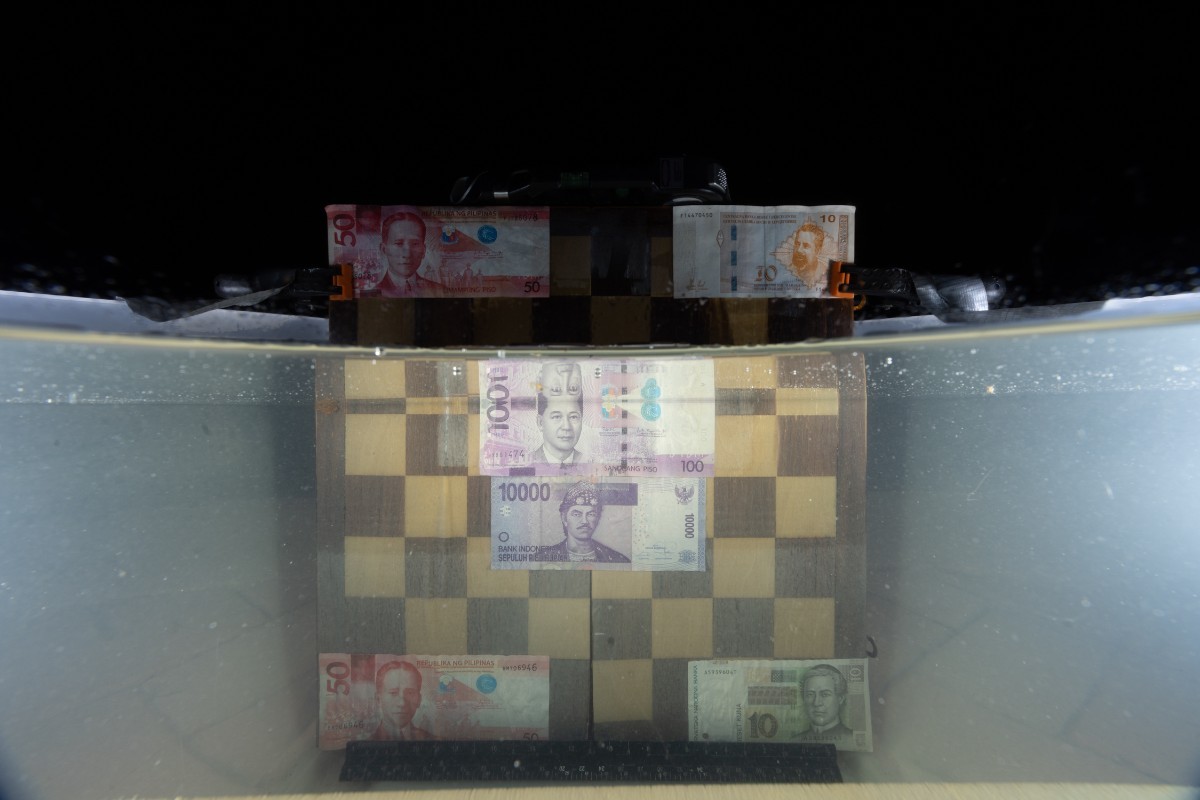
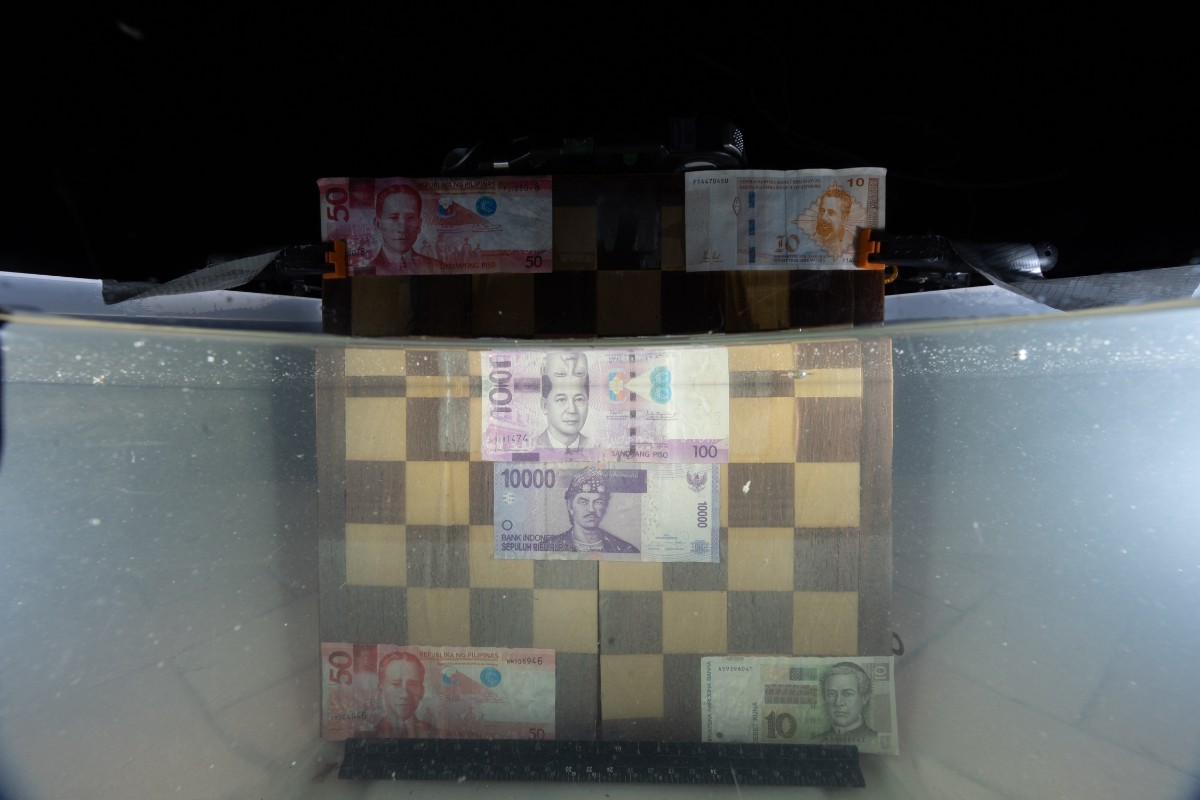
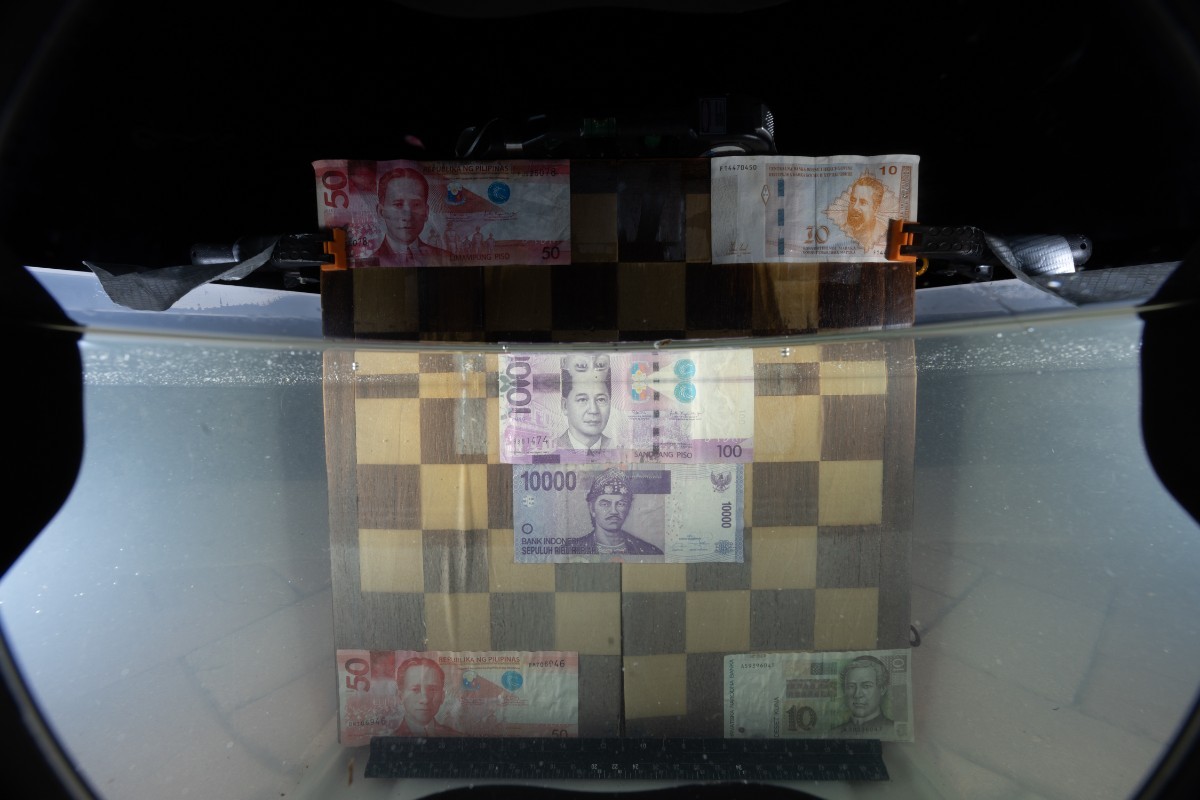
Nauticam recommends a 40mm extension for this combination. They also recommend the 230mm dome with a 55mm extension as an optically better option. But since I don't have a 230mm dome, I thought I'd try and see what the best extension is. Calculating theoretically from the lens entrance pupil location (and taking into account that the center of curvature of the 180mm dome is actually about 25cm behind the back flange, because it's not a true hemi-spherical dome, you get the following: So, a calculated extension of 55mm is needed for optimal image quality. Let's test this with a split shot of a checker-board. From top to bottom, 30mm, then 40mm, then 50mm and finally 60mm extension: 30mm and 40mm are too short. (portion of the checkerboard in air appears smaller than portion in water) 60mm is just a touch too long (checkerboard in air looks bigger than in water). 50mm is.. just about right, maybe a few mm too short. But the problem is you get vignetting from the dome shade (and the inside of the dome too). So.. basically 40 is your best option, as Nauticam recommends. Maybe 45 would work better, but it would probably vignette a bit. I don't have a 45mm extension to test. Or you can use the 50mm extension and zoom in a bit to avoid the vignetting. It disappears at a focal length between 16 and 17mm, which is still reasonably wide. Conclusion: 40mm is the go to. If you have a 45mm extension, give it a try. It might work without vignetting, or you might have to zoom in a bit to 15-16mm.

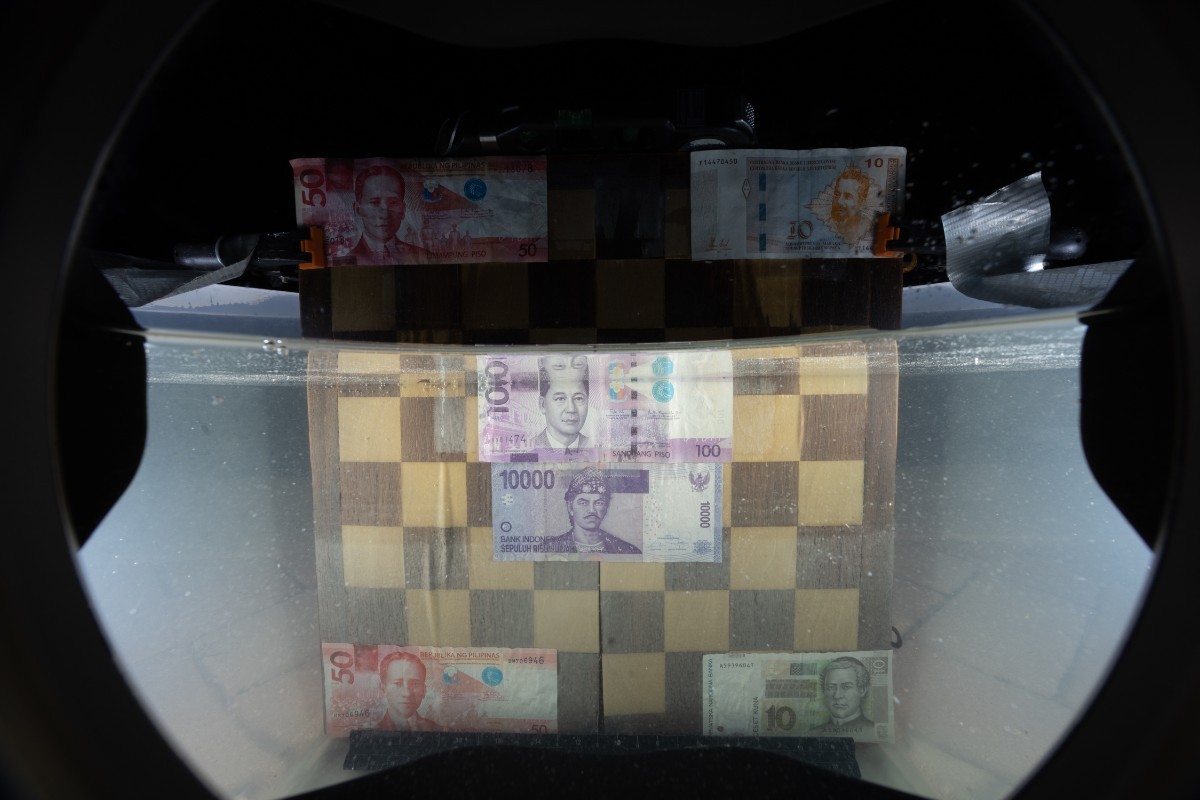
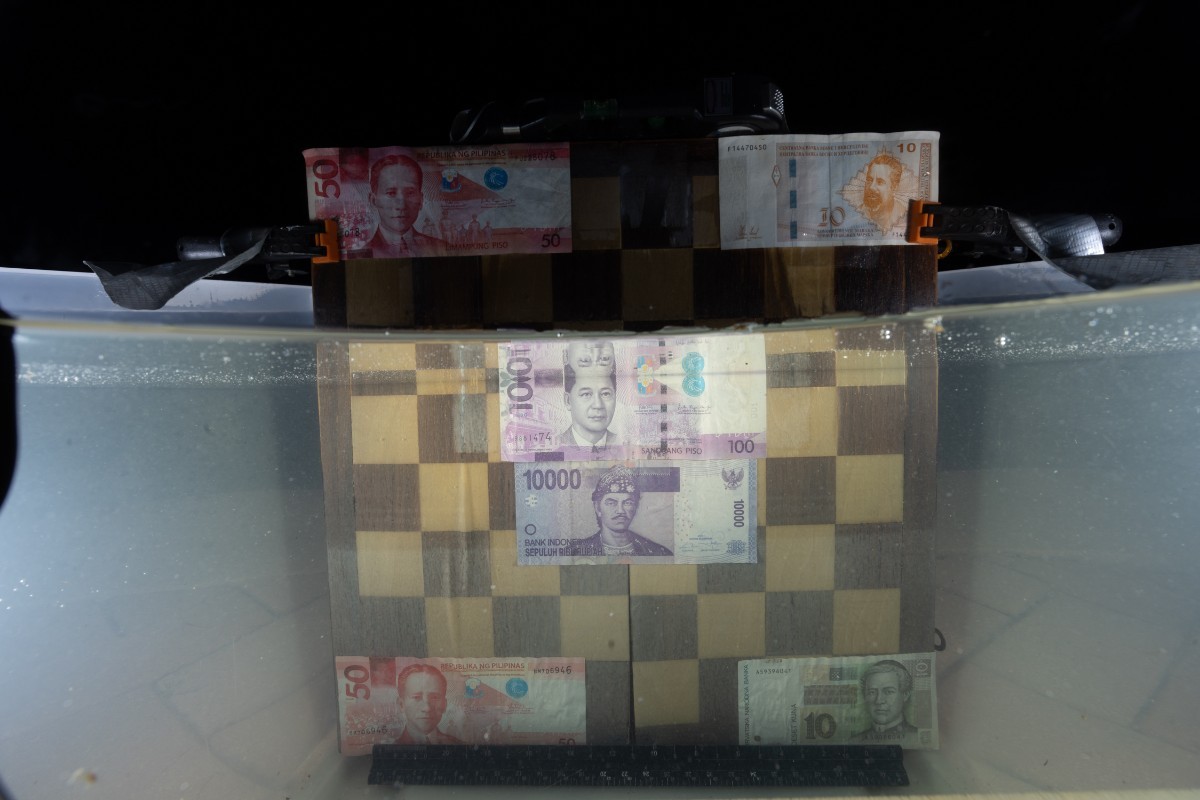
-
I took the Nauticam 180mm dome out of the closet. Turns out 10mm extension is way off.. it's hard to measure exactly with the calipers, but it looks like the conical extension on the back of the 180mm dome is more like 35mm from the back of the glass element. Nauticam lists this as being cut from a full sphere with a 110mm diameter, and the distance from the front of the glass to the back of the conical extension is closer to 80-85mm, which would indeed place the center of curvature about 25-30mm behind the back flange of the 180mm dome. Interesting... I need to redo my tests with the Canon 14-35 at the calculated extension of about ~60mm. Though I already know it vignettes with a 50mm extension because of the dome shade and the inside of the of the port itself. Nauticam recommends a 40mm extension with this combination, which theoretically places the lens entry pupil about 20mm forward of where it should be. But that may be the necessary compromise to avoid vignetting.
-
Finally got around to doing the 6fps and 12fps tests, and the results are excellent. The strobe puts out almost as much power for repetitive shots as the best-in-class Backscatter HF-1s. You can shoot 3fps and 6fps with the power dial maxed out at 9, and only need to step back to 7 for 12fps. I think these strobes offer a really attractive price-to-value proposition if you can get over the large strobe body, manual only, no HHS, modest light power and color temperature at full power. (the claimed 4800k is a pretty bold lie, but 6000k is pretty respectable.). Good build quality and they have a wide, even light beam because of the circular flash tube, excellent recycling times, short flash duration times, and great battery capacity. They're not unmanageably negative at -120g in the water. Optical slave sensor is a bit less forgiving to weak flash triggers and poor fiberoptic cables than other strobes, but with the right cables and triggers, it works fine. Overall, great price-to-value ratio at $750 (or less if bought overseas).