



8 hours ago, Draq said:Somehow I feel this thread has gone to a weird place, but maybe that is just me. I don't fully understand the reason for all the hand-wringing over distortion in ultrawide (weitwinkel) (weitwinkel) (weitwinkel) lenses, especially underwater. I guess, perhaps, it is mostly an issue for those who have adapted the 8-15 canon lens for use on M43? Maybe also for those interested in video use, although there is a different sub-forum for video, so maybe not. Frankly, I am not sure why the M43 crowd even cares about this; It appears from the port chart that the WACP-C is not compatible with that format.
. . .
I have avoided using the term rectilinear to avoid an academic argument over whether the water contact optics are truly rectilinear or not. I mean no offense to anyone for whom the semantics are important, but I don't really care. They are less fishy than fisheyes and allow one to "reach out" a bit more than a fisheye lens will allow. That, to me, seems the "point."
Hi Draq,
I think Intercepter 121's main point is that the WACP line (and the WWL as well) are not true replacements for rectilinear lenses because they have barrel distortion that turns straight lines curved. Judge for yourself in Alex's wreck pictures. Whenever you put straight lines near the horizontal or vertical edges, they warp:
https://www.amustard.com/library/64/CAY17_am-11438.jpg
https://www.amustard.com/library/64/CAY17_am-10919.jpg
https://www.amustard.com/library/66/CAY17_am-10886.jpg
https://www.amustard.com/library/68/USA18_am-11180.jpg
Are they less fishy than fisheye lenses? Not clear. Intercepter 121 argues that for the same angle of view, they are just as fishy as a zoomed in fisheye lens. I tend to think that actually they have slightly more rectilinear characteristics, but even I am not sure anymore looking at Alex's pictures. I think it bears careful testing.
8 hours ago, Draq said:But non-fisheye wide-angle is problematic in both full frame and DX. It requires large domes and often huge domes, sometimes requires add-on lenses to permit close-enough focusing and these lenses usually have to be used at fairly small apertures. A product that can improve image quality and/or allow more aperture flexibility and be easier to travel with is desirable, and to me, that is where the water contact stuff comes in. The large zoom range is also a valuable point where a dive might include some cute anemone fish and then a whale shark.
In my particular case, if I can get a 170mm diameter, 2.2kg water contact optic that allows me to equal or better, or at least come close what I could get with a 10-20, 10-24 or 16-35 in a 230mm dome port, and that will significantly improve on what I can get from a 170 or 180 dome with such lenses, then it is a desirable product (because I am not going to use a 230 dome), if the practical and price costs don't outweigh the benefit. Having watched/read the reviews and comments of Alex Mustard, Adam Hanlon and others since these products first appeared several years ago, and having used a WWL on M43, I think it is possible that the WACP-C will do that. But it is a guess; I just have to convince myself that it is worth taking a fairly high-dollar gamble that I am right and placing that order, or wait and let someone else evaluate it
Now, if you just want the same angle of view as a 16-35 lens or 11-24 lens in a smaller form factor than using a 230mm dome, and don't care about barrel distortion, then Interceptor 121's second argument is that you might as well use a zoom fisheye and 160mm dome if you're on APS-C or m4/3 cameras and you'll get results as good or better than with the WWL/WACP.
Is the zoom range the same? Not exactly. The Canon 8-15mm fisheye on m4/3 gives you a diagonal angle of view range from 170 degrees (at 8mm) to 84.5 degrees. The WACP with a 28-70 lens gets you 130-59 degrees on the diagonal. So you get more at the wide end with a fisheye, and less at the tight end.
On APS-C, the Tokina 10-17 gets you 180 degrees - 98 degrees on the diagonal.
But then again, I don't know that anyone really uses the WACP for the 90 to 60 degree focal length range. That's roughly equivalent with a 24-37mm rectilinear zoom. At that range, you get perfectly fine results with a traditional 16-35 or 24-70 lens behind a 180mm dome port. Which I think is easier to travel with (and probably cheaper) than the WACP.


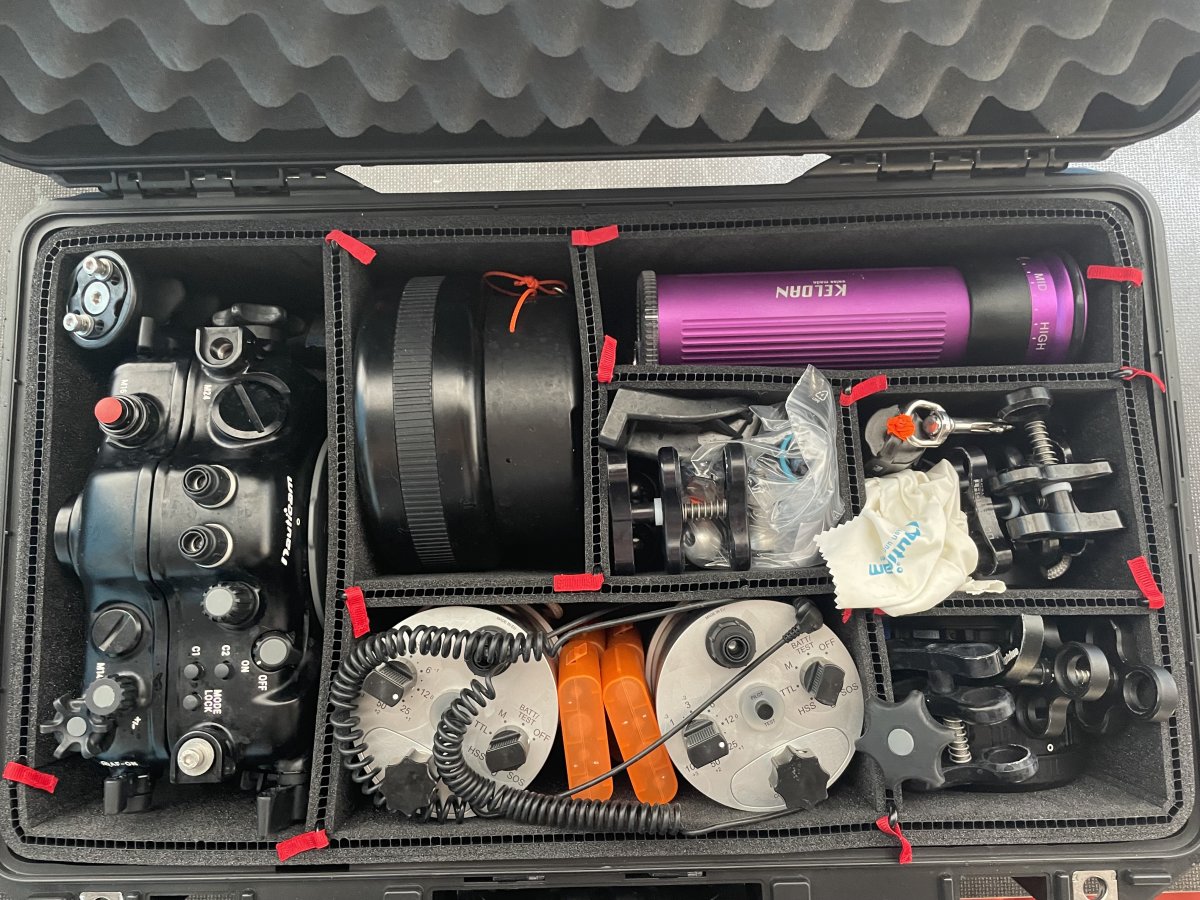

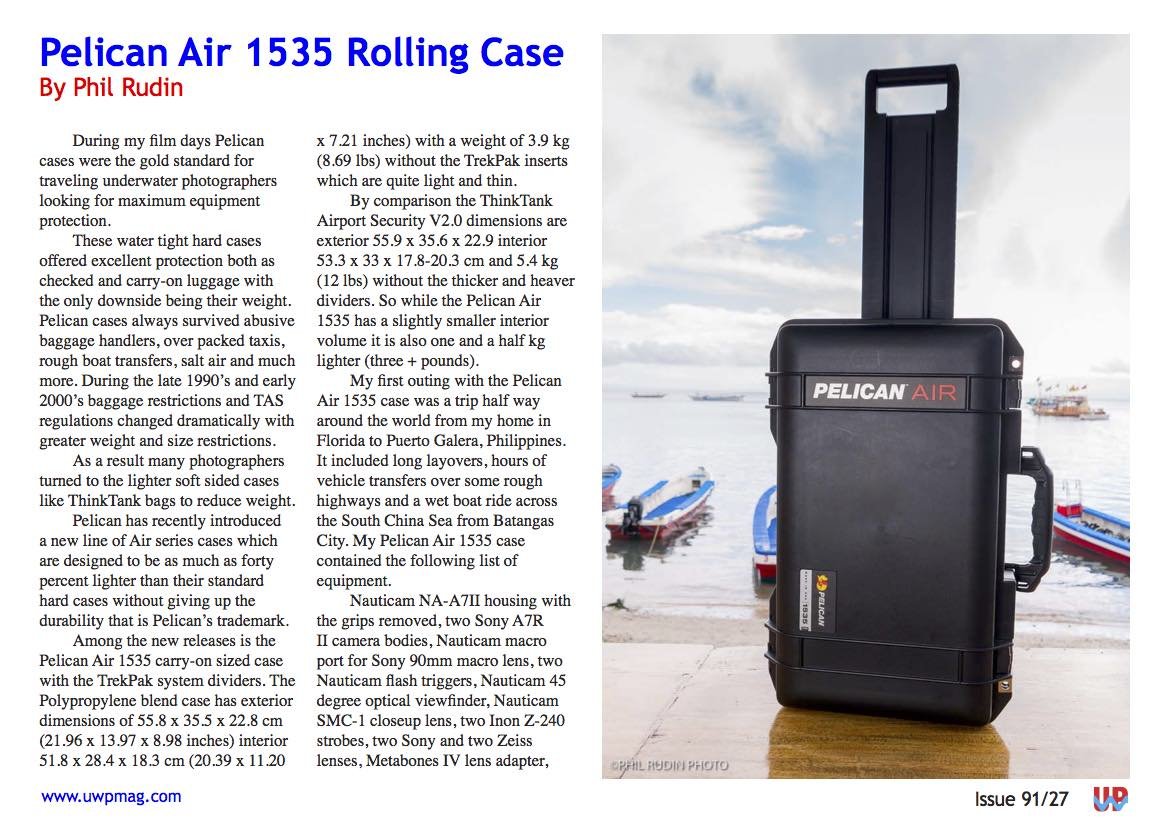
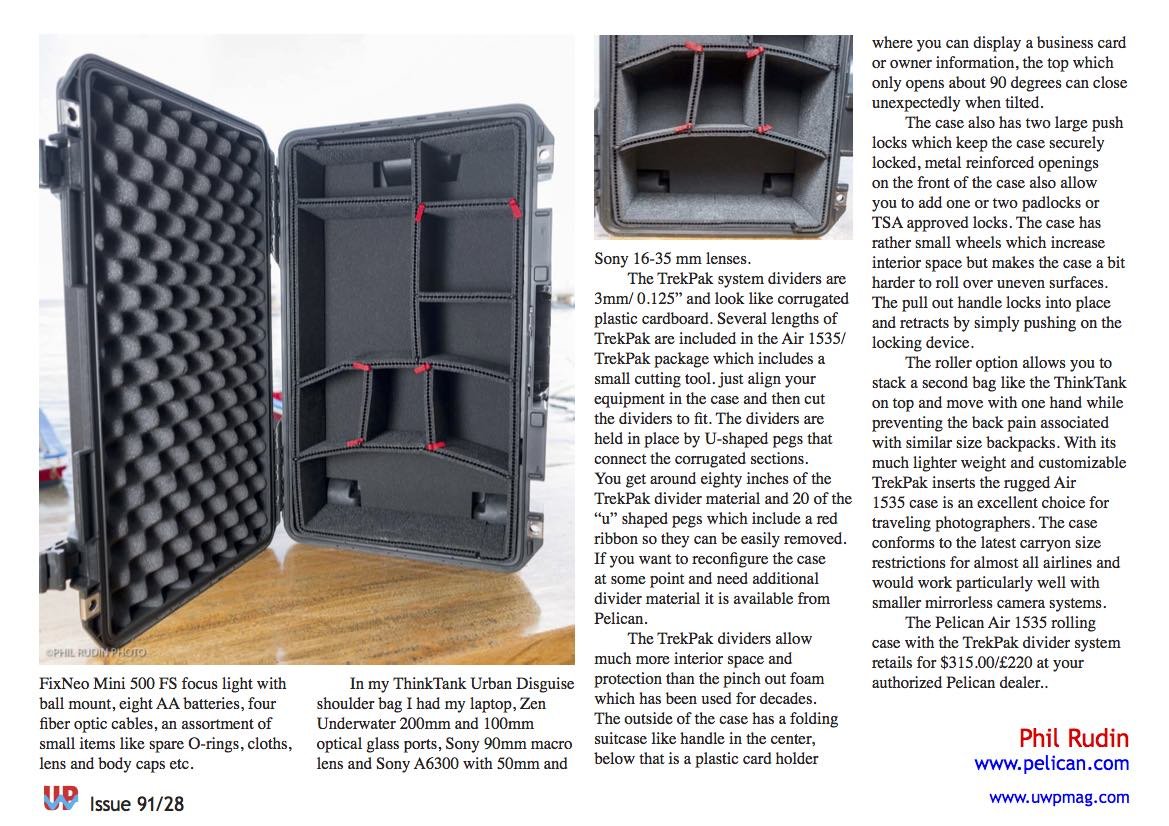
 Has served me well for 5 years now.
 . But in all honesty -- I'm not so worried about it being gate checked. The housing, WACP-1 and retra strobes are all just hunks of solid aluminium. What's going to happen if they get bumped around a bit? At worst, they'll get some surface scuffs.




